
Why Wireless Earbuds Sound So Different Across Brands
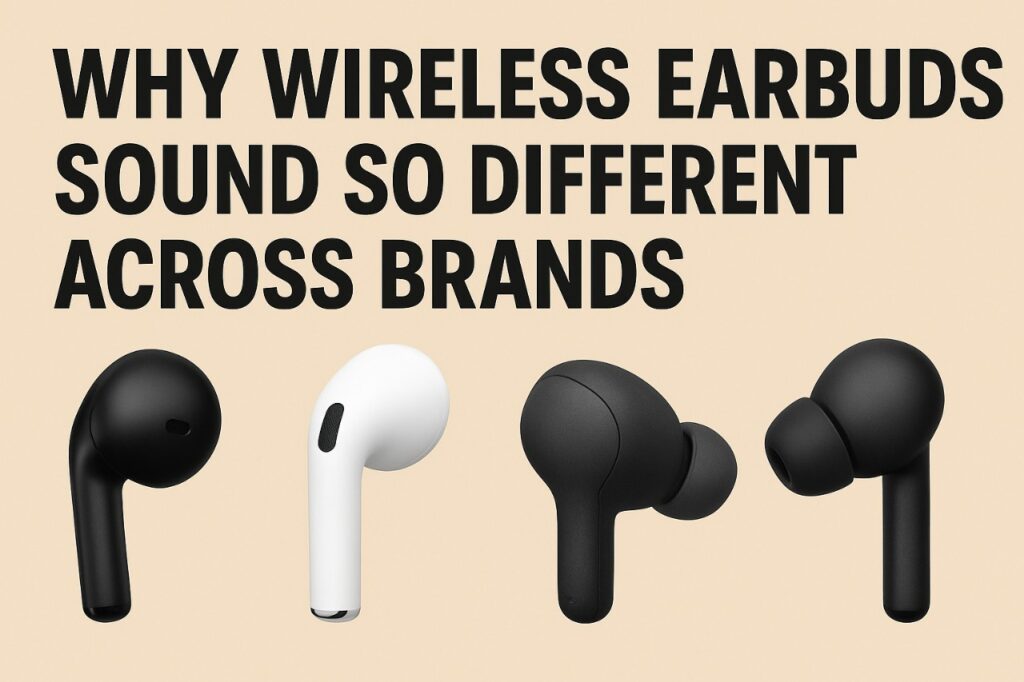
Wireless earbuds dominate the personal audio market, yet users often notice dramatic differences in wireless earbuds sound quality between brands, even at similar price points. While marketing frequently emphasizes “premium audio” or “hi-fi sound,” the actual listening experience depends on multiple engineering and design factors. Understanding these variables clarifies why earbuds from different brands can feel worlds apart.
Driver Technology and Size
The heart of any earbud is its driver, the component responsible for converting electrical signals into sound. Brands use dynamic, balanced armature, or hybrid drivers, each producing distinctive tonal characteristics. Dynamic drivers often deliver robust bass but may compromise midrange clarity, while balanced armature drivers excel in detailed treble and mids. Variations in driver size, placement, and tuning mean that even earbuds with similar specifications can sound remarkably different.
Acoustic Design and Ear Fit
Fit and sealing influence sound perception significantly. The interaction between ear canal shape, silicone or foam tips, and housing design affects bass response, spatial imaging, and perceived clarity. A poorly fitting earbud can produce weak bass or muffled mids, whereas a properly sealed earbud enhances low-end impact and vocal detail. Manufacturers invest heavily in ergonomic designs to optimize this interface, explaining why identical technical specs may yield distinct auditory experiences across brands.
Mini Comparison: Factors Affecting Wireless Earbuds Sound
| Factor | Effect on Sound Quality |
|---|---|
| Driver Type & Size | Tonal balance, bass depth, treble clarity |
| Acoustic Housing | Resonance, warmth, soundstage |
| Ear Tip Fit | Bass response, clarity, isolation |
| Software Tuning & EQ | Frequency shaping, brand-specific signature sound |
| Bluetooth Codec | Latency, compression, dynamic range |
This table demonstrates that multiple components and design choices collectively determine perceived sound quality, beyond mere marketing labels.
Bluetooth Codec and Wireless Transmission
The wireless signal itself plays a role in sound fidelity. Different brands support varying codecs—SBC, AAC, aptX, LDAC, or proprietary solutions—that affect bitrate, compression, and latency. High-resolution codecs like LDAC transmit more data per second, preserving audio detail, while basic codecs may compress the signal and reduce clarity. Variations in codec support explain why some earbuds sound noticeably richer or more detailed than others, even when using the same source file.
Software Tuning and Brand Signatures
Many brands tune their earbuds with software to produce a signature sound profile. Some emphasize punchy bass for pop and hip-hop, others prioritize a neutral profile for accuracy in classical or acoustic music. Digital signal processing (DSP) and EQ adjustments allow brands to differentiate their products audibly. This intentional tuning, combined with driver and acoustic design, creates brand-specific sound signatures, giving each earbuds lineup a unique sonic identity.
Environmental and Listening Factors
The perception of wireless earbuds sound quality also depends on external factors such as ambient noise, source material, and listener sensitivity. Active noise cancellation (ANC) and passive isolation can dramatically influence clarity and perceived bass. Moreover, high-quality recordings reveal more subtle differences in tuning, while low-bitrate streams may mask variations. The combined effect of environment, fit, and content means that two users might describe the same earbud’s sound very differently.
Closing Reflection
Wireless earbuds sound quality is shaped by a complex interplay of hardware, design, software, and user factors. Driver technology, acoustic housing, ear fit, codec support, and software tuning all contribute to brand-specific auditory experiences. Recognizing these factors empowers users to choose earbuds that match their listening preferences rather than relying solely on marketing claims. In 2025, the right choice combines engineering insight with personal taste, offering clarity, balance, and enjoyment in daily listening.
Stay Tuned with Vibetric Audio Insights
- Follow our Instagram @vibetric_official for deep dives into earbuds, headphones, and audio science.
- Bookmark vibetric.com to explore detailed comparisons and sound quality analyses.
- Discover how to optimize your listening experience based on real technical factors.
What’s your take on this?
At Vibetric, the comments go way beyond quick reactions — they’re where creators, innovators, and curious minds spark conversations that push tech’s future forward.

AI Intelligence Race in 2026: The Real Battle Beyond Speed
AI Intelligence Race in 2026: The Real Battle Beyond Speed For years, consumer technology sold us speed. Every keynote celebrated higher clock

Windows AI PCs 2026 — The Powerful Shift Toward Intelligent Computing
Windows AI PCs 2026 — The Powerful Shift Toward Intelligent Computing For years, PC upgrades were measured through familiar metrics—faster processors, better