
The Quiet, Hidden Wireless Audio Quality Impact on Modern Listening
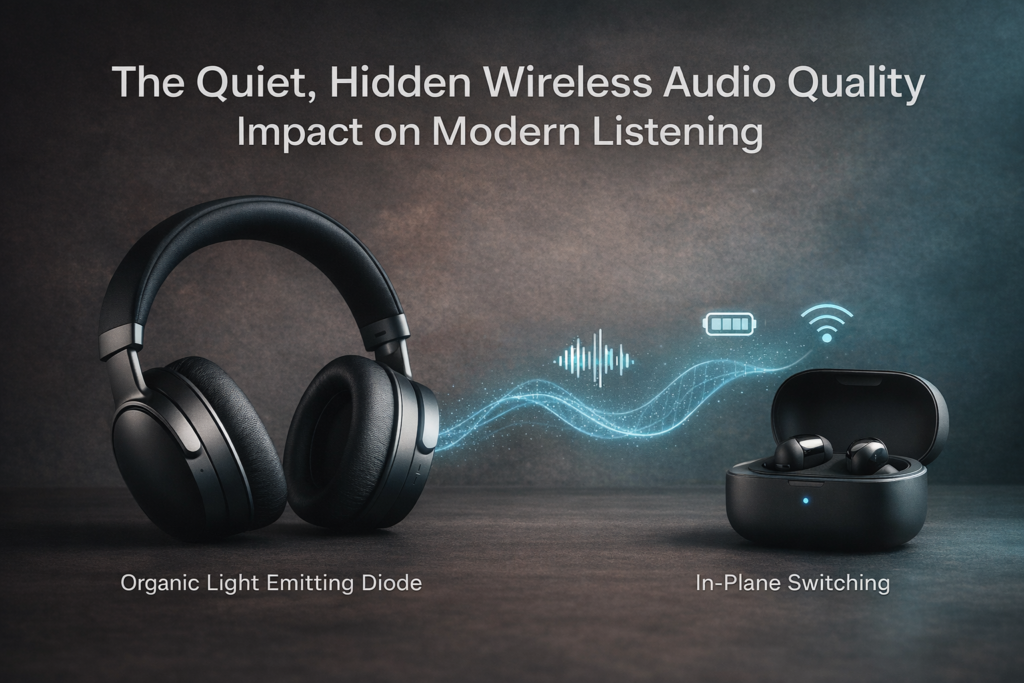
Wireless audio didn’t take over because it sounded better. It took over because it fit modern life better. Fewer cables, cleaner desks, seamless switching between devices—convenience rewrote expectations faster than sound quality could object. As wireless becomes the default, the real question isn’t whether it’s good enough anymore. It’s how wireless audio quality impact quietly reshapes what listeners perceive as “good sound” in the first place.
The shift isn’t neutral. It changes where quality is lost, where it’s compensated for, and what listeners stop noticing altogether.
Sound Quality Didn’t Disappear — It Moved
When audio went wireless, fidelity didn’t vanish overnight. It redistributed itself across new bottlenecks. Compression, transmission stability, power efficiency, and onboard processing now matter as much as drivers and tuning.
Wired audio concentrated quality in the signal path. Wireless audio spreads responsibility across the entire system. Codecs decide how much data survives. DSP decides how that data is reshaped. Battery constraints decide how aggressively everything runs.
The result is a listening experience that can sound impressive yet be less faithful—optimized for consistency and mass appeal rather than purity.
Compression Is the Invisible Editor
The most significant wireless audio quality impact comes from compression, not hardware. Bluetooth audio doesn’t transmit raw sound; it prioritizes reliability and latency over completeness.
Modern codecs are efficient, but efficiency always involves choice. Certain frequencies are emphasized, others simplified. Transients are smoothed. Dynamic range is subtly constrained. None of this is obvious in isolation, but together it nudges sound toward a familiar, safe profile.
Listeners often interpret this as “cleaner” audio. In reality, it’s more controlled audio. The messiness that gives recordings depth is often the first casualty.
Why Wireless Can Sound Better Than It Should
Here’s the paradox: many wireless headphones sound better to casual listeners than wired ones. That isn’t an accident.
Wireless systems rely heavily on DSP—active equalization, loudness compensation, spatial effects, and adaptive tuning. These tools correct weaknesses in drivers and seal inconsistencies in real time. They also tailor sound to average hearing preferences.
This is where wireless audio quality impact becomes psychological. What people hear is often more flattering, not more accurate. Bass is reinforced. Harshness is softened. Volume stays consistent across tracks.
For many, that feels like higher quality—even if the original signal has been heavily reshaped.
A Snapshot of Where Quality Shifts
| Aspect | Wired Audio | Wireless Audio |
|---|---|---|
| Signal integrity | Direct, lossless-capable | Compressed, codec-dependent |
| Tuning control | Source-driven | DSP-driven |
| Consistency | Variable by setup | Highly controlled |
| Convenience | Low | High |
this comparison highlights the core trade-off: wired audio preserves information, while wireless audio preserves experience.
Latency Changed How Audio Is Designed
Wireless audio isn’t just about sound—it’s about timing. Latency constraints influence everything from codec selection to processing depth.
To keep audio in sync with video, wireless systems often sacrifice complexity. Some spatial cues are simplified. Micro-details are deprioritized. The soundstage becomes more forward and immediate.
This design bias favors clarity over realism. It works well for streaming, gaming, and calls—but subtly shifts listener expectations. Over time, people stop expecting depth and start valuing immediacy.
That expectation shift is a long-term wireless audio quality impact few people notice consciously.
Battery Physics Is Now Part of the Sound
In wired systems, power is external. In wireless systems, sound quality competes with battery life.
Amplification strength, DSP intensity, and codec selection all draw power. Designers must balance sonic ambition against runtime promises. The compromise usually favors efficiency, not maximal performance.
This doesn’t mean wireless audio can’t sound excellent. It means it’s optimized to sound good within strict energy limits. That constraint shapes tuning choices in ways listeners rarely consider.
The Myth of “Good Enough” Becoming the Standard
As wireless audio improves incrementally, the gap between “acceptable” and “excellent” narrows perceptually. This has cultural consequences.
Listeners exposed primarily to wireless sound profiles adapt quickly. Nuances lost through compression stop being missed. Over time, reference points shift. What once sounded thin now sounds normal.
This isn’t a decline in taste—it’s adaptation. Wireless audio quality impact isn’t just technical; it’s educational. It teaches ears what to expect by repeating the same sonic compromises consistently.
Where This Leaves Audio Quality Going Forward
Wireless audio isn’t the enemy of sound quality. It’s the new framework through which sound quality is defined.
Future improvements won’t come from eliminating compression, but from smarter decisions about what to preserve. Better psychoacoustic models. More adaptive processing. More transparent tuning philosophies.
The danger isn’t wireless audio itself. It’s mistaking convenience-driven tuning for objective improvement.
Understanding wireless audio quality impact means recognizing that sound hasn’t gotten worse—it’s been reinterpreted. And once interpretation becomes the default, going back to neutrality feels unfamiliar.
Audio quality didn’t disappear when everything went wireless. It just stopped being obvious where the trade-offs were happening.
Stay Tuned with Vibetric
- Follow our Instagram @vibetric_official for deeper insights into modern audio design.
- Bookmark vibetric.com to keep track of how listening standards evolve.
- Stay connected as convenience continues to reshape sound perception.
What’s your take on this?
At Vibetric, the comments go way beyond quick reactions — they’re where creators, innovators, and curious minds spark conversations that push tech’s future forward.
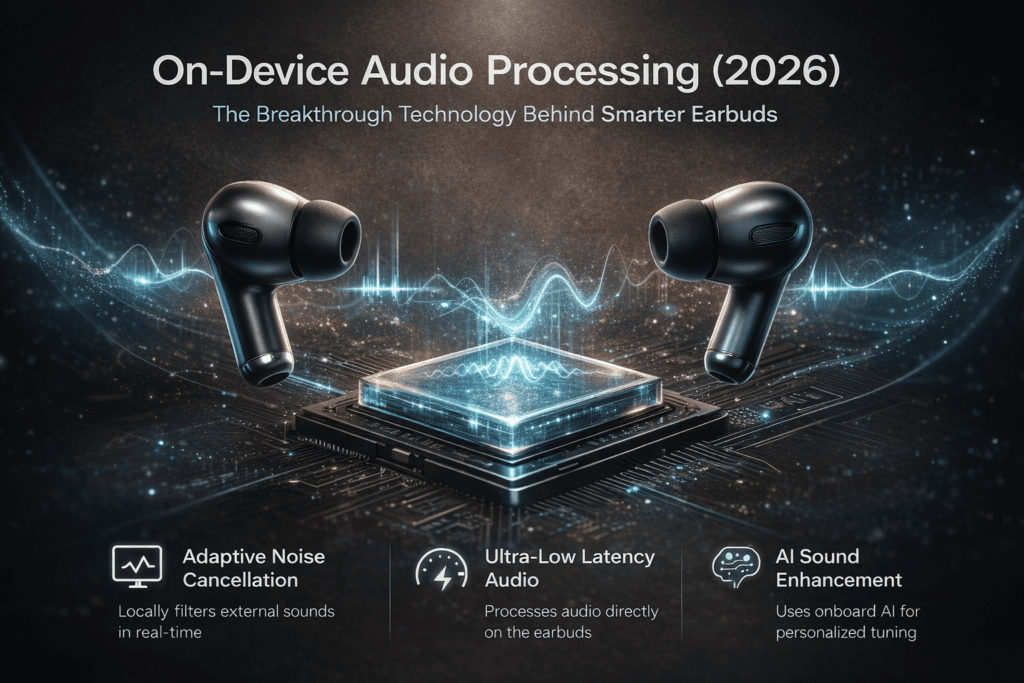
On-Device Audio Processing (2026): The Breakthrough Technology Behind Smarter Earbuds
On-Device Audio Processing (2026): The Breakthrough Technology Behind Smarter Earbuds A commuter taps play on the subway. The train roars into the
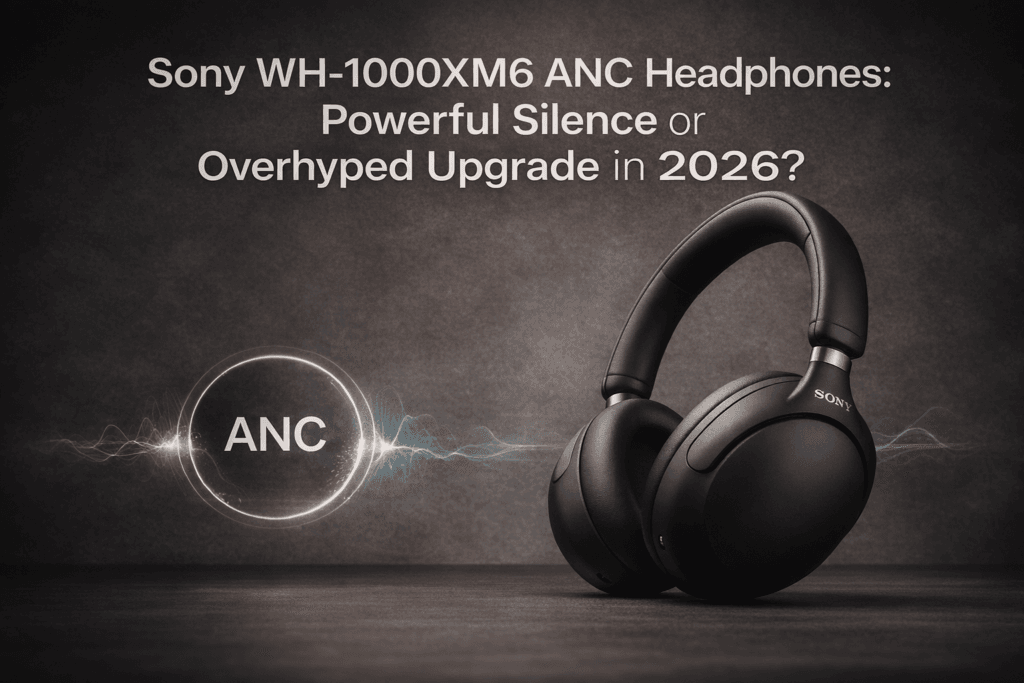
Sony WH-1000XM6 ANC Headphones: Powerful Silence or Overhyped Upgrade in 2026?
Sony WH-1000XM6 ANC Headphones: Powerful Silence or Overhyped Upgrade in 2026? For years, noise-canceling headphones have chased the same promise: silence on