
Which is Better in 2025 — Wired or Wireless Audio?
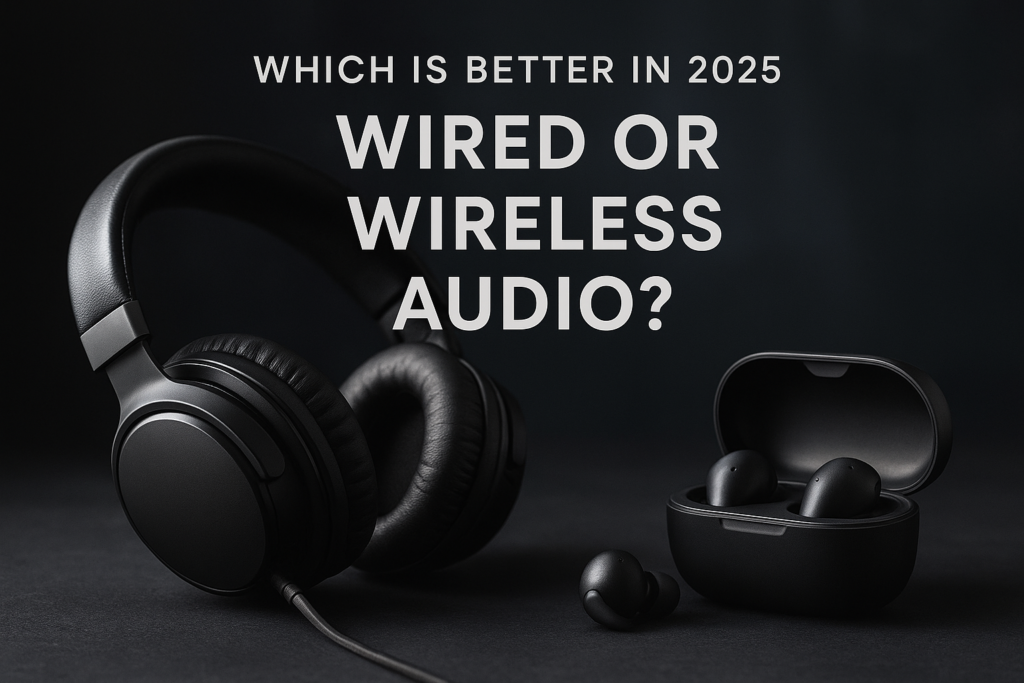
The wired vs wireless audio debate has persisted for years, but in 2025, the conversation has evolved. At one time, wired headphones ruled as the unchallenged standard for delivering the best sound quality. But now, as wireless audio technology improves, the scales are tipping. Wireless earbuds are more convenient, offer advanced features, and—dare we say it—are nearly as good as wired options in terms of sound quality. With so many choices, deciding which is best for you isn’t as simple as it used to be.
The Evolution of Audio Technology
The shift from wired to wireless headphones began with a few key technological advances. The 3.5mm headphone jack slowly started to disappear, and Bluetooth technology was refined. Wireless earbud models, like Apple’s AirPods, quickly became iconic. But despite their rise, wired headphones still hold strong appeal, particularly for audiophiles and professionals. As we approach 2025, both technologies have matured and offer distinct benefits.
Wired audio continues to provide the purest sound, especially for critical listening environments. But wireless audio has gained ground by improving sound quality, convenience, and the ability to connect seamlessly across devices. So, which one is superior? Let’s break down the strengths and weaknesses of wired vs wireless audio in 2025.
What We’ve Been Led to Believe
The prevailing belief is that wired audio is for purists, while wireless audio is for casual listeners or those prioritizing convenience. In reality, both technologies have their merits. Wired audio offers unmatched fidelity and zero latency, while wireless audio continues to advance in both sound quality and ease of use. So, how do we navigate this sea of choices?
Deep-Dive Explanation: Wired vs Wireless Audio
Misconceptions: The Assumptions We Make
Many assume that wireless audio can’t compare to wired audio when it comes to sound quality. This was true in the early days of Bluetooth, but today’s high-quality codecs like aptX Adaptive and LDAC have closed the gap. Additionally, it’s often assumed that wired audio is the go-to for high-fidelity listening, but some modern wireless models now support high-res audio transmission with near-zero loss in quality.
Technical Reality: How Do These Technologies Work?
Wired headphones send audio signals through a direct connection (like a 3.5mm or USB-C cable). This direct transmission guarantees no loss of data and zero latency, making it ideal for audiophiles and professionals who require precise, high-fidelity sound.
Wireless headphones, on the other hand, rely on Bluetooth. The audio is compressed before being transmitted over the air, which can degrade quality, but high-end Bluetooth codecs like aptX, LDAC, and AAC are capable of delivering excellent sound. The development of Bluetooth 5.2 has also drastically improved connection stability, latency, and range.
Examples of Actual Wireless Codec Devices:
- Sony WH-1000XM5: These headphones support aptX Adaptive for CD-quality sound, allowing for minimal compression and excellent fidelity.
- Sennheiser Momentum True Wireless 3: Featuring LDAC support, these wireless earbuds can deliver high-resolution audio with low latency, ensuring that you get near-lossless sound quality even when you’re on the go.
- Bose QuietComfort 45: Another example supporting AAC and aptX for excellent audio performance without compromising on comfort or noise cancellation.
Devices like these demonstrate how wireless headphones and earbuds can rival traditional wired connections in terms of sound quality. These models incorporate advanced Bluetooth codecs, making them suitable for audiophiles and casual listeners alike, offering high-fidelity sound without the constraints of a wired connection.
Industry Behavior: Why Brands Choose One Over the Other
The ongoing trend of wireless adoption stems from user convenience. Manufacturers are eliminating the headphone jack to make devices sleeker, while also catering to a growing market that wants wireless freedom. Meanwhile, wired headphones are marketed as the choice for those who seek the highest quality sound without compromises. Despite the wireless revolution, wired solutions have carved out a niche, especially among audiophiles and content creators who rely on accurate, unaltered sound.
Future Trajectory: Where Are These Technologies Headed?
Looking ahead to 2025 and beyond, both wired and wireless technologies will continue to evolve. Wireless audio will likely see improved codecs, longer battery life, and lower latency as Bluetooth standards continue to refine. As for wired audio, expect to see more high-resolution cables and balanced connections aimed at audiophiles. Hybrid systems that can switch between wired and wireless modes are likely to become more common, offering users the best of both worlds.
Specs Comparison Table: Wired vs Wireless Audio (2025)
| Feature | Wired Audio | Wireless Audio |
|---|---|---|
| Sound Quality | Best possible fidelity, no compression | High-quality with aptX, LDAC, AAC support |
| Latency | Zero latency | Low latency with Bluetooth 5.2 (around 40-80ms) |
| Battery Life | No battery required | 8–12 hours on average, depends on model |
| Portability | Limited by cable length | High, lightweight, and compact design |
| Durability | Typically more durable | Less durable due to battery wear |
| Audio Source | Direct connection to device | Wireless connection, requires Bluetooth pairing |
| Price Range | Typically lower cost | Generally more expensive due to wireless tech |
Real-World Examples: Wired vs Wireless in Daily Use
Scenario 1: The Commuter
For someone who uses headphones during a daily commute, wireless earbuds are the clear winner. The Apple AirPods Pro 2 offer seamless connectivity with Apple devices and active noise cancellation that lets users escape the noise of the train or subway. They’re lightweight, portable, and eliminate the hassle of tangled wires.
Scenario 2: The Gamer
For a gamer, wired headphones are often the preferred choice. Headphones like the SteelSeries Arctis Pro provide zero latency and exceptional sound clarity—key factors for competitive gaming. The reliability of a wired connection ensures there are no dropped signals or connectivity issues, making it crucial for fast-paced gameplay.
Scenario 3: The Audiophile
High-end wired headphones like the Sennheiser HD800S are still the go-to choice for audiophiles. These headphones are built for precision, delivering a broad frequency response and rich sound that wireless technology hasn’t yet replicated. For listeners who care deeply about sound purity, wired is still the preferred option.
Data-Backed Insight: Wired vs Wireless Audio – What the Numbers Say
While it’s difficult to quantify everything about sound quality, there are clear trends that speak volumes about the wired vs wireless debate. Bluetooth technology in 2025 is capable of transmitting high-resolution audio, with LDAC and aptX Adaptive providing bit rates of up to 990 kbps and 420 kbps respectively—close to CD-quality sound. However, when it comes to the absolute maximum sound quality, wired connections still have the edge, supporting high-res audio with bit rates that are often higher than wireless codecs can handle.
Human Impact: How Your Choice Affects You
Wired Audio: The Focused Listener
For audiophiles or those working in professional sound environments, wired headphones remain an essential tool. The focus on perfect sound quality without any interruptions is a major reason people stick with wired models. For users who prioritize precision, wired headphones provide the most accurate, faithful representation of the original audio.
Wireless Audio: The Casual Listener
For those who value convenience over absolute sound quality, wireless audio has become the norm. People want headphones that don’t tie them down with cords, allowing them to multitask, exercise, or commute without hassle. Wireless headphones are also often favored by those who listen to music casually or in public places.
Solution Framework / Buyer Guide: Choosing Between Wired and Wireless Audio
- Everyday Users: Choose wireless headphones for convenience, portability, and seamless integration with mobile devices. Models like Apple AirPods Pro 2 and Sony WF-1000XM5 offer great sound and advanced features like active noise cancellation.
- Creators/Professionals: If you need high-quality, precise audio for work, wired headphones like the Audio-Technica ATH-M50X or Beyerdynamic DT 770 Pro are perfect for studio and editing environments.
- Gamers/Enthusiasts: Wired headphones are typically preferred by gamers due to their low latency and reliable connection. Models like SteelSeries Arctis Pro or Razer Kraken V3 are designed for optimal sound during gameplay.
- Future-Proof Buyers: Consider hybrid models like the Sony WH-1000XM5 or Sennheiser Momentum 3, which provide the flexibility to switch between wired and wireless modes as needed.
Counter-Perspective: When Wired Audio Might Be Less Relevant
In the age of wireless freedom, the practicality of wired headphones can be a burden. While they offer better sound quality and lower latency, they are cumbersome for users who don’t want to deal with tangled cables or the restriction of movement. For many, wireless audio provides more benefits in the long run, especially for people with active lifestyles or those who prioritize ease of use.
Reddit / User Reality: What Do Real Users Think?
| User Type | Feedback Summary | Relevance |
|---|---|---|
| Audiophiles | "Wired headphones still offer the best sound quality." | High |
| Commuters | "Wireless is a game-changer for travel and convenience." | High |
| Gamers | "Latency is a deal-breaker, wired is the way to go." | Medium |
| Fitness Fans | "Wireless is essential for workouts and running." | High |
User Feedback Summary:
The majority of audiophiles still swear by wired headphones for superior sound quality. However, many commuters and fitness enthusiasts prefer wireless for convenience. For gamers, wired models offer lower latency—crucial for competitive play.
Future Forecast: What Lies Ahead for Wired and Wireless Audio?
As we approach the future, expect wireless audio to continue dominating consumer markets with better battery life, latency improvements, and seamless integrations across devices. Wired audio will persist in professional settings and among audiophiles, with high-res cables pushing the boundaries of audio fidelity.
Closing Narrative: A Final Thought on Audio’s Future
Whether you choose wired or wireless, the future of audio is filled with possibilities. Wired audio remains unbeatable for pure sound quality, while wireless audio is fast closing the gap in terms of both performance and convenience. In 2025, the key lies in choosing the right tool for the job—whether that’s a pair of high-res wired headphones for studio work or advanced wireless earbuds for everyday life.
Vibetric Ending
No matter how you choose to listen, remember that both wired and wireless technologies will continue to improve. The question is not which is better, but which is better for you.
Ready to Embrace the Next Wave of Audio Technology?
- Follow vibetric_official on Instagram to stay updated on the latest in audio tech and trends.
- Bookmark Vibetric.com for future updates, as we continue to track the evolution of audio technology.
- Subscribe for updates and receive in-depth breakdowns and expert opinions on audio innovations.
Frequently Asked Questions: Navigating the Wired vs Wireless Debate
- Do wired headphones still provide better sound quality than wireless headphones?
Yes, wired headphones often deliver superior sound with no compression or latency, making them ideal for audiophiles. - What’s the best wireless audio technology in 2025?
Bluetooth 5.2, combined with high-end codecs like aptX Adaptive and LDAC, provides the best wireless audio quality. - Can wireless headphones sound as good as wired?
With the right codec and equipment, wireless headphones like the Sony WH-1000XM5 can offer almost identical sound quality to wired counterparts. - Are wired headphones still relevant for gaming?
Yes, they are preferred for zero latency, especially in competitive gaming environments. - How long do wireless earbud batteries last in 2025?
The best models offer up to 8–10 hours of continuous playback, with additional charges from their case. - Which is better for fitness—wired or wireless headphones?
Wireless headphones are generally preferred for exercise due to their freedom of movement and convenience. - What are hybrid audio solutions?
Hybrid audio solutions allow you to use both wired and wireless modes, offering flexibility for different scenarios. - Are wireless audio solutions catching up to wired in sound quality?
Yes, aptX Adaptive, LDAC, and other advanced codecs have closed the gap considerably. - What’s the future of wired audio?
Wired audio will continue to evolve, with high-res audio codecs and improved durability, though wireless models will likely dominate in the consumer market. - Will wireless audio ever replace wired completely?
It’s unlikely. Audiophiles and professionals will always prefer the reliability and fidelity of wired connections.
What’s your take on this?
At Vibetric, the comments go way beyond quick reactions — they’re where creators, innovators, and curious minds spark conversations that push tech’s future forward.

Is Expensive Audio Tuning Quality Really Better? The Critical Truth Explained
Is Expensive Audio Tuning Quality Really Better? The Critical Truth Explained Price has become a shortcut for trust in audio. Many listeners

AI in Smartphones Marketing vs Reality: The Real Problem With Overhyped AI Claims
AI in Smartphones Marketing vs Reality: The Real Problem With Overhyped AI Claims AI is everywhere in smartphone marketing right now. Every