
Why Ultra-Wide Cameras Matter More Than Zoom
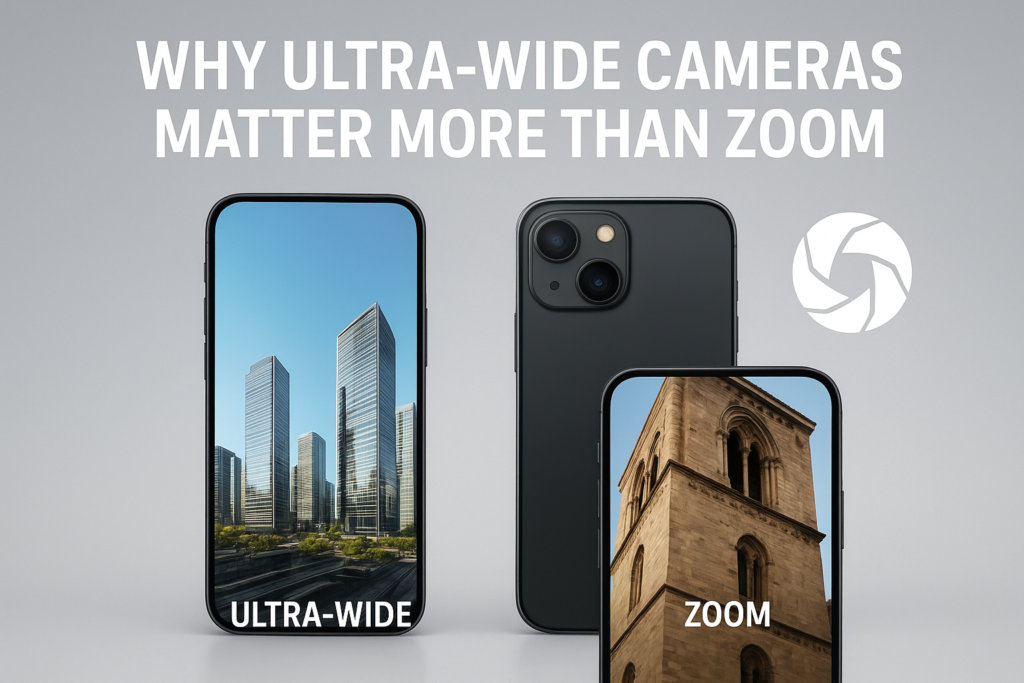
In 2025, smartphone photography is evolving beyond megapixels and optical zoom bragging rights. Ultra-wide lenses, once an afterthought, are now central to versatile shooting. They capture environments, stories, and perspectives that zoom lenses cannot. While telephoto cameras remain impressive for detail-oriented shots, their real-world value is often overestimated. Understanding the practical advantages of ultra-wide vs zoom camera systems helps both enthusiasts and everyday users make informed choices.
Why Ultra-Wide Lenses Dominate Daily Use
Ultra-wide cameras offer a field of view that standard and zoom lenses can’t match. Expansive landscapes, architectural marvels, and group shots become effortless, eliminating the need to step back or compromise framing.
In 2025, sensor improvements, AI-driven computational photography, and distortion correction have made ultra-wide shots more natural and usable than ever. Edge correction and HDR processing reduce warping, ensuring that wide vistas or tight indoor spaces look clean and balanced.
For everyday users, ultra-wide lenses are often the go-to choice. They work well across city streets, crowded interiors, vlogs, and travel photography—making the ultra-wide vs zoom camera discussion lean heavily toward practicality and daily relevance.
Zoom Lenses: Detail and Specialty Applications
Zoom lenses focus on magnifying distant subjects, offering clarity where ultra-wide cameras cannot. Optical zoom beyond 5–10x, combined with digital zoom, enables sports photography, wildlife shots, and artistic framing with perspective compression.
However, daily usage frequency is lower. Zoom lenses are sensitive to shake, lighting, and movement, often requiring stabilization, longer shutter speeds, or post-processing. Their strength lies in controlled conditions rather than spontaneous everyday photography—another reason the ultra-wide vs zoom camera choice is shaped by frequency of use.
Performance Across Lighting Conditions
Ultra-wide lenses benefit from wider apertures and computational enhancements, enabling better low-light performance and sharper edges. Telephoto lenses often struggle in dim environments. Even with optical image stabilization, low-light zoom shots can introduce blur or noise, limiting practical usability.
In essence, ultra-wide cameras provide more consistently usable results in real-world scenarios, whereas zoom cameras excel in specialized contexts.
Mini Comparison: Ultra-Wide vs Zoom (2025 Smartphones)
| Feature | Ultra-Wide | Zoom |
|---|---|---|
| Field of View | Expansive, 120–125° | Narrow, 2–10x optical |
| Best Use | Landscapes, interiors, vlogs | Distant subjects, compression shots |
| Low-Light Performance | Excellent with AI correction | Moderate, needs stabilization |
| Frequency of Use | Daily | Occasional |
| Computational Assistance | AI distortion correction, HDR | AI stabilization, noise reduction |
| Flagship Example | iPhone 17 Pro, Galaxy S25 Ultra | Galaxy S25 Ultra 10x telephoto, Xiaomi 14 Pro 5x |
This snapshot highlights the real ultra-wide vs zoom camera trade-offs users face in everyday situations.
Engineering Insights: Beyond Focal Length
Real-world camera performance depends on sensor size, lens quality, and AI processing—not just focal length. Ultra-wide lenses leverage multi-frame processing to reduce distortion, enhance dynamic range, and improve edge sharpness. Zoom lenses need stabilization, careful exposure control, and AI enhancement to maintain clarity, especially beyond 5x magnification.
Flagship 2025 phones exemplify this:
- Samsung Galaxy S25 Ultra: Combines a 120° ultra-wide lens with a 10x periscope telephoto lens, supported by AI for distortion correction and noise reduction.
- iPhone 17 Pro: Integrates wide and ultra-wide sensors with deep computational imaging, offering strong low-light ultra-wide performance.
- Xiaomi 14 Pro: Features 5x optical zoom with AI-assisted stabilization, providing usable distant shots while still highlighting ultra-wide practicality.
Use-Case Lens: When Each Lens Excels
- Ultra-Wide: Urban streets, travel landscapes, interiors, vlogging, group selfies.
- Zoom: Wildlife, sports, concerts, artistic shots with compressed perspective.
For most users, ultra-wide lenses see far more frequent use, offering consistency, versatility, and ease—reinforcing why the ultra-wide vs zoom camera debate often tilts toward everyday usability.
Closing Insight
Ultra-wide cameras have transitioned from supplementary tools to everyday essentials in 2025 smartphones. Zoom lenses maintain niche appeal, but ultra-wide lenses shape daily photography habits, influencing how users capture environments and stories. Recognizing the real-world utility of each lens helps consumers prioritize versatility over marketing hype, aligning camera choices with actual shooting needs rather than theoretical capabilities.
Expand Your Smartphone Photography
- Follow our Instagram @vibetric_official for hands-on comparisons and photography insights.
- Bookmark vibetric.com to explore lens performance, AI enhancements, and practical shooting tips.
- Stay updated on smartphone camera trends to capture the most compelling shots in every scenario.
What’s your take on this?
At Vibetric, the comments go way beyond quick reactions — they’re where creators, innovators, and curious minds spark conversations that push tech’s future forward.
iOS vs Android in 2025 — What Really Matters
iOS vs Android in 2025 — What Really Matters The iOS vs Android debate has evolved in 2025. It’s no longer just

How Global Tech Giants Are Quietly Redesigning Everyday Life in 2025
How Global Tech Giants Are Quietly Redesigning Everyday Life in 2025 The biggest innovations of 2025 didn’t launch on a stage. hey