
Why True Wireless Earbuds All Sound the Same
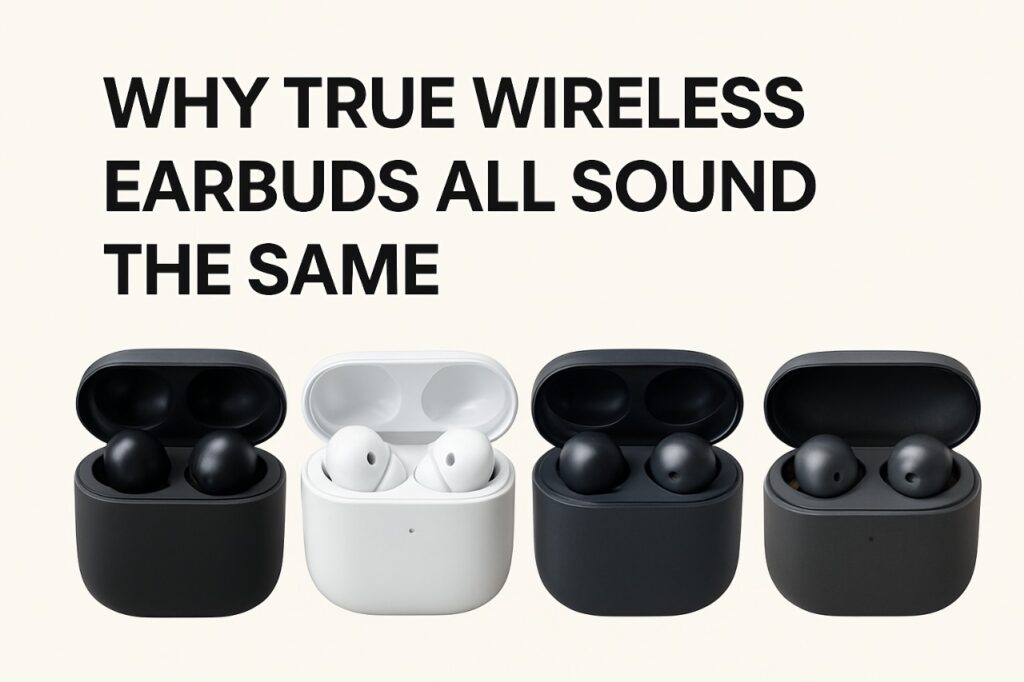
Ever notice how switching between different true wireless earbuds barely changes your listening experience?
Different brands, different designs — yet somehow the same sound: boosted bass, sharp treble, and a slightly “processed” texture.
It’s not in your head. In 2025, most true wireless earbuds genuinely do sound alike — and there are clear technical reasons behind this growing similarity.
🎧 The Core Insight
We’ve entered an era where most true wireless earbuds share the same audio blueprint.
Brands — whether budget or premium — rely on:
- the same 6–10 mm dynamic drivers,
- similar amplification limits,
- the same Bluetooth chipsets,
- and pre-tuned EQ curves designed for mainstream consumers.
And that mainstream tuning almost always means:
- Boosted bass → instantly impressive
- Elevated treble → fake sense of “detail”
- Recessed mids → vocals pushed back
It’s a tuning designed to perform well in quick demos, online reviews, and crowded stores.
Not a tuning designed for accuracy.
Even when brands talk about “custom chambers,” “dual drivers,” or “AI tuning,” the real differences often come down to tiny DSP changes — not hardware breakthroughs. Underneath the fancy marketing, the sound signatures sit only a few steps apart.
⚙️ Why They All Blend Together
- Shared Components
Most companies buy drivers, Bluetooth chips, and DSP modules from the same suppliers: Qualcomm, BES, Realtek, and Airoha.
Different branding — same internal engine. - Safe, Mass-Market Tuning
Companies avoid unique sound signatures because niche tuning risks negative reviews.
Safe = more sales. - Bluetooth Limitations
Codecs like SBC, AAC, or even LDAC compress audio.
This compression removes micro-detail, flattening the overall signature — making everything sound similar. - Heavy DSP Processing
Small earbuds have tiny drivers and tiny amps.
To compensate, manufacturers rely on DSP to:
- boost bass
- tame harsh peaks
- smooth out distortion
But DSP homogenizes the sound — everything becomes “pleasant,” but nothing becomes “unique.”
As one audio engineer on Reddit put it:
“You can only do so much with a 6mm driver, 2 mW amp, and a Bluetooth pipe.”
Even top brands like Sony, JBL, Nothing, or OnePlus follow this formula.
Differences exist — warmer tuning here, brighter highs there — but none create a dramatically unique audio identity.
🎶 Where the Real Difference Lies (Not the Sound)
Ironically, in 2025, the most impressive features of true wireless earbuds are not audio-related.
Real competition is now about:
- ANC performance
- battery life
- comfort + fit
- case design
- latency optimization
- multipoint connectivity
- AI-powered noise filtering for calls
In many models, ANC tuning affects your perception of sound more than the driver itself.
A slightly stronger low-frequency cancellation can trick your brain into thinking bass improved — even when the driver hasn’t changed at all.
And when people say one brand “sounds better,” it’s often because:
- it’s slightly louder,
- the DSP is cleaner,
- or the fit creates a tighter seal, boosting bass naturally.
The driver didn’t do the magic — your ear canal did.
🧩 Key Takeaways
- Most true wireless earbuds use similar hardware, drivers, and chipsets.
- Bluetooth compression limits true high-fidelity audio.
- Differences are often small DSP tweaks, not major acoustic changes.
- ANC, fit, and seal shape perceived audio more than the speaker driver.
- For actual sound improvement, look for better codecs (LDAC, aptX Lossless) and proper ear tip fit.
💬 Vibetric Verdict
Vibetric Verdict: The era of truly unique-sounding true wireless earbuds is fading. Until brands make bolder tuning decisions or Bluetooth leaps forward, most earbuds will continue chasing the same “safe” and familiar sound.
Great for convenience.
Not great for individuality.
🔗 Stay in the Loop
We don’t sell hype — we explain it.
- Follow @vibetric_official for grounded audio insights, unbiased product breakdowns, and honesty you won’t get from marketing pages
- Bookmark vibetric.com to stay ahead of the tech curve.
- No hype. No bias. Just facts — the Vibetric way.
💬 What’s your take on this?
The comment section at Vibetric isn’t just for reactions — it’s where creators, thinkers, and curious minds exchange ideas that shape how we see tech’s future.
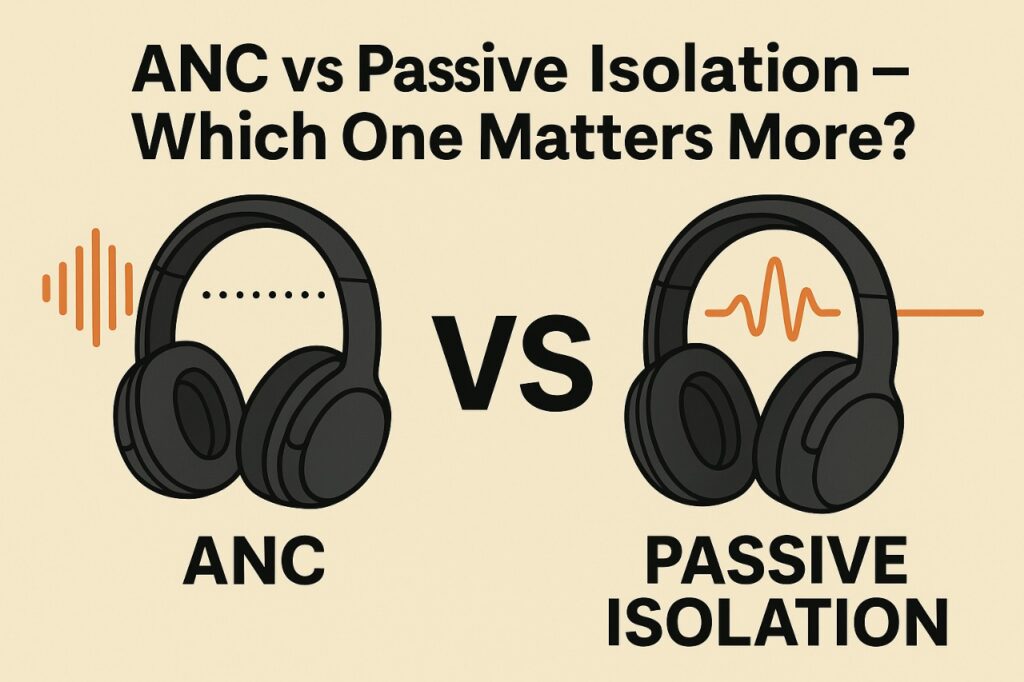
ANC vs Passive Isolation — Which One Matters More?
ANC vs Passive Isolation — Which One Matters More? Silence in headphones isn’t created by magic. It’s created by physics — one
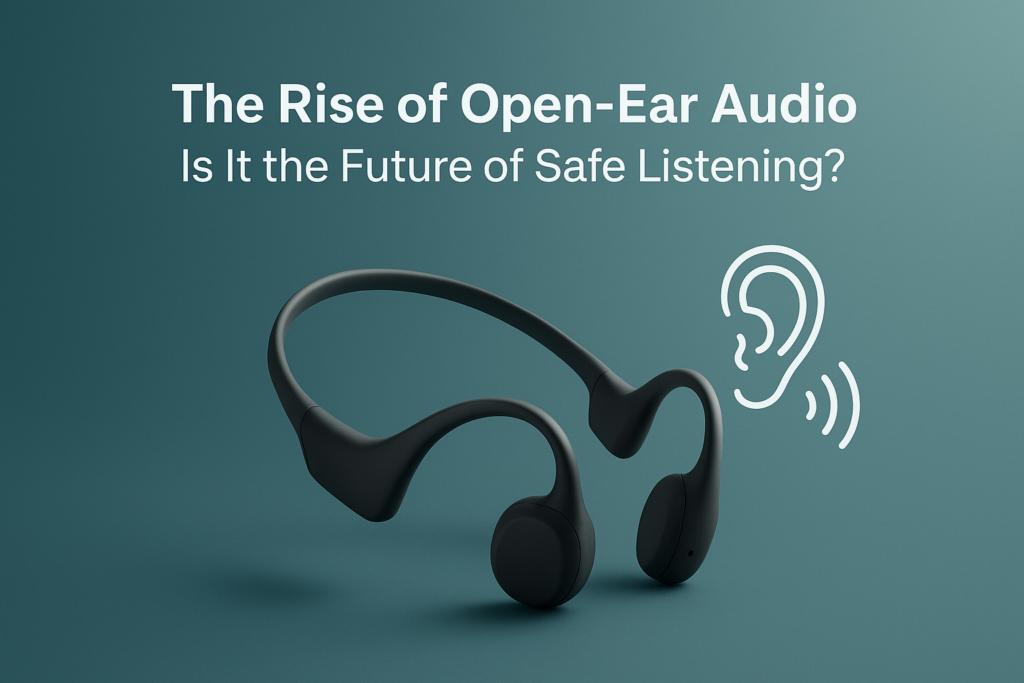
The Rise of Open-Ear Audio: Is It the Future of Safe Listening?
The Rise of Open-Ear Audio: Is It the Future of Safe Listening? We’ve entered a moment in personal audio where excitement and