
Why Thin Doesn’t Always Mean Better in Laptops
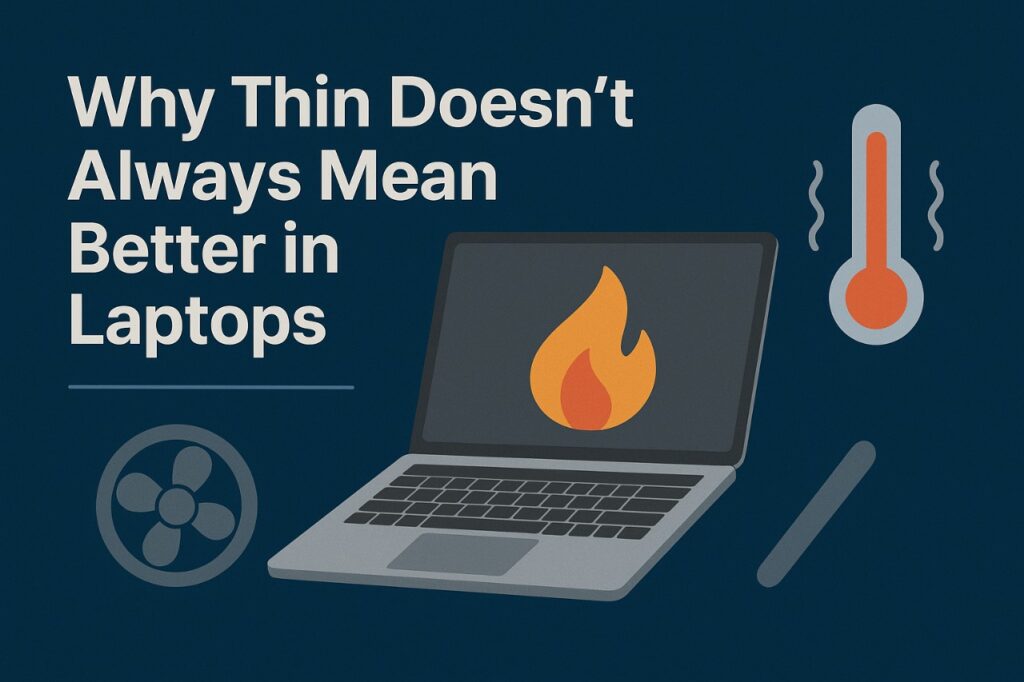
In the race to make laptops thinner, thin laptop performance has quietly become the trade-off no one talks about. Brands have spent years perfecting sleek designs, forgetting one crucial truth — physics still applies. A slim, premium chassis might look impressive on the shelf, but once you start gaming, editing, or even video calling, that elegance often turns into a thermal nightmare. What began as an engineering marvel has now turned into an obsession — thinner laptops keep selling, even when real performance falls behind.
⚙️ The Core Problem
Every generation, laptops get lighter, fans get smaller, and processors get hotter.
To achieve that under-15mm look, brands sacrifice airflow, upgradeability, and even battery capacity — all for aesthetics.
The result? You get a stunning machine that struggles to sustain its own power when pushed.
Reddit users have a name for it: “the thermal tax.” You pay more for style, then lose performance because your CPU throttles within minutes.
As one user put it:
“My ultra-slim i7 runs like an i3 after 10 minutes of gaming.”
It’s not that thin laptops are bad — it’s that marketing hides the trade-offs. Without enough room for proper heat dissipation, even top-tier chips can’t perform consistently. Thin laptop performance looks great in benchmarks — until you actually start using it.
🔋 The Hidden Costs of Thinness
That ultra-slim design comes at a real price:
- Smaller batteries: less room means shorter runtimes, especially under heavy loads.
- Soldered components: most thin laptops have RAM and SSDs permanently attached to the board — no upgrades, no repairs.
- Higher heat and louder fans: tiny fans spin harder to compensate for restricted airflow.
- Thermal throttling: as temperatures rise, the system automatically reduces CPU power — sometimes cutting performance by 20–30%.
- Shorter lifespan: consistent heat strain reduces component health over time.
All of these issues are invisible in ads — but painfully clear after a few months of daily use. The pursuit of “thin” has made laptops prettier, not better.
🧠 The Shift in 2025
Thankfully, the narrative is changing. In 2025 laptops, balance is finally being recognized as smarter than minimalism.
Brands like ASUS, Lenovo, and Framework are now reintroducing bulk with purpose — thicker builds with superior cooling systems, modular designs, and larger vents.
Even Apple’s MacBook Air M4 quietly became a few millimeters thicker — and that subtle change delivered dramatically improved sustained performance.
Consumers, too, are waking up. Creators and gamers now prioritize consistent performance over ultra-thin bragging rights. A laptop that runs cooler, lasts longer, and stays quiet is the new definition of premium.
The modern trend isn’t just “how light can it be” — it’s “how long can it last under load.” Thin laptop performance is being redefined, and brands that adapt are finally earning real credibility.
💬 Vibetric Verdict
Vibetric Verdict: A thin laptop might look sleek in photos — but performance needs space to breathe. In 2025, balance is the new luxury.
A well-designed laptop isn’t the one that disappears in your bag — it’s the one that stays reliable when you need it most.
🔗 Stay in the Loop
We don’t sell hype — we explain it.
- Follow @vibetric_official for daily truth checks, performance insights, and real reviews on what matters most.
- No hype. No bias. Just facts — the Vibetric way.
💬 What’s your take on this?
The comment section at Vibetric isn’t just for reactions — it’s where creators, thinkers, and curious minds exchange ideas that shape how we see tech’s future.

8GB RAM Laptops in 2025 — Smart Buy or Short-Term Fix?