
Sony’s Next-Gen Audio Lineup Review — Is the Premium Gap Still Justified?
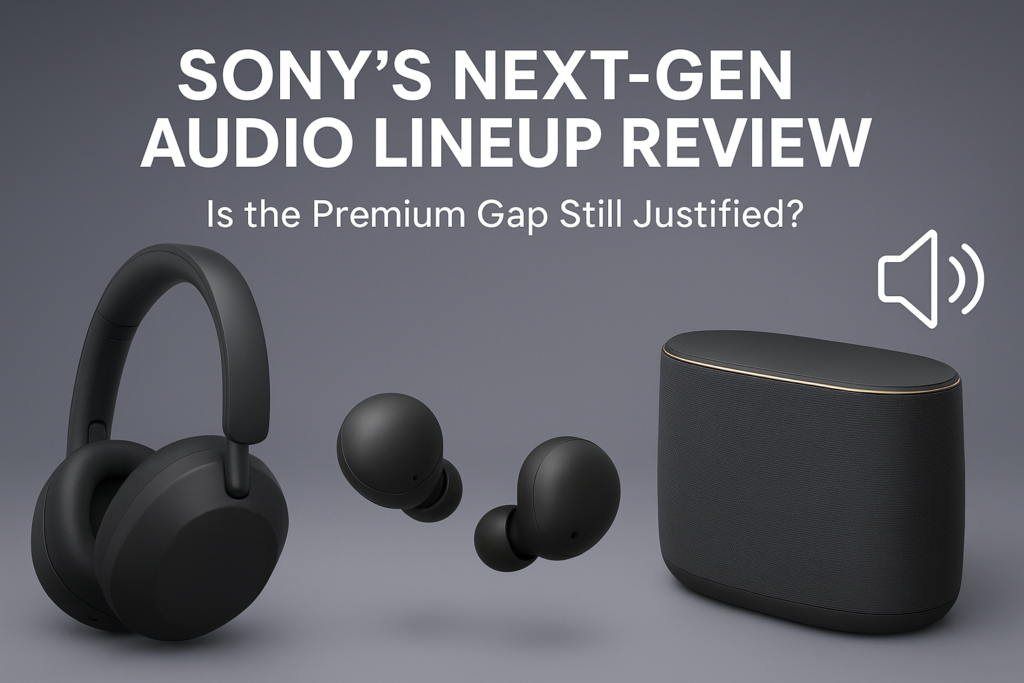
As the audio industry continues to evolve, the line between “premium” and “mainstream” has never been more blurred. For years, Sony has been a mainstay in the high-end audio space, with their flagship headphones, soundbars, and speakers commanding premium prices. But in 2025, amidst a flood of increasingly capable mid-range competitors, is the premium gap still justified? Or has Sony next gen audio lineup become just another expensive option with diminishing returns?
A New Era for Audio
Walking into a high-end electronics store, the display shelf is a sea of sleek, polished designs. Among the offerings, Sony next gen audio lineup 2025—headphones, wireless earbuds, and speakers—seem to command an aura of superiority.
But as a self-proclaimed audio enthusiast, you wonder: Is it really worth the price? This question nags at you as you browse the selection. With competitors like Bose, Sennheiser, and even tech newcomers pushing the envelope, the value proposition of a premium Sony audio product feels more elusive than ever.
What was once a no-brainer for audiophiles and discerning listeners—Sony’s unquestioned dominance in sound quality—is now facing real competition. But is this competition truly closing the gap, or has Sony adapted in a way that keeps it ahead?
Big Reveal: The Truth Behind the Premium Pricing
Sony next gen audio lineup 2025 promises upgrades across the board—new noise-canceling technology, enhanced battery life, and immersive sound experiences. But the burning question remains: Are these changes enough to justify the premium pricing? Let’s break down the latest releases—like the WH-1000XM5 headphones, the SRS-RA5000 speaker, and the LinkBuds S—and see how they measure up to competitors in today’s rapidly evolving audio market.
Deep-Dive Explanation
Misconceptions: What We’ve Been Led to Believe About Sony’s Premium Audio
For years, Sony’s audio lineup has been marketed as the gold standard, often leading consumers to assume that higher prices equate to better sound quality. The reality is more nuanced. As the tech industry, in general, advances—especially with AI-powered sound calibration and spatial audio technologies—the gap between premium and mid-range audio products has narrowed. Sony’s 2025 audio lineup may offer some incredible features, but in many cases, these features may not provide a noticeable improvement for the average listener.
Technical Reality: How Sony’s New Tech Measures Up
When it comes to Sony next gen audio lineup, the real innovation lies in the engineering. The WH-1000XM5, for example, builds on the brand’s renowned noise-canceling technology, adding a new chip that adjusts the sound based on your environment and improves battery life. But while these are notable upgrades, they may only benefit a small segment of users. Similarly, the SRS-RA5000 speaker offers 360 Reality Audio for an immersive listening experience, but the setup required to enjoy its full potential might make it less practical for casual listeners. Sony’s premium audio products continue to push boundaries in specific areas, but some of these features may not justify the price tag for everyone.
Industry Behavior: The Premium Strategy
Sony’s 2025 audio lineup exemplifies a shift towards exclusive, tech-heavy products. This strategy is designed to appeal to audiophiles and those who want the latest and greatest, with features like proprietary codecs (LDAC, DSEE Extreme) and cutting-edge sound technologies. However, the challenge is that these products require an ecosystem to truly shine, meaning consumers must buy into the full suite of Sony devices to fully leverage its advantages. Meanwhile, competitors like Bose and Apple are catching up with more affordable alternatives that still provide excellent sound quality, making it harder for Sony to justify the premium price.
Future Trajectory: What’s Next for Sony’s Audio Tech?
Looking toward the future, Sony’s audio lineup 2025 will likely continue to focus on advanced sound technologies—especially spatial audio and AI-based customization. However, the premium segment will face growing pressure from mid-range competitors offering similar performance at lower prices. The next few years may also see Sony incorporating more sustainable materials and further enhancing user-friendly features like battery life and comfort, as the market demands more eco-conscious and accessible premium audio products.
Real-World Examples: Does the Premium Hold Up?
Example 1: The WH-1000XM5 vs. Bose 700
Both are leaders in noise-canceling technology, but while Sony’s WH-1000XM5 offers better battery life and slightly more immersive sound for audiophiles, the Bose 700 excels in microphone clarity and call quality, making it the better all-around choice for business users.
Example 2: SRS-RA5000 vs. Bang & Olufsen Beosound 1
The RA5000 delivers an expansive soundstage with 360 Reality Audio, while the Beosound 1 boasts a luxurious design with rich, full-bodied sound. However, the B&O’s price tag is far higher, leading consumers to question whether the incremental increase in sound quality justifies the premium.
Quick Snapshot Table:
| Product | Key Feature | Price Range | Sound Quality | Best For |
|---|---|---|---|---|
| WH-1000XM5 | Industry-Leading ANC | $350–$400 | Excellent | Frequent Travelers |
| Bose 700 | Superior Microphone Tech | $380 | Great | Call-heavy Users |
| SRS-RA5000 | 360 Reality Audio | $600 | Rich, Immersive | Home Audio Enthusiasts |
| Beosound 1 | Premium Design | $1,000+ | Full-bodied | Design-Lovers & Audiophiles |
Data-Backed Insight: Audio Innovation in 2025
The trend toward spatial audio and AI-based sound optimization is more than just a marketing gimmick. Immersive technologies like 360 Reality Audio are projected to grow by 30% annually through 2025. However, mainstream listeners still prioritize simpler, intuitive audio solutions that deliver superior sound quality without the need for additional hardware or specialized content.
Human Impact: The Emotional Cost of Premium Audio
For many, audio isn’t just a product—it’s a deeply emotional experience. Sony’s premium audio lineup seeks to enhance that experience with features like adaptive sound control and high-end noise cancellation. But at what cost? The pressure to buy into an expensive ecosystem can lead to decision fatigue. Does owning the latest Sony audio product truly improve one’s daily listening experience? Or is it the psychological satisfaction of having the “best” that people are after?
Solution Framework: Who Should Buy Sony’s Premium Audio?
- Everyday Users: If you need solid, reliable audio, Sony’s premium offerings may feel like overkill. Consider a mid-range alternative like the Sony WH-1000XM4 or Bose QuietComfort 45.
- Creators/Professionals: The enhanced sound accuracy and noise cancellation make the WH-1000XM5 and SRS-RA5000 ideal choices for professionals.
- Gamers/Enthusiasts: While Sony’s audio products excel in sound, gaming-specific brands like SteelSeries or Razer might offer better value at a lower price point.
- Future-Proof Buyers: If you’re after cutting-edge sound technologies, Sony’s 2025 audio lineup offers top-tier features like 360 Reality Audio.
Counter-Perspective: When Is Sony’s Premium Audio Not Worth It?
For casual listeners, Sony’s premium audio products might feel like a luxury that offers diminishing returns. If you’re primarily using headphones for commuting or casual listening, a more affordable model may meet your needs just fine. Similarly, if you don’t have access to 360 Reality Audio content, the RA5000 speaker’s premium price may not be justified.
Reddit / User Reality Section
Reddit users often provide the clearest insights into the real-world usage of Sony’s audio products. Common feedback includes mixed feelings—while many audiophiles praise the superior sound quality, others question whether the price is truly worth it, especially when cheaper alternatives offer similar sound quality.
User Feedback Table:
| User Type | Feedback Summary | Relevance |
|---|---|---|
| Audiophile | "The sound quality is incredible, but not worth the price unless you’re really into spatial audio." | High |
| Everyday Listener | "The WH-1000XM5 is overkill for casual use, but the noise cancellation is great." | Medium |
| Gamer | "Great sound, but not as tailored to gaming as I’d hoped." | Low |
Across Reddit, users have mixed feelings about Sony’s premium products. While audiophiles praise the superior sound quality, others feel that the incremental improvements don’t justify the price increase over mid-range models. For casual listeners or those not investing in the Sony ecosystem, the WH-1000XM5 or SRS-RA5000 may seem like overkill, especially when alternatives provide similar features at lower prices.
What’s on the Horizon for Premium Audio?
By 2025, Sony next gen audio lineup will likely continue pushing the boundaries of AI and advanced sound processing. As competitors like Bose and Apple improve their offerings, Sony will need to innovate further, focusing on battery life, comfort, and sustainable materials. The demand for immersive audio—especially spatial audio—will continue to grow, putting more pressure on Sony to stay ahead of the curve.
Closing Narrative: Returning to the Core Question
As you leave the store, you’re left with the same lingering thought: Is it worth it? While Sony’s premium audio products still deliver outstanding quality, the real question isn’t whether they’re good—but whether they offer true value in a world full of capable alternatives. For those deeply invested in the world of audio, the answer remains clear. But for the everyday listener, the premium gap is becoming harder to justify.
Vibetric Ending
Sony’s audio lineup in 2025 showcases the company’s unyielding commitment to innovation, but the true value may lie in the user’s willingness to embrace its premium price tag. The question is not whether Sony’s audio is still elite—it’s whether it’s the best choice for you.
Want to See How Sony’s Audio Lineup Will Evolve in the Future?
- Follow vibetric_official on Instagram for more in-depth reviews and tech insights.
- Bookmark Vibetric.com for the latest updates on next-gen audio and tech trends.
- Stay tuned for our upcoming review of Bose’s latest noise-canceling headphones!
Frequently Asked Questions About Sony’s Next-Gen Audio Lineup (2025)
- Are Sony’s 2025 audio products worth the premium?
For audiophiles and those who prioritize advanced features like noise cancellation, spatial audio, and superior sound quality, Sony’s premium lineup still offers great value. However, casual listeners may find mid-range alternatives more cost-effective for everyday use. - What’s the difference between Sony WH-1000XM5 and Bose 700?
Both offer excellent noise cancellation, but the WH-1000XM5 is designed with better sound quality and longer battery life, while the Bose 700 excels in microphone clarity and call quality, making it a better choice for business users. - Is 360 Reality Audio worth it in Sony’s speakers?
360 Reality Audio provides an immersive sound experience, but its full potential is only realized with compatible content and specific setups. For casual listeners, this feature may feel like a luxury rather than a necessity. - What improvements have been made in Sony’s WH-1000XM5 headphones?
The WH-1000XM5 includes new adaptive sound control, enhanced ANC (Active Noise Cancellation), and improved sound quality. Battery life has also been extended, but the overall user experience may not be dramatically different for those upgrading from previous models. - Does Sony’s new speaker lineup justify the premium pricing?
While the SRS-RA5000 offers an impressive soundstage with 360 Reality Audio, the high price tag might not be justified for users who are not heavily invested in the immersive audio ecosystem. For most, competitors like Bose offer excellent sound quality at a lower price. - Can I get comparable audio quality to Sony’s premium products at a lower price?
Yes, several brands like Bose, Sennheiser, and JBL provide excellent audio quality, especially for mid-range listeners, often at a more affordable price. The Sony WH-1000XM4 or Bose QuietComfort 45 are good alternatives without sacrificing sound quality. - What’s the difference between Sony’s noise cancellation and other brands like Bose?
Sony’s noise cancellation technology, especially in the WH-1000XM5, is known for its adaptive capabilities, adjusting to your environment. Bose offers equally impressive noise cancellation, but Sony tends to have an edge in customizability and long battery life. - How does Sony’s sound quality compare to other high-end audio brands?
Sony is known for its precision and clarity in sound reproduction, especially in its premium lineup. However, brands like Bang & Olufsen and Sennheiser might offer more refined sound for audiophiles, while Sony delivers a balance of high-quality sound with added tech features. - Is Sony’s 2025 lineup future-proof?
With advanced features like 360 Reality Audio, AI-powered sound adjustments, and compatibility with future streaming platforms, Sony’s audio products are designed with future technology in mind. However, as competitors innovate, Sony’s lineup will need constant refinement to stay ahead. - Are Sony’s 2025 products worth upgrading from older models?
If you’re already using something like the WH-1000XM4 or an older SRS speaker, the improvements in 2025 models are incremental rather than revolutionary. The decision to upgrade depends on whether you prioritize the latest features like enhanced ANC, sound calibration, or spatial audio.
What’s your take on this?
At Vibetric, the comments go way beyond quick reactions — they’re where creators, innovators, and curious minds spark conversations that push tech’s future forward.

Mac vs Windows in 2025: A Global Performance & Value Breakdown
Mac vs Windows in 2025: A Global Performance & Value Breakdown In 2025, the Mac vs Windows debate goes beyond preference; it’s
Why Ultra-Wide Cameras Matter More Than Zoom
Why Ultra-Wide Cameras Matter More Than Zoom In 2025, smartphone photography is evolving beyond megapixels and optical zoom bragging rights. Ultra-wide lenses,