
How Global Chipset Competition Is Changing Phone Prices
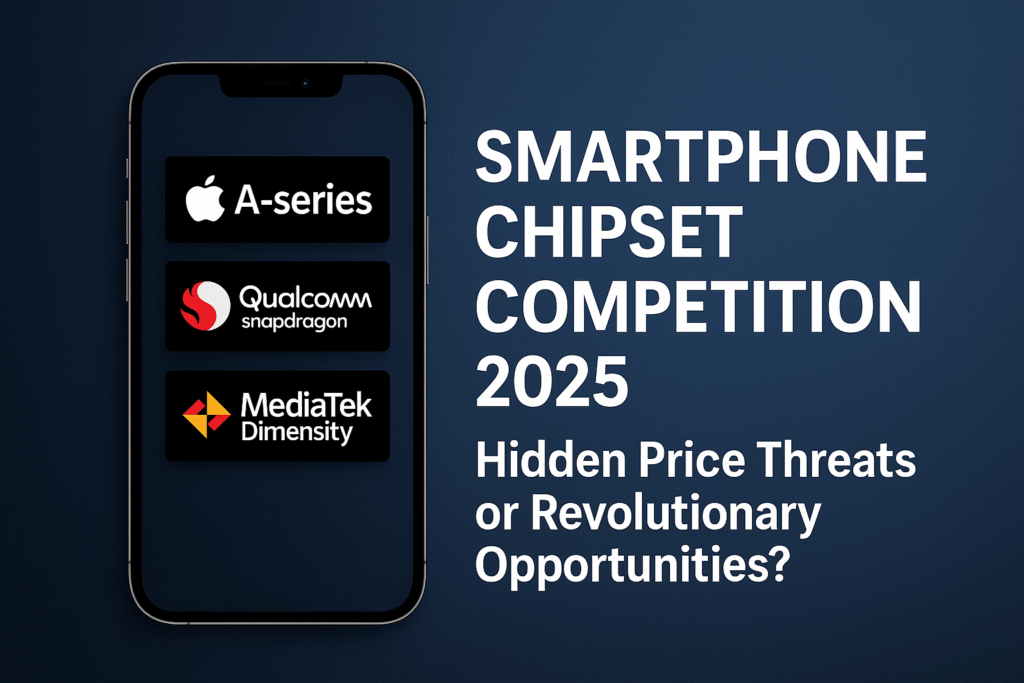
The price of your next smartphone may not just depend on the brand or camera features anymore—chipsets are emerging as the new pricing lever. As global smartphone chipset trends evolve, competition between key players like Apple, Qualcomm, and MediaTek is driving shifts in the way smartphones are priced.
A few years ago, higher-end chips equated to higher prices, but today, the battle between chipmakers is rebalancing that equation. With rising performance, better energy efficiency, and new 5G capabilities, chipsets are changing the cost structures of smartphones in unexpected ways. But how exactly does this competition affect what you’ll pay for your phone in 2025?
Scene-Setter
Imagine walking into a phone store, or scrolling through an online marketplace, deciding between two models. On the surface, they seem similar—both sleek with high-resolution displays and excellent cameras. But it’s the chipset inside that could be the deciding factor. Apple’s A-series, Qualcomm’s Snapdragon, and MediaTek’s Dimensity chips are all vying for dominance, and while their influence is invisible on the surface, it directly impacts performance—and price. As more chipmakers enter the fray, consumers are faced with more choices. Will chip competition make flagship devices more affordable, or are we headed toward even more expensive tech?
Big Reveal / Core Problem
The rise of mobile chip competition is reframing the phone pricing model. For years, consumers could expect that a higher-end phone would come with a higher price tag simply because it was a “premium” device. However, as chipmakers like Qualcomm, MediaTek, and Apple push their technologies forward, the relationship between chipset power and phone cost is becoming more complex. Are we seeing a reduction in prices thanks to competition, or is it simply making high-end devices more feature-packed and expensive?
The truth lies in how these companies are pricing and advancing their technologies. Chip manufacturers not only affect performance but also impact the total cost structure of a phone, making the overall pricing model less intuitive than ever.
Deep-Dive Explanation
1. Misconceptions: What People Get Wrong About Smartphone Chips
Most consumers think that a more powerful chipset means a more expensive phone, but this isn’t always the case. While flagship chips like Apple’s A-series or Qualcomm’s Snapdragon 8-series are generally more expensive, the chipmarket has become more segmented. Several misconceptions surround the idea of what makes a premium smartphone chipset:
- Misconception 1: “The more cores and higher GHz, the better the chipset.”
While multiple cores and higher clock speeds (GHz) are important for certain tasks, they don’t necessarily translate to better real-world performance. Chips today rely heavily on AI and machine learning for optimized performance, meaning that a single-core can be just as impactful, if not more so, than a multi-core setup. - Misconception 2: “Flagship phones always come with the best chipsets.”
Not all mid-range phones with Snapdragon 7-series or MediaTek Dimensity chips perform worse than their flagship counterparts. Some smartphones from OnePlus or Realme now offer near-flagship performance at significantly lower prices, thanks to newer, more efficient chips. - Misconception 3: “Exynos-powered phones are always inferior to Snapdragon devices.”
Samsung’s Exynos chips have been criticized in the past for lagging behind Qualcomm, but recent releases show significant improvement. In fact, the Exynos 2200 is closing the performance gap, offering a competitive alternative to Snapdragon at a lower price point.
2. Technical Reality: How Chipset Competition Shapes Prices
In terms of engineering, the phone chipset is the heart of the device. It dictates not only speed and performance but also power efficiency, connectivity, and overall user experience. Let’s break down the key players in the market:
- Apple’s A-series Chips
Apple has long led the charge with its A-series chips, including the A16 and the recently launched A17 Bionic. These chips are known for top-tier performance, combining high efficiency with incredible single-core processing power.
Impact on Pricing: Since Apple manufactures its own chips, it retains control over pricing, making iPhones typically more expensive than similar Android devices. However, this integration of software and hardware allows Apple to keep the device experience cohesive without overspending on the chip alone. - Qualcomm Snapdragon Chips
Qualcomm is the dominant player in the Android smartphone market. The Snapdragon 8-series remains the go-to chipset for premium phones from brands like Samsung, Xiaomi, and OnePlus. Snapdragon chips are known for their balanced performance, 5G capabilities, and superior camera optimization.
Impact on Pricing: Qualcomm’s chips, especially at the high end, come at a premium cost that often pushes phone prices higher. However, with mid-tier Snapdragon chips (Snapdragon 7-series and 6-series), Qualcomm has made mid-range phones far more affordable without sacrificing performance. - MediaTek Dimensity Chips
MediaTek has recently turned heads with its Dimensity chips, which now compete directly with Qualcomm in the mid-range and premium segments. The Dimensity 1000+ and Dimensity 1200 offer near-flagship-level performance but at a fraction of the price of Qualcomm’s flagship counterparts.
Impact on Pricing: MediaTek’s aggressive pricing strategy has lowered the cost of smartphones in the budget and mid-range segments, bringing high-performance options to consumers without the hefty price tag associated with Snapdragon chips.
3. Industry Behavior: Strategic Decisions and Pricing Tactics
The behavior of chipmakers significantly influences the pricing structure of smartphones. While Apple’s in-house chips result in higher production costs, Qualcomm’s reliance on Android brands and MediaTek’s market push for budget-friendly phones reveal different pricing strategies. Here’s how each company is adapting:
- Apple’s Vertical Integration
Apple’s focus on vertical integration—designing both the chip and the software—enables them to sell their A-series chips at a higher price point while maintaining control over the overall user experience. This integration helps Apple charge a premium for iPhones, making the device ecosystem more seamless. - Qualcomm’s Tiered Strategy
Qualcomm offers a tiered pricing structure for its chips. The higher-end Snapdragon 8-series powers flagship phones, while the 7-series and 6-series bring solid performance to mid-range and budget phones. This allows Qualcomm to capture a larger share of the smartphone market by offering chips that fit a wide variety of budgets. - MediaTek’s Aggressive Push for Market Share
MediaTek has been making a strategic push to capture more of the mid-range market with its Dimensity chips. By offering high-performance chips at a lower cost, MediaTek is able to undercut Qualcomm and provide value-driven options for consumers.
4. Future Trajectory: Where Smartphone Chipsets Are Heading
As we move into 2025 and beyond, we can expect several key trends in the chipset market:
- 5G Optimization: 5G chips will continue to evolve, improving both speed and power efficiency, which will help manufacturers balance performance with battery life.
- AI-Powered Chipsets: With the increasing need for AI in smartphone cameras, voice assistants, and user interfaces, AI-powered chips will become a key selling point for next-gen phones.
- Foldable Phones & New Form Factors: As foldable phones gain traction, chipset designs will need to adapt to unique form factors and screen configurations.
- Smaller, More Efficient Chips: Expect more energy-efficient chips that generate less heat and improve battery life without compromising performance.
Real-World Examples: How Chipsets Affect Consumer Decisions
Scenario 1: Budget-Friendly MediaTek Phones
A user looking for a budget phone with decent performance might opt for a MediaTek Dimensity 800 powered device. This smartphone will offer 5G connectivity, solid battery life, and a good camera, all at a fraction of the price of a Snapdragon 8-series phone.
Scenario 2: Premium Qualcomm-Powered Device
A gamer or power user may choose a Qualcomm Snapdragon 8-series phone for its superior processing power and graphics performance, even if it means paying more. The tradeoff is higher performance for gaming, multitasking, and overall smoother experiences.
Data-Backed Insight
- Apple’s A-series chips lead in single-core performance, often outperforming Snapdragon and Exynos in raw speed.
- MediaTek chips offer a 30-40% reduction in cost compared to Qualcomm Snapdragon chips for mid-range devices.
- 5G-capable chipsets are now 30% cheaper than in 2020, allowing more affordable smartphones to feature next-gen connectivity.
Human Impact: How Chipset Competition Affects Users
As the competition heats up, the main beneficiaries are consumers, who are now seeing more value-packed options across the price spectrum. For mid-range buyers, MediaTek’s Dimensity series brings affordable performance, while Qualcomm and Apple’s A-series continue to set the bar for high-end devices. As chip prices stabilize and more players enter the market, consumers can expect to get more power for their dollar.
Solution Framework / Buyer Guide
| User Type | Recommended Model | Key Features | Pros | Cons |
|---|---|---|---|---|
| Budget-Conscious | Xiaomi Redmi Note 11 (MediaTek) | 5G, MediaTek Dimensity 810, decent camera | Affordable, reliable | Lower GPU performance |
| Power Users | OnePlus 9 Pro (Snapdragon 888) | Snapdragon 888, 120Hz AMOLED display | High performance | Higher cost |
| Flagship Seekers | iPhone 14 Pro (Apple A16) | A16 Bionic chip, ProMotion display | Optimized ecosystem | Expensive |
| Future-Proof Buyers | Samsung Galaxy S22 Ultra (Exynos) | 5G, top-tier cameras, S Pen support | Premium features | Heavier |
Data-Backed Insight: What the Numbers Say
- According to Newzoo, cloud gaming subscriptions are expected to grow by 40% in 2025, driven by the popularity of services like Xbox Game Pass and Nvidia GeForce Now.
- NPD Group reports that despite the rise of cloud gaming, 70% of gamers still prefer to use local hardware for their primary gaming experience.
- The World Economic Forum estimates that by 2026, global internet infrastructure will enable 10-20ms latency for cloud gaming, making it competitive with local hardware in terms of responsiveness.
Human Impact: How the Gaming Landscape Affects Us
For everyday gamers, the choice between cloud gaming vs local hardware isn’t just about technical specifications—it’s about lifestyle. Cloud gaming offers accessibility, flexibility, and affordability. It means not having to upgrade your hardware every year to keep up with the latest games. On the other hand, local hardware provides the full gaming experience, one that immerses you in the world you’re playing, offering unrivaled sound, graphics, and control.
The future of gaming will require a balance between these two worlds, allowing gamers to decide what works best for them, whether it’s the freedom of the cloud or the power of local hardware.
Counter-Perspective
Not every consumer needs the most advanced chipset. Casual users may find budget models powered by MediaTek or lower-end Snapdragon chips perfectly sufficient. For them, the premium price attached to Apple’s A-series or Snapdragon 8-series might not offer significant value in terms of actual usage.
Reddit / User Reality Section
Across smartphone forums on Reddit, users share diverse opinions on chipset impacts.
| User Type | Feedback Summary | Relevance |
|---|---|---|
| Casual Users | "Budget MediaTek phones perform fine for daily use." | High |
| Gamers | "Snapdragon chips offer smoother gaming, but it's pricey." | Medium |
| Apple Fans | "A-series is worth the premium for performance." | High |
| Budget Shoppers | "MediaTek's affordability outshines performance." | High |
While Apple fans swear by the A-series for its top-tier performance, budget-conscious buyers are opting for MediaTek-powered devices without feeling shortchanged. Gamers still see value in the Snapdragon chips, but some feel the pricing is excessive for non-enthusiasts.
Future Forecast
As chipmakers like Qualcomm and MediaTek innovate further, 2025 will see faster, cheaper, and more energy-efficient processors that will likely push even more affordable devices into the mid-range market. As 5G becomes ubiquitous, 5G chipsets will become mainstream, further leveling the playing field.
Closing Narrative
As you look at your next phone purchase, it’s clear that chipsets are becoming a major determinant of both performance and price. What was once the domain of the tech elite is now within reach for the everyday user, thanks to fierce chipset competition. What does that mean for you? A smarter, more strategic buying decision and a brighter future of accessible tech.
Vibetric Ending
At Vibetric, we stay ahead of chipset trends to bring you the most informed insights into the future of mobile tech. Your next phone’s chipset is about to make a bigger impact on your experience than ever before.
Ready to Embrace the Next Wave of Smartphone Chipsets?
- Follow vibetric_official on Instagram for real-time updates on smartphone trends and chipset innovations.
- Bookmark Vibetric.com for continuous expert analysis and in-depth breakdowns of the newest chipset technologies.
- Stay connected with Vibetric for ongoing expert opinions and a closer look at the future of mobile tech.
Frequently Asked Questions About Smartphone Chipsets
- What is a smartphone chipset?
A chipset is the main processor of a smartphone, responsible for tasks such as running apps, managing memory, and controlling wireless communication. - Why are smartphones so expensive with high-end chips?
High-end chipsets offer top-tier performance, AI optimization, and superior camera or gaming capabilities, which increase manufacturing costs. - Does MediaTek make bad chips?
No, MediaTek offers powerful and cost-effective options for budget and mid-range smartphones, though some premium devices still prefer Qualcomm or Apple chips. - Which chipset is best for gaming?
Qualcomm Snapdragon 8-series and Apple’s A-series are the best for gaming, offering robust processing power and graphics performance. - Do Apple’s A-series chips justify the high iPhone prices?
Yes, the performance and integration of Apple’s chips with iOS provide a cohesive user experience that contributes to the premium pricing. - Will phone prices go down with more chipset competition?
Yes, as chip competition heats up, mid-range phones are becoming more affordable, but flagship models may see continued pricing pressure due to advanced features. - Are 5G phones more expensive because of the chipset?
Initially, 5G chipsets were expensive, but as the technology matures, more affordable 5G options are becoming available. - Can I get a good phone under $300?
Yes, MediaTek-powered phones and mid-range Snapdragon devices offer solid performance under $300. - Which chipset is better for photography?
Qualcomm’s Snapdragon 8-series and Apple’s A-series lead in camera optimization and AI processing for photography. - Do I need a premium chipset for everyday use?
Not necessarily. Budget chipsets like MediaTek’s Dimensity and Snapdragon 6-series offer great value for everyday tasks.
What’s your take on this?
At Vibetric, the comments go way beyond quick reactions — they’re where creators, innovators, and curious minds spark conversations that push tech’s future forward.
Why 5G Still Feels Overhyped in India
Why 5G Still Feels Overhyped in India For years, telecom brands have promised that 5G in India would change everything — instant

The Great Audio Shift: Why Comfort, Algorithms, and Acoustics Matter More Than Hardware
The Great Audio Shift: Why Comfort, Algorithms, and Acoustics Matter More Than Hardware The shift didn’t happen in a lab, a keynote