How Smartphone Brands Quietly Recycled the Same Ideas in 2025
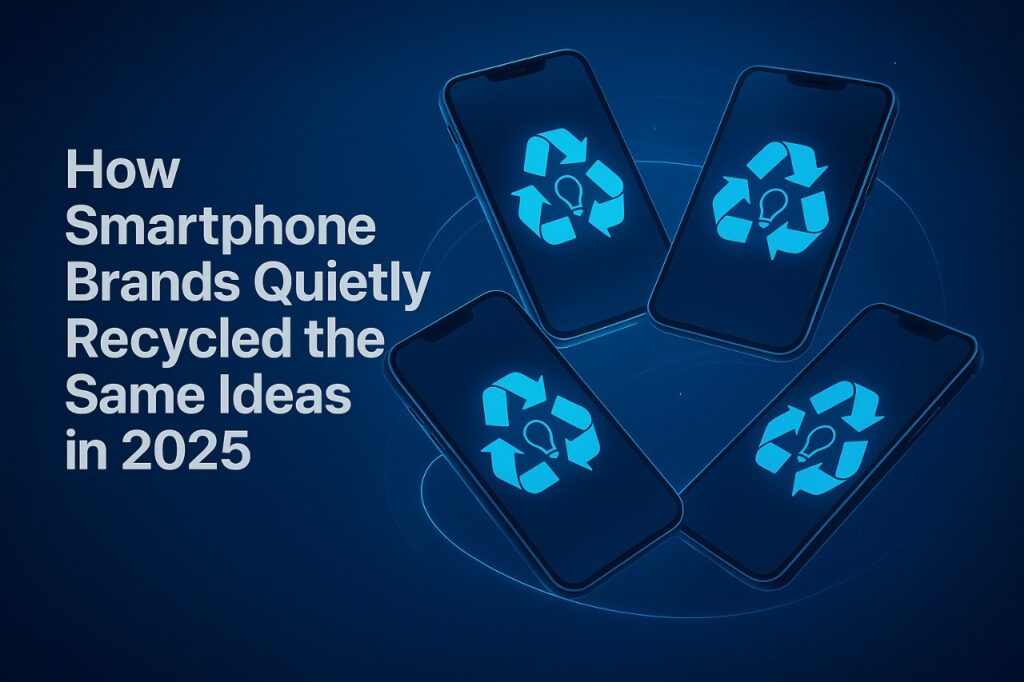
Smartphone brands 2025 have quietly entered their recycling era — where every “new” launch feels strangely familiar. The once-innovative tech world is now filled with repackaged designs, reused camera sensors, and rebranded AI features. What looks like progress is often just clever rebranding, and this blog uncovers how smartphone makers are repeating old ideas with modern polish.
⚙️ The Innovation Slowdown
The golden age of smartphone breakthroughs — foldables, 200MP cameras, ultra-fast charging — has officially peaked. In 2025, smartphone brands have hit a creative plateau.
Instead of revolutionary designs, we now get refinements of old ideas: slightly brighter displays, recycled sensors, rearranged camera islands, and “AI-powered” software tweaks.
On Reddit, one user summed it up perfectly:
“Every phone feels like a remix of last year’s model with an extra AI button.”
That joke captures the reality. Hardware has matured to the point where yearly innovation is minimal, so smartphone brands 2025 are focusing on software ecosystems, cloud integration, and AI branding to stay relevant.
💡 The Real Reason Behind the Recycle
This isn’t a case of industry laziness — it’s a business strategy.
Designing an entirely new chip architecture, display type, or camera system costs billions in R&D. But reusing a proven framework, tweaking materials, and slapping a fresh name on it? Much cheaper — and far safer.
With global sales slowing down and users keeping their phones for longer (often 3–4 years), brands can’t afford big experimental leaps every cycle.
So they’ve shifted to what they call “iterative innovation” — small, marketable changes wrapped in big promises.
It’s a survival tactic that keeps margins healthy while appearing cutting-edge. And with AI in smartphones now being the buzzword of the year, most companies have found the perfect distraction: label every update as “AI-enhanced,” regardless of its actual impact.
🔁 The Subtle Tricks They Use
To keep the illusion of progress alive, brands rely on a few clever tactics:
- Rebranding recycled hardware as “next-gen” (same sensor, new name).
- Cosmetic design refreshes framed as “reimagined form factors.”
- Software tweaks marketed as “AI optimization” or “smart learning.”
- Slightly bigger batteries or one new color promoted as major leaps.
Each trick works because it feels like innovation — until you compare it side-by-side with last year’s model and realize how little has truly changed.
In short: it’s not about invention anymore — it’s about perception management.
🔍 What Still Counts as Real Progress
That doesn’t mean the industry is stagnant. The true innovation in 2025 lies beneath the surface — in chip efficiency, battery chemistry, and long-term software support.
Companies like Qualcomm, MediaTek, and Google are focusing on AI-driven silicon, enabling smarter photo processing and real-time optimization.
Similarly, better software longevity is quietly becoming the new selling point. Brands extending update cycles to five or seven years might not look flashy on stage, but they define real user value.
🧩 Key Takeaways
- Sartphone innovation in 2025 is more refinement than revolution.
- Brands reuse parts and designs to balance cost and consistency.
- AI marketing often disguises recycled hardware and software.
- True innovation happens in efficiency, software, and longevity.
- Don’t buy what’s “new” — buy what’s thoughtfully built.
💬 Vibetric Verdict
Vibetric Verdict: The truth is simple — 2025’s “new” smartphones are mostly old ideas wearing modern clothes.
There’s nothing wrong with refinement — it’s how industries mature — but pretending repetition is revolution only hurts consumer trust.
Maybe honesty is the one upgrade smartphone brands 2025 still need to make.
🔗 Stay in the Loop
Follow @vibetric_officialfor daily truth checks and real-world insights that cut through tech marketing noise.
No hype. No bias. Just facts — the Vibetric way.
💬 What’s your take on this?
The comment section at Vibetric isn’t just for reactions — it’s where creators, thinkers, and curious minds exchange ideas that shape how we see tech’s future.
Midrange Flagships Are Winning — Here’s Why