The Hidden Truth About Smartphone Battery Health in 2025
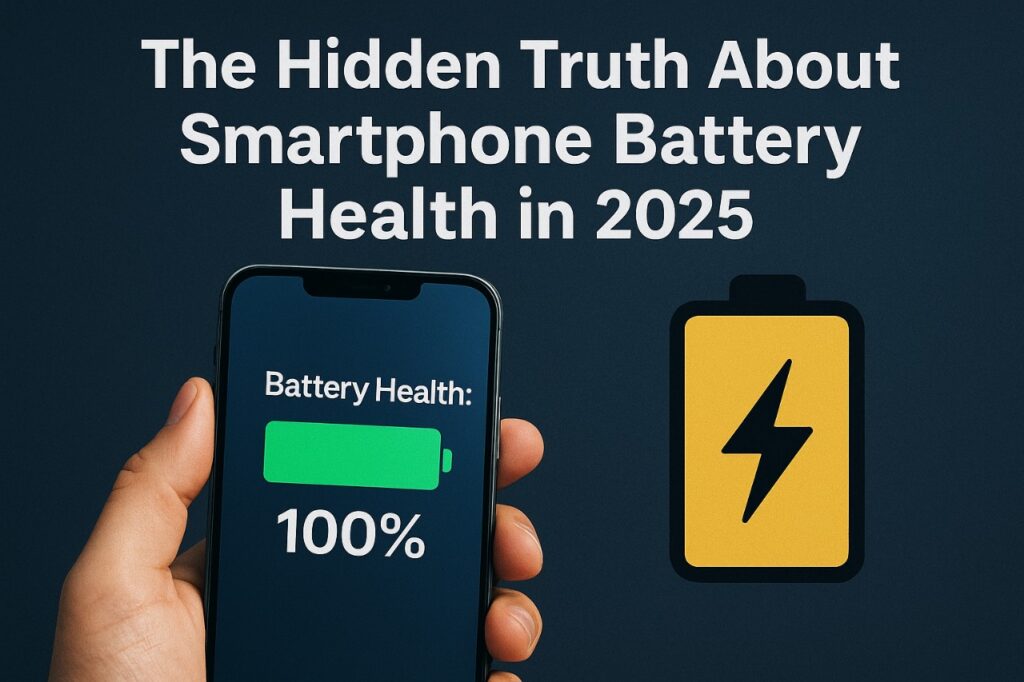
In 2025, your phone proudly displays “Battery Health: 100%” — but that number is more marketing than math.
Behind the polished interface and AI-powered “optimization,” there’s a quiet truth: the data you see about your smartphone battery health in 2025 is designed to keep you reassured, not necessarily informed.
🔋 The Hidden Layer of “Battery Health”
What most brands don’t tell you is that battery health isn’t a precise measurement — it’s an algorithmic estimate.
That “health percentage” is based on charge cycles, voltage stability, and temperature readings, not a direct assessment of the battery’s chemical condition.
This means two phones showing 95% battery health could perform very differently in real-world use.
Some manufacturers even recalibrate stats through software updates, quietly reshaping perception.
One Reddit thread titled “My 2-year-old phone jumped from 87% to 95% after an update” went viral — with users calling it a “battery placebo.”
In short: battery health numbers aren’t lies, but they’re not the full truth either. They’re estimates built to keep users confident in their devices’ longevity, especially as competition in smartphone battery health 2025 has become a key marketing factor.
⚙️ Why Batteries Age Faster Now
Smartphones in 2025 charge faster than ever — 120W, 150W, even 200W.
Yes, it’s impressive. But physics hasn’t changed: fast charging equals more heat, and heat is still the number one enemy of lithium cells.
Manufacturers now include “AI charging” systems that claim to protect your battery by learning your usage habits. Some stop charging at 80% overnight or slow down when heat builds up.
But these systems are more of a safety cushion than a true solution — they manage stress, not remove it.
Even the most advanced AI-powered battery management can’t defy chemistry. Charging your phone multiple times a day, gaming while plugged in, or keeping it warm under sunlight still accelerates cell wear.
Your smartphone battery health in 2025 may look fine on-screen, but internally, microscopic degradation continues with every watt.
🧠 How to Actually Keep It Healthy
Real battery care isn’t high-tech — it’s consistent habits.
- Keep your charge between 20%–80% when possible.
- Avoid charging while gaming — it doubles the heat stress.
- Use original or certified chargers only.
- Don’t panic over small percentage drops — they’re natural.
- Keep your device cool — never leave it in cars or direct sunlight.
Real-world tests prove it: phones that stay below 35°C while charging can last up to 150 more cycles, translating to about six extra months of usable battery life.
💬 Vibetric Verdict
Vibetric Verdict: AI systems and “100% health” stats might make you feel secure — but only mindful habits preserve real longevity.
In 2025, smartphones have evolved dramatically, yet smartphone battery health still depends on basic chemistry. You can’t outsmart physics — but you can outlast it with smarter usage.
🔗 Stay in the Loop
We don’t sell hype — we explain it.
- Follow @vibetric_official for grounded insights on smartphone battery health 2025, real-world endurance tests, and performance truths brands rarely mention.
- No hype. No bias. Just facts — the Vibetric way.
💬 What’s your take on this?
The comment section at Vibetric isn’t just for reactions — it’s where creators, thinkers, and curious minds exchange ideas that shape how we see tech’s future.
Why Thin Doesn’t Always Mean Better in Laptops