
Is Smartphone AI Overrated or the Next Big Shift?
The word “AI” is plastered across every smartphone spec sheet these days. From night photography enhancements to predictive typing and energy optimization, smartphone AI features promise to anticipate user needs and redefine convenience. But amid the marketing noise, it’s worth asking: are these capabilities genuinely transformative, or have we entered a hype loop where every incremental improvement masquerades as intelligence?
Beyond the Buzz: What AI Actually Does in Phones
Smartphone AI features primarily operate in the background, adjusting algorithms to suit context. Computational photography, for instance, combines multiple exposures with AI-driven noise reduction to produce clearer images in low light. Predictive text and autocorrect leverage on-device machine learning to anticipate words, and adaptive battery systems shift resources toward frequently used apps. While impressive, the underlying mechanics are still fundamentally reactive: AI in phones often optimizes what we already do, rather than introducing entirely new behaviors.
User Behavior and Perceived Intelligence
The perception of AI is frequently more psychological than functional. Users notice smoother transitions, sharper photos, or quicker recommendations, and naturally attribute these to “smarter” devices. However, much of this is incremental efficiency—faster app suggestions, minor camera improvements, or background task management. The difference between expectation and reality can skew public perception, making features appear revolutionary even when their impact is modest.
The Industry’s AI Arms Race
Manufacturers are increasingly framing smartphones as AI platforms rather than mere communication tools. Dedicated neural processing units (NPUs) are becoming standard, enabling on-device machine learning without draining cloud resources. This infrastructure shift hints at a long-term trajectory where AI integration is not just a marketing angle but a foundational element of hardware and software synergy. The real question is whether the average user will meaningfully interact with these capabilities or continue to benefit indirectly.
When AI Becomes Tangible
Some smartphone AI features do break through the incremental ceiling. Real-time translation, object recognition for accessibility, and AI-assisted video editing provide functionality that genuinely changes user experience. These are cases where AI is not just enhancing a task but enabling something previously difficult or impossible on a mobile device.
Mini Comparison: Top AI Features by Brand (2025)
| Brand | Key AI Features |
|---|---|
| Apple | Smart HDR 5, Photonic Engine, Live Text in Photos, Siri Suggestions |
| Samsung | Nightography, AI Scene Optimizer, Adaptive Battery, Bixby Routine Automation |
| Google Pixel | Real Tone & Magic Eraser, Call Screening AI, Recorder Transcription, Live Translate |
These examples give concrete insight into how brands differentiate themselves via AI-driven capabilities while addressing real-world user needs.
Myth vs. Reality: The AI Narrative
| Perception | Reality |
|---|---|
| AI automatically makes phones smarter | Mostly context-driven optimization |
| AI replaces human decision-making | Primarily assists or accelerates tasks |
| Every user experiences AI benefits equally | Benefits often depend on usage patterns |
This snapshot reveals the gap between marketing narrative and practical utility. AI in smartphones is real, but its transformative potential is unevenly distributed and heavily use-case dependent.
The Contrarian Angle
While the hype emphasizes futuristic AI features, the most meaningful progress might be invisible: efficiency gains, security improvements, and predictive maintenance. Users may not notice every AI-driven optimization, but collectively these improvements shape the device’s reliability and longevity. Sometimes, the silent shifts are more impactful than flashy headline features.
A Subtle Shift Toward the Next Phase
Smartphone AI features are neither completely overrated nor fully realized. They represent a hybrid stage: tangible enhancements exist alongside inflated expectations. The trajectory points toward deeper integration where AI becomes less of a feature and more of an operating principle embedded in every interaction. For consumers, this means smarter devices without necessarily thinking about it—and for the industry, a quiet race to embed intelligence into the core of mobile computing.
Stay in the Loop with Vibetric Insights
- Follow our Instagram @vibetric_official for crisp, unbiased tech perspectives.
- Bookmark vibetric.com for smart reviews and future-focused analysis.
- Keep updated on the latest smartphone AI trends and usability insights.
What’s your take on this?
At Vibetric, the comments go way beyond quick reactions — they’re where creators, innovators, and curious minds spark conversations that push tech’s future forward.
Why Software Support Now Matters More Than Hardware
Why Camera Islands Keep Getting Bigger Every Year Smartphone design has always been a balance between elegance and function. But in 2025,
OLED vs IPS — Which Display Lasts Longer?
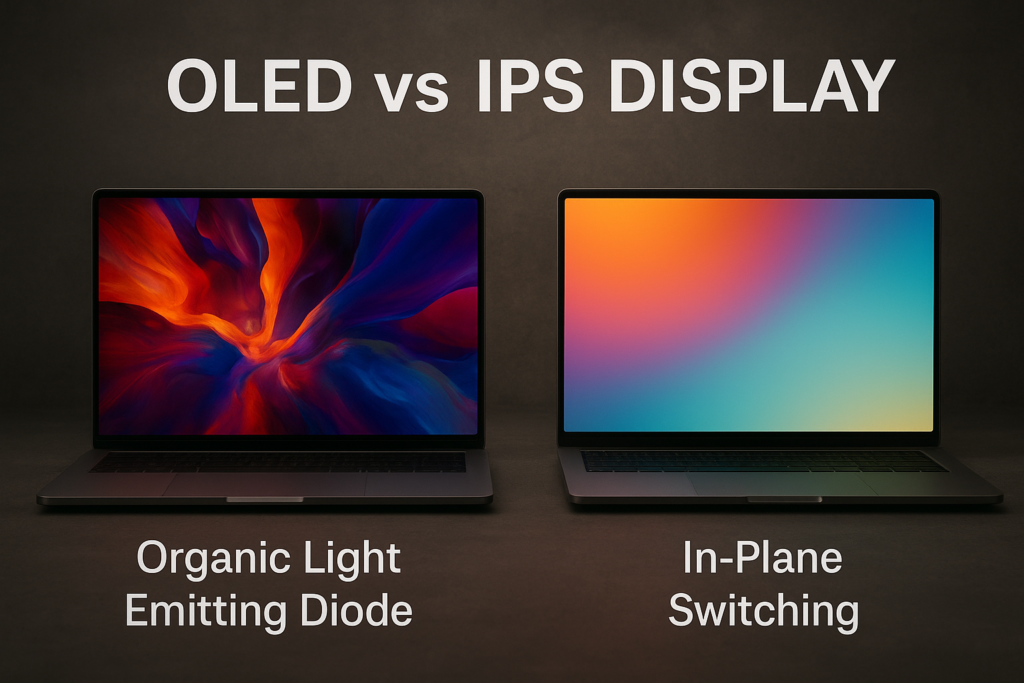
OLED vs IPS — Which Display Lasts Longer? Laptop displays in 2025 have reached a crossroads: OLED panels promise cinematic visuals, while