
The Future of Tech — Worldwide View
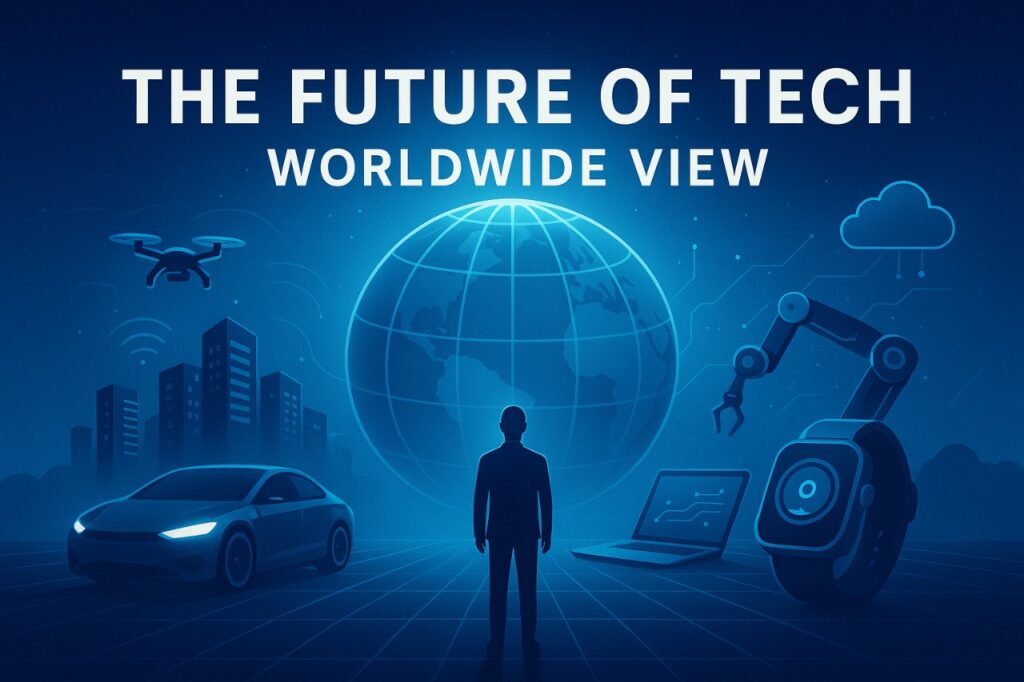
Every decade has its defining moment — a shift that quietly rewrites the rules. In 2025, that shift isn’t a single device, platform, or invention. It’s direction. The world is steering toward future tech that is more autonomous, more adaptive, and more aware of its environment.
This global view breaks down what humanity is building next — not as hype, but as a map of where innovation is actually heading.
⚙️ Core Insight (Depth + Clarity)
The most important truth about future tech is this: it’s no longer about adding more power — it’s about removing more friction.
Devices are getting “self-managing.” Cars reroute without asking. Laptops optimize performance in real time. Machines detect anomalies before they occur. Tech is moving from being a tool we operate to a system that operates for us.
2025 sets the stage for a new cycle where intelligence, sustainability, and connection take center stage. Instead of chasing raw specs, companies race to build ecosystems that predict behavior, automate tasks, and learn user patterns. This is not science fiction — it’s the blueprint of the next decade.
📊Bite-Sized Data Table
| Emerging Category | What’s Changing | Why It Matters |
|---|---|---|
| On-device AI | Faster, local processing | Privacy + efficiency boost |
| Smart materials | Self-healing glass, thermal fabrics | Longer-lasting tech |
| Mixed-reality layers | Digital overlays in physical spaces | Work + entertainment shift |
| Autonomous ecosystems | Devices self-coordinate | Zero-friction workflows |
| Global connectivity | Satellite-based networks | Internet beyond limitations |
| Sustainable engineering | Recyclable silicon + modular parts | Lower carbon footprint |
🔍 Micro Analysis
A: The Real-World Impact
The coming wave of future tech reshapes everyday life more subtly than past revolutions:
- Smart homes predict your routine and adapt lighting, cooling, and security automatically.
- Wearables shift from “step trackers” to full-time health monitors that detect stress, hydration, and irregularities.
- Cars become rolling data centers, constantly learning to avoid accidents and reduce energy use.
- AR overlays guide workers in factories, hospitals, and logistics centers.
- Personal devices sync tasks, preferences, and workflows even across brands.
The magic isn’t in new product categories — it’s in intelligence that meets people where they are.
B: The Hidden Truth
Behind every major future tech breakthrough is an uncomfortable reality: innovation is becoming extremely expensive.
To survive, companies rely on:
- Shared suppliers for chips, displays, and batteries.
- Multi-year software promises instead of yearly hardware leaps.
- AI optimization to extend the life of existing devices.
- Cloud infrastructure shifting to hybrid, low-latency local models.
- Regulations forcing better privacy and transparent data handling.
The future isn’t being built through miracles — it’s being engineered through efficiency.
🌍 Culture Angle
Every advancement in future tech reflects a cultural shift. People want less noise and more intention. Minimalist design, invisible interfaces, silent automation — all of it aligns with a generation that values clarity over clutter.
Tools are no longer status symbols; they’re extensions of identity. That’s why the tech world focuses on personalization, wellness integration, and seamless transitions between devices. Humanity doesn’t want more technology — it wants calmer technology.
🧠 Quick Vibetric Takeaway
- Future tech is shifting from power to intelligence.
- On-device AI becomes the backbone of personal privacy and speed.
- Sustainability grows from a trend into a design rule.
- MR, AR, and spatial layers become everyday work tools.
- Cross-device cognition replaces traditional “ecosystems.”
- Automations expand from convenience to necessity.
- The next decade isn’t about more devices — it’s about smarter ones.
💬 Vibetric Verdict
Vibetric Verdict: The future of technology won’t arrive with fireworks. It will arrive quietly in the background through systems that learn, adapt, and evolve without demanding attention.
That’s what makes this era powerful. The best innovations will be the ones
you barely notice, because they just work.
🔗 Stay in the Loop
We don’t sell hype — we explain it.
- Follow @vibetric_official for grounded gaming insights, hardware testing, and trend analysis.
- Bookmark vibetric.com to stay ahead of the tech curve.
- No hype. No bias. Just facts — the Vibetric way.
💬 What’s your take on this?
The comment section at Vibetric isn’t just for reactions — it’s where creators, thinkers, and curious minds exchange ideas that shape how we see tech’s future.
The Real Reason Mid-Range Phones Are Getting So Good
The Real Reason Mid-Range Phones Are Getting So Good For years, flagship phones dominated headlines, while mid-range phones played second fiddle. But
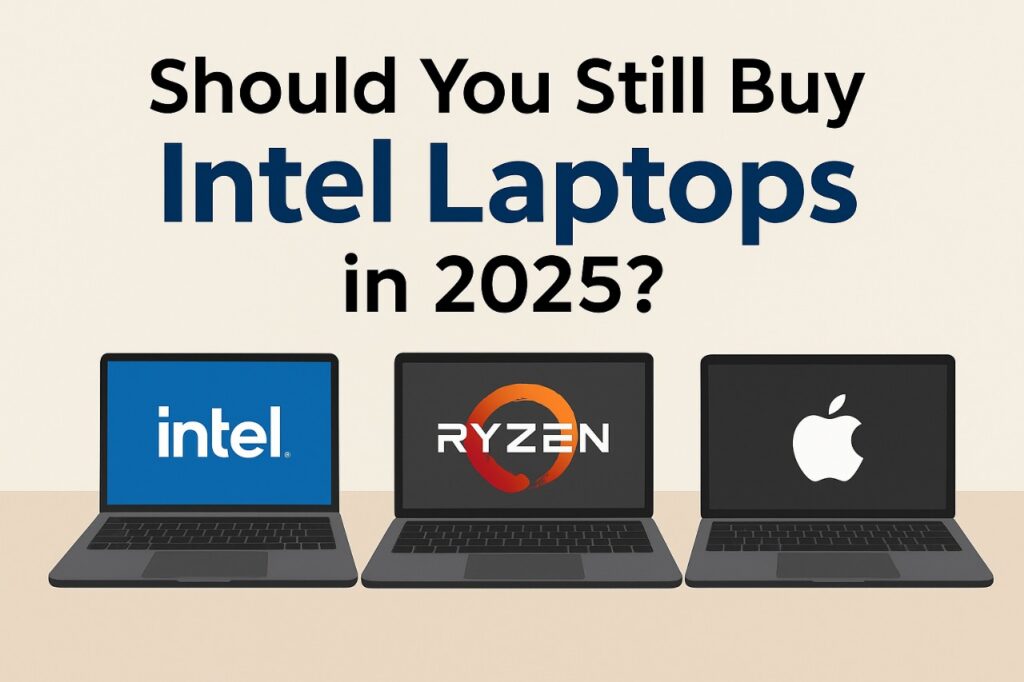
Should You Still Buy Intel Laptops in 2025?
Should You Still Buy Intel Laptops in 2025? Intel has long been synonymous with laptop performance. For decades, its CPUs powered desktops