
The Rise of Open-Ear Audio: Is It the Future of Safe Listening?
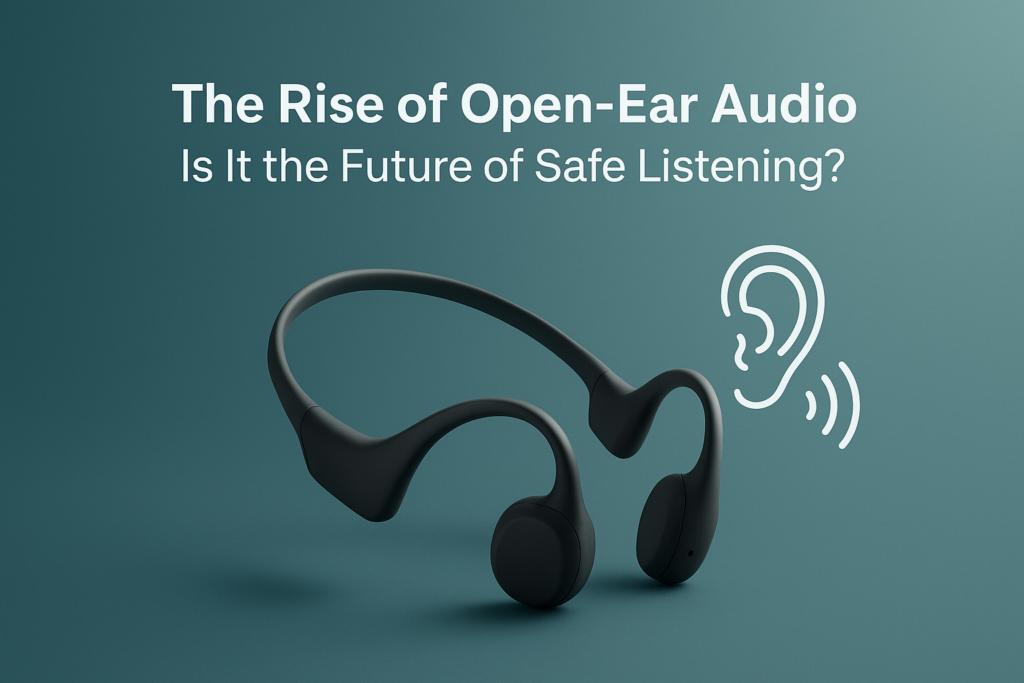
We’ve entered a moment in personal audio where excitement and anxiety collide. On one hand, everyone wants immersive sound—music that fills your world, podcasts that feel whispered into your mind, calls that sound crystal clear.
But on the other hand, we’re also waking up to a quieter, unsettling truth: the way we listen is damaging our hearing faster than ever.
As more people experience ear fatigue, tinnitus, and volume creep, a new alternative has emerged—open-ear audio, a style of listening that promises clarity, comfort, and, most importantly, safety. But as the buzz around these devices rises, a crucial question appears: is open-ear audio genuinely the future of safe listening, or is it simply the latest fad in a crowded market?
A New Way of Listening
Picture a crowded morning crossing in your city. Cars hum beneath the metallic rhythm of traffic lights, pedestrians weave past you, the city breathes at full volume. You tap play on your playlist—but unlike the sealed-off world of earbuds, you hear everything. Your music floats alongside real life rather than drowning it out. No pressure in your ears. No isolation. No anxious need to turn the volume up to overpower the world.
It feels different—lighter, safer, more natural. But as refreshing as this experience seems, it sparks a deeper curiosity: could this be the way we’ll all listen in the future? Or is this just another temporary detour in the evolution of headphones?
The Core Problem: The Risks of Traditional Listening
For decades, headphone innovation equated to “seal the world out.” Better isolation, deeper immersion, tighter fit. But the problem is simple: the more we isolate, the louder we listen—and the more damage we risk. In-ear and over-ear headphones, used for hours daily, expose the delicate structures of the ear to potentially harmful levels.
Open-ear audio promises a safer alternative: freedom from the sealed canal, no pressure buildup, and naturally lower listening volumes. Yet enthusiasm alone can’t answer the real question—is open-ear audio truly capable of replacing traditional headphones without compromising sound quality or user experience?
To find out, we need to break down the misconceptions, the engineering, the behavior of brands, and where the technology is heading.
The Truth Behind Open-Ear Audio
Misconceptions: The Assumptions People Make
Most listeners assume open-ear audio equals poor audio quality. The logic seems straightforward: if nothing seals the ear, sound must be thin, weak, or easily drowned out. But this is outdated thinking.
Modern open-ear headphones use bone conduction, air-conduction, or directional driver arrays to direct sound precisely without blocking the ear canal. They aren’t miniature speakers blasting sound into the air—they are engineered pathways designed for clarity and spatial accuracy.
Another misconception is that open-ear audio is only for athletes. While fitness communities popularized it, the new generation targets commuters, office workers, creators, and anyone needing situational awareness.
Still, misconceptions persist because many early models lacked depth and bass. Today, that landscape is changing fast.
Technical Reality: The Mechanism Behind Open-Ear Audio
Open-ear audio comes in two primary engineering approaches:
Bone Conduction
Vibrations travel through the cheekbones directly to the cochlea, bypassing the eardrum.
Pros:
- Keeps the ear canal entirely open
- Ideal for safety-focused outdoor use
- Reduces risk of eardrum stress
Limitations:
- Thinner bass
- Slightly “hollow” soundstage
- Vibrational feel isn’t for everyone
Air-Conduction / Directional Drivers
Sound is beamed precisely toward the ear without sealing it.
Pros:
- More natural sound signature
- Better clarity and highs
- No physical vibration
Limitations:
- Bass remains lighter than sealed earbuds
- Some leakage depends on environment
The key benefit is biological: with the ear canal open, users naturally listen at much lower volumes—reducing long-term hearing damage.
Industry Behavior: Why Brands Are Pushing It
The audio industry is pivoting toward wellness. Hearing loss is rising, especially among younger users who listen for 4–6 hours daily. Brands noticed:
- Bose launched open-ear glasses and directional audio wearables.
- Sony integrated open-ear designs into their sports lineup.
- Shokz (Aftershokz) dominates bone conduction.
- New startups are entering with hybrid systems and AI-enhanced awareness.
This shift isn’t just marketing—it’s strategic. Wellness tech sells. Regulatory agencies are discussing stricter volume limits. And consumers want health-friendly alternatives.
Open-ear audio solves a real problem, making it a long-term category rather than a passing trend.
Future Trajectory: What Open-Ear Audio Looks Like in 2026 and Beyond
Expect several advances:
- Hybrid conduction systems
Combining bone + directional drivers to restore bass and richness.
- Adaptive ambient sound shaping
AI that adjusts audio output depending on your environment—louder on quiet streets, softer indoors.
- Wearable integration
Smart glasses, AR devices, helmets, and car headrests could all integrate open-ear audio systems.
- Hearing health analytics
Real-time feedback on safe listening practices.
Open-ear audio isn’t just improving—it’s expanding in purpose.
Where Open-Ear Audio Fits in Your Daily Life
Urban Commuting
You hear your playlist and traffic. The risk of missing crucial sounds—like announcements or honking—is minimized.
Outdoor Fitness
For runners, cyclists, and hikers, open-ear audio enables environmental awareness, reducing accidents caused by traditional earbuds.
Office Productivity
Background music becomes gentler and more natural, without isolating you from conversations or alerts.
Quick Snapshot: Use Cases for Open-Ear Audio
| Scenario | Benefit | Ideal Tech Type | Awareness Level |
|---|---|---|---|
| City commute | Hear vehicles & PA systems | Air-conduction | High |
| Outdoor running | Enhanced safety | Bone conduction | High |
| Office work | Quiet background audio | Air-conduction | Medium |
| Home chores | Hands-free listening | Either | Medium |
| Cycling | Full situational awareness | Bone conduction | Very High |
| Gym workouts | Sweat-friendly audio | Bone conduction | High |
| Video meetings | Natural voice clarity | Air-conduction | Medium |
Data-Backed Insight: What the Numbers Say
- WHO reports 1+ billion young people at risk of noise-induced hearing loss.
- Open-ear audio users typically reduce listening volume by 20–35% compared to in-ear users.
- Bone conduction technology lowers eardrum pressure almost entirely.
- Studies show that open-ear designs cut long-term fatigue and promote healthier listening patterns.
The engineering aligns with the biology: keep the ear open → lower volume → lower risk.
How Open-Ear Audio Transforms Everyday Life
Open-ear audio creates a healthier psychological relationship with sound. You’re less isolated, less cut off, and less tense. The world doesn’t vanish behind a wall of noise—you stay present.
For parents, hearing the environment matters. For commuters, awareness equals safety. For creators and office workers, open airflow reduces fatigue. And for those prone to tinnitus, the lack of direct canal pressure can be significantly relieving.
Open-ear audio doesn’t just protect hearing; it reshapes how we engage with our surroundings.
Solution Framework: Which Open-Ear Audio Device Should You Choose?
| User Type | Recommended Model | Key Features | Pros | Cons |
|---|---|---|---|---|
| Everyday Users | Bose Frames | Audio glasses, stylish design | Great clarity, fashion-forward | Limited bass |
| Creators/Professionals | Sony Open-Ear Sports | Stable fit, voice clarity | Excellent for calls | Not immersive |
| Gamers/Enthusiasts | Shokz Aeropex | Bone conduction | Safe, stable | Light bass |
| Future-Proof Buyers | Shokz OpenRun Pro | Advanced bone conduction | Long battery, durable | Not for noisy places |
Pros & Cons of Open-Ear Audio (Model-Agnostic)
| Category | Pros | Cons |
|---|---|---|
| Sound | Natural highs, clear voices | Reduced bass depth |
| Comfort | No pressure in ear canal | Some vibration sensation |
| Safety | Better awareness outdoors | No passive isolation |
| Health | Lower listening volume | Not ideal for loud transport |
| Durability | Sweatproof options | Wind noise on some designs |
Reddit / User Reality: What People Actually Say
Across audio communities on Reddit, users express mixed but passionate opinions about open-ear audio. Fitness audiences love the comfort and safety, while audiophiles remain unconvinced due to bass limitations. Office workers appreciate the ability to stay aware without pausing their music. Many users emphasize that open-ear audio “feels more natural,” while others wait for stronger bass performance before switching permanently.
User Feedback Snapshot
| User Type | Feedback Summary | Relevance |
|---|---|---|
| Runners | “Perfect for staying alert to traffic.” | High |
| Cyclists | “Best safety-focused gear I own.” | High |
| Audiophiles | “Still lacks bass punch.” | Medium |
| Commuters | “Great for trains, not subways.” | Medium |
| Office Workers | “Helps me stay focused without isolation.” | High |
| Parents | “Can listen while still hearing my kids.” | High |
The consensus is clear: open-ear audio shines in environments requiring awareness and comfort. It’s celebrated for safety, convenience, and natural sound presentation. However, listeners seeking deep immersion still gravitate toward traditional headphones. The technology impresses early adopters but hasn’t fully converted the bass-heavy crowd. Many users express optimism, believing future models will improve sound depth and hybrid systems. Overall, open-ear audio is viewed as a practical, health-forward category with strong real-world value.
What’s Next for Safe Listening
By 2026, open-ear audio will see hybrid conduction, AI-driven audio shaping, better bass simulation, and integration with AR eyewear. Brands will refine directional drivers to reduce leakage and improve volume consistency. As safe-listening regulations tighten globally, open-ear audio could become the standard recommendation for long-duration listening.
Closing Narrative: A New Way to Hear the World
As you step back onto that bustling city street, the world feels alive again—not blocked out, not muted, but layered naturally beneath your soundtrack. That balance between your surroundings and your audio is what open-ear listening captures so well. The rise of open-ear audio isn’t just about safer tech—it’s about reshaping how we move through our environments without sacrificing connection. And as innovations continue to evolve, this listening style may soon become the norm rather than the niche.
Vibetric Ending
Open-ear audio isn’t just another audio trend—it’s a shift toward smarter, safer, more human listening. At Vibetric, we’ll keep tracking this evolution as it transforms the way the world hears.
Ready to Embrace the Future of Safe Listening?
- Follow vibetric_official on Instagram for deeper audio breakdowns and safe-listening insights.
- Bookmark Vibetric.com for upcoming reviews of next-gen open-ear devices.
- Stay connected with Vibetric as we explore the future of sound, design, and audio well-being.
Everything You Need to Know About Open-Ear Audio
- What is open-ear audio?
A listening approach using bone conduction or directional drivers to deliver sound without blocking the ears. - Are open-ear headphones safer?
Yes—users typically listen at lower volumes, reducing long-term hearing risks. - Do open-ear headphones have good sound quality?
They offer clear mids/highs but lighter bass compared to sealed earbuds. - Are they good for running or cycling?
Excellent—because they allow full awareness of surroundings. - Can I use them in noisy environments?
They work, but traditional noise-canceling headphones perform better in loud settings. - Do they cause ear fatigue?
Less than in-ear models because they don’t seal or press into the canal. - Are bone conduction and air conduction different?
Yes—bone conduction uses vibrations; air conduction uses directed speakers. - Are open-ear devices compatible with all phones?
Yes—any Bluetooth-enabled device works. - Are they worth buying for daily use?
If you value awareness, comfort, and hearing safety—absolutely. - Is open-ear audio the future?
With growing health concerns and rapid tech improvements, open-ear audio is positioned to become a major category in personal audio.
What’s your take on this?
At Vibetric, the comments go way beyond quick reactions — they’re where creators, innovators, and curious minds spark conversations that push tech’s future forward.
The Rise of Open-Ear Audio: Is It the Future of Safe Listening?
The Rise of Open-Ear Audio: Is It the Future of Safe Listening? We’ve entered a moment in personal audio where excitement and

Do Foldables Finally Make Sense This Year?
Do Foldables Finally Make Sense This Year? Foldable smartphones have existed as a futuristic concept for several years, but adoption remained limited