
Next Gen Active Noise Cancellation: Smart Design, Better Silence in 2026
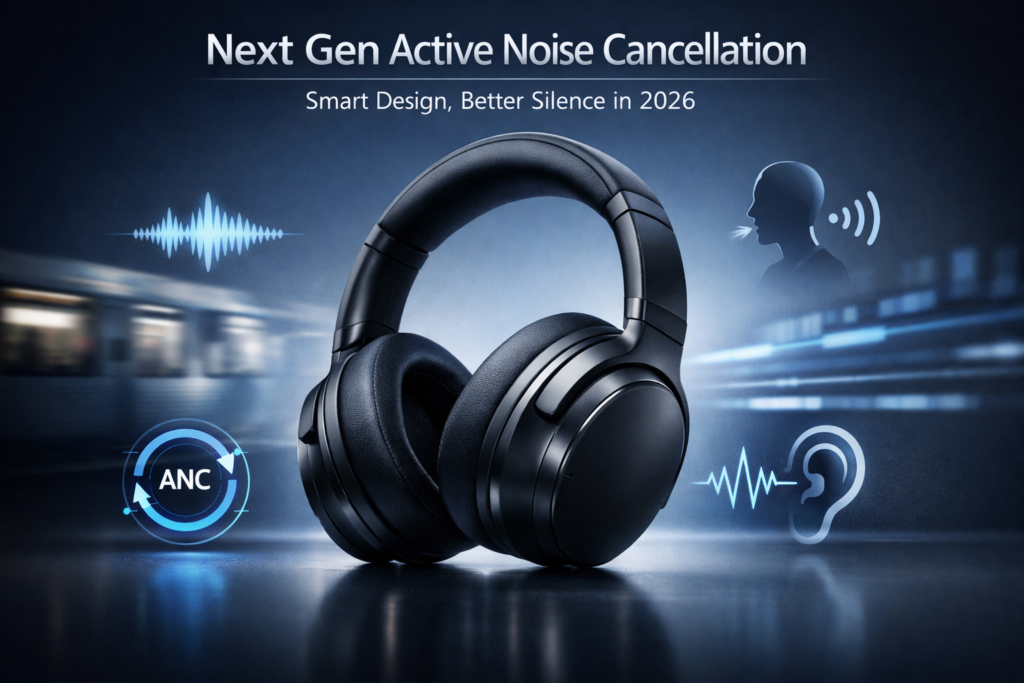
Active noise cancellation has reached a strange plateau. Today’s premium headphones already hush airplane cabins and erase low-frequency rumbles with impressive consistency. Yet users still complain about pressure fatigue, garbled voices, wind noise, and that uncanny feeling of being sealed off from reality. The promise of silence is there—but it’s incomplete. As we approach 2026, the conversation isn’t about more cancellation. It’s about smarter silence, and that shift will redefine next gen active noise cancellation in ways most buyers aren’t expecting.
A morning commute that exposes the cracks
Picture a typical weekday commute: subway screeching, overlapping conversations, a sudden announcement cutting through music, then a gust of wind as you climb the stairs. Current ANC systems react, but they react bluntly. They cancel broadly, sometimes too late, often without context. The result is quiet—but not comfort. This everyday friction is the real catalyst behind the next wave of ANC development.
Everyone chases silence, but the real goal is control
The industry still markets ANC as a binary feature: on or off, stronger or weaker. That framing is outdated. The real challenge isn’t suppressing sound—it’s deciding which sounds matter in real time. Next gen active noise cancellation is moving away from blanket suppression toward selective acoustic intelligence. Silence will become adjustable, situational, and predictive rather than reactive.
When microphones stop listening and start interpreting
The biggest leap won’t come from louder anti-noise signals. It will come from perception.
By 2026, ANC systems will rely less on raw microphone input and more on sensor fusion. External mics, internal mics, motion sensors, and even jaw or head movement data will work together. Instead of asking “Is there noise?”, headphones will ask “What kind of sound is this, and should the user hear it?”
This shift enables three critical upgrades:
- Context-aware filtering that distinguishes speech from mechanical noise
- Predictive cancellation that anticipates sound changes before they peak
- User-intent modeling based on activity patterns, not manual modes
That’s the backbone of next gen active noise cancellation—interpretation over suppression.
Why pressure fatigue is finally being addressed
Many users describe ANC fatigue as a “pressure” sensation, even though no physical pressure exists. The cause is phase mismatch and overcorrection in low-frequency bands, especially during long listening sessions.
Next-generation systems will reduce this by:
- Dynamically adjusting cancellation depth based on ear canal resonance
- Using adaptive phase alignment instead of fixed profiles
- Backing off cancellation when silence becomes perceptually uncomfortable
Rather than chasing maximum decibel reduction, next gen active noise cancellation prioritizes neurological comfort—something current systems largely ignore.
A feedback loop that finally makes sense
The most meaningful architectural change is how feedback loops are handled. Instead of a simple mic → processor → speaker chain, future ANC systems operate as closed, self-correcting ecosystems.
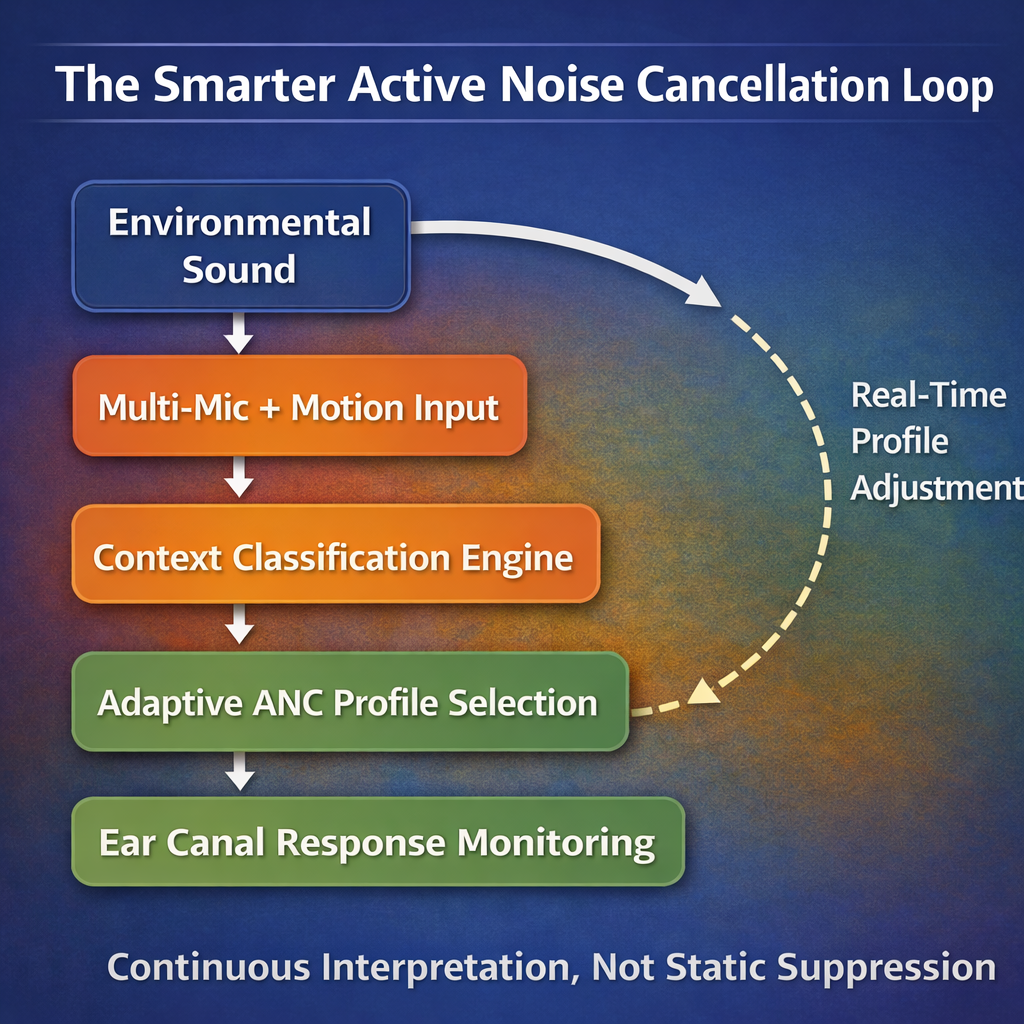
This loop explains why future ANC will feel smoother rather than stronger. It’s also why firmware updates—not new hardware—will increasingly unlock better performance over time.
The myth of “more microphones equals better ANC”
There’s a persistent belief that adding microphones automatically improves noise cancellation. In reality, poorly coordinated mics can worsen artifacts and latency.
Reality check:
- More mics help only if the processing pipeline can interpret them coherently
- Latency matters more than mic count for transient noises
- Wind and sudden impacts require different suppression strategies than engines
By 2026, manufacturers that haven’t rethought their signal-processing stack will hit diminishing returns. Next gen active noise cancellation depends on smarter orchestration, not hardware excess.
How users will notice the difference first
The most immediate improvements won’t show up on spec sheets. They’ll show up in moments.
Scenario one: You’re in a café. Background chatter fades, but the barista’s voice cuts through cleanly—without switching modes.
Scenario two: You step outside into heavy wind. ANC reduces wind buffeting automatically without muting music or causing distortion.
Scenario three: On a long flight, ANC subtly eases after an hour to reduce fatigue, then ramps back up during turbulence.
These are small experiences, but they define the practical value of next gen active noise cancellation far better than lab measurements.
What the data trends quietly suggest
Across the audio industry, three patterns are emerging:
- Increased investment in on-device machine learning for audio tasks
- Greater emphasis on personalization over universal tuning
- A shift from maximum cancellation metrics to comfort and clarity scores
None of these trends require radical hardware breakthroughs. They require better software philosophy. That’s why next gen active noise cancellation will feel like a software revolution disguised as an audio upgrade.
While there’s a clear preference for mechanical switches in the gaming community due to the feel and reliability, office workers and casual typists often lean toward the quieter, more durable magnetic switches.
Silence that adapts to how humans actually listen
Human hearing isn’t static. Sensitivity changes with fatigue, mood, and environment. Future ANC systems will reflect this reality.
Expect headphones that:
- Learn preferred cancellation levels at different times of day
- Adjust transparency automatically during conversations
- Reduce cognitive load by preserving spatial cues instead of flattening sound
This human-centric approach marks a departure from the “engineering-first” mindset that dominated early ANC design. Next gen active noise cancellation is as much about psychology as acoustics.
Who benefits most from the shift
Different users will feel the upgrade differently.
Everyday listeners gain comfort and fewer distractions without managing settings.
Remote workers experience clearer calls and less fatigue during long sessions.
Travelers get smoother transitions between environments.
Creators and professionals benefit from predictable monitoring without over-isolation.
Future-proof buyers receive systems that improve through updates rather than becoming obsolete.
A simple comparison highlights the change:
| Current ANC Focus | Next-Gen ANC Focus |
|---|---|
| Max noise reduction | Situational intelligence |
| Static profiles | Adaptive learning |
| Hardware-driven gains | Software-driven evolution |
| Isolation-first | Comfort-first |
When the upgrade won’t matter as much
Not everyone needs the cutting edge. If you listen casually in predictable environments—home, office, quiet streets—the leap to next gen active noise cancellation may feel subtle. The value scales with environmental complexity. The noisier and more variable your day, the more transformative these advances become.
What real users already complain about
Scanning community discussions reveals consistent pain points that next-gen systems are clearly targeting:
| User Complaint | Current Reality | Next-Gen Direction |
|---|---|---|
| “ANC hurts my ears” | Overcorrection | Adaptive depth control |
| “Wind ruins everything” | Poor transient handling | Contextual suppression |
| “I miss announcements” | Binary modes | Selective transparency |
| “ANC feels unnatural” | Flat soundstage | Spatial preservation |
| “Updates don’t change much” | Hardware limits | Software-led gains |
| “Battery drops fast” | Constant max processing | Demand-based ANC |
These aren’t niche issues—they’re the blueprint for next gen active noise cancellation priorities.
Looking past 2026 without the hype
Beyond 2026, the trajectory is clear but grounded. ANC will merge more tightly with hearing health, accessibility features, and augmented audio experiences. The goal won’t be silence for its own sake, but acoustic agency—letting users decide how much of the world they let in, moment by moment.
No dramatic marketing buzzwords required. Just better listening.
The quiet future circles back to the commute
That same subway ride from earlier? In a couple of years, it won’t feel dramatically quieter. It will feel calmer. Less fatiguing. More intentional. You’ll notice sounds when they matter and forget about them when they don’t. That’s the understated promise of next gen active noise cancellation—not louder silence, but smarter peace.
Vibetric Ending
Technology matures when it stops showing off and starts understanding its user. ANC is finally reaching that phase.
Wondering How Next-Gen Active Noise Cancellation Works? Here’s What You Need to Know
- Follow vibetric_official on Instagram to keep up with the latest trends and insights into audio technology.
- Bookmark Vibetric.com we continuously update our analysis as new developments emerge in headphone innovation.
Subscribe for ongoing, in-depth breakdowns and expert perspectives on the future of listening.
Questions People Ask When Silence Gets Smarter
No. The goal is selective reduction, not total silence, preserving important sounds and comfort.
Yes. Hardware matters, but software intelligence drives the biggest gains.
Some improvements may arrive via firmware, but full benefits require newer processing architectures.
Not anymore. New systems prioritize spatial integrity and phase accuracy.
By adjusting depth dynamically and avoiding constant low-frequency overcorrection.
Processing is expected to remain on-device, focusing on sound patterns, not content.
Smarter, demand-based cancellation should improve efficiency overall.
Absolutely. Voice isolation and environmental awareness improve call clarity.
If you travel, commute, or work in dynamic environments, the difference will be noticeable.
No—but it’s the first version that truly adapts to how humans hear.
What’s your take on this?
At Vibetric, the comments go way beyond quick reactions — they’re where creators, innovators, and curious minds spark conversations that push tech’s future forward.
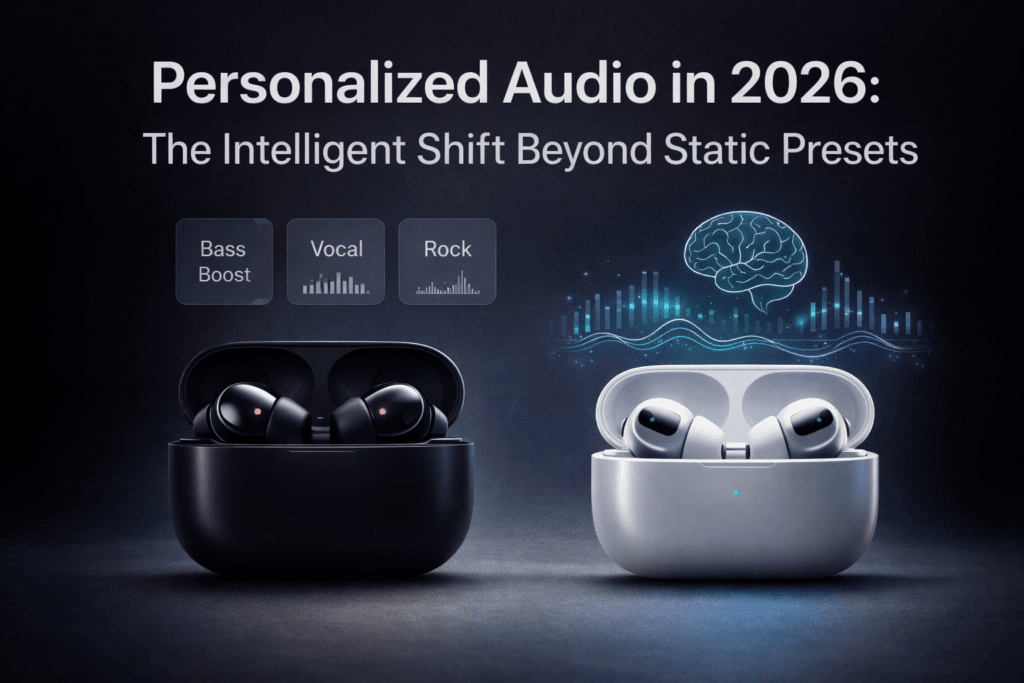
Personalized Audio in 2026: The Intelligent Shift Beyond Static Presets
Personalized Audio in 2026: The Intelligent Shift Beyond Static Presets For years, audio customization meant choosing a label. “Bass Boost.”“Vocal.”“Rock.”“Podcast.” These presets
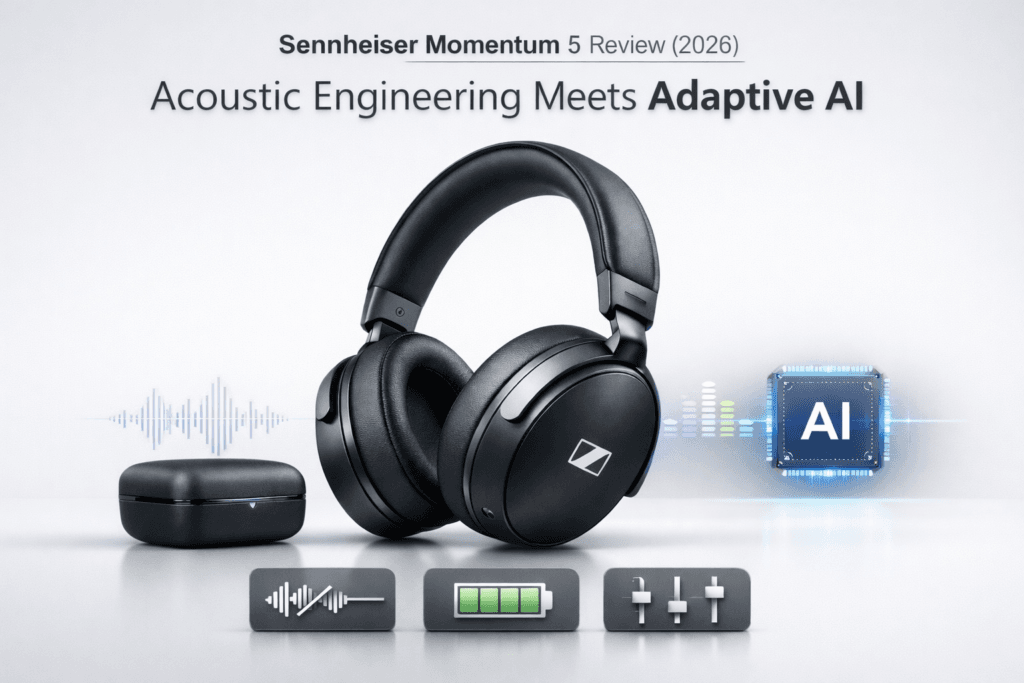
Sennheiser Momentum 5 Review (2026): Acoustic Engineering Meets Adaptive AI
Sennheiser Momentum 5 Review (2026): Acoustic Engineering Meets Adaptive AI Noise-canceling headphones have reached a point of saturation. Every flagship promises deeper