
Mechanical vs Membrane Keyboard — Which Is Worth It in 2025?
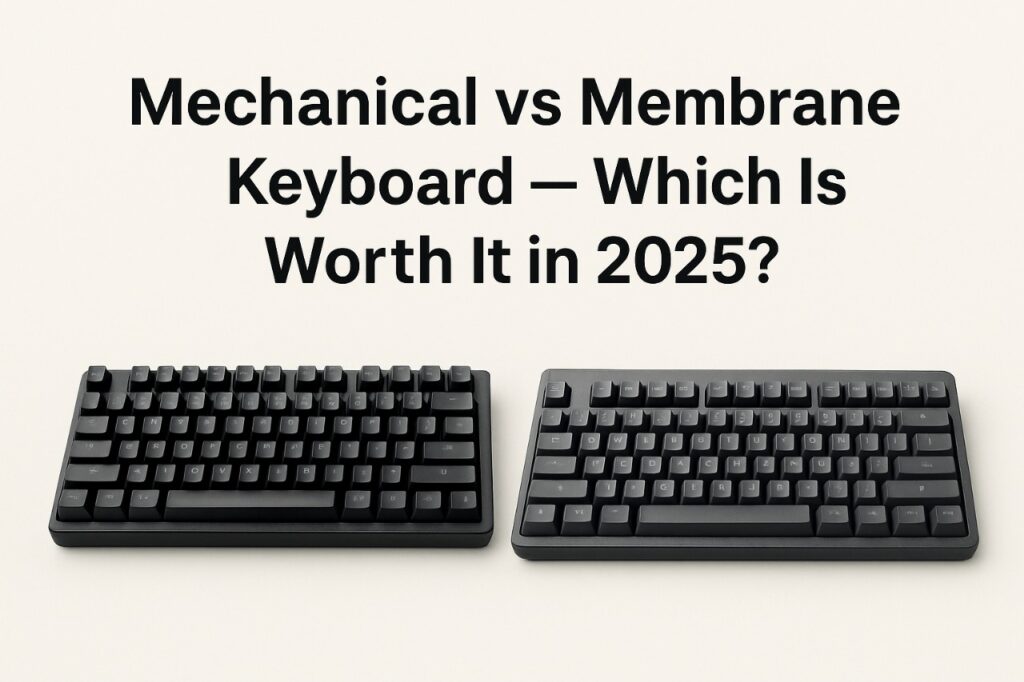
Keyboards are more than input devices—they define how we interact with computers daily. In 2025, the debate between mechanical vs membrane keyboard persists, yet the landscape has evolved. With hybrid designs, silent switches, and software customization, choosing the right keyboard is both a technical and personal decision. Beyond gaming or office use, keyboards now integrate features that affect ergonomics, durability, and workflow efficiency.
Understanding the Core Difference
Mechanical and membrane keyboards differ fundamentally in construction. Mechanical keyboards use individual switches for each key, providing tactile feedback, audible clicks, and consistent actuation. Membrane keyboards rely on rubber domes and pressure pads, delivering softer, quieter presses but less precise feedback. These differences shape typing accuracy, speed, and fatigue. For users spending hours coding, writing, or gaming, the mechanical approach can feel more responsive, while membrane keyboards appeal to those prioritizing quiet operation or portability.
Typing Experience and Ergonomics
The tactile feel of a mechanical keyboard is deliberate and satisfying. Each keystroke provides a physical cue that can reduce typos and increase confidence during long typing sessions. Key travel, actuation force, and switch type (linear, tactile, clicky) allow users to tailor the experience. Membrane keyboards, in contrast, offer a gentler, quieter feel that some users prefer in office settings or shared spaces. Ergonomic design has improved across both types: adjustable angles, wrist rests, and optimized layouts reduce strain, meaning even membrane keyboards can support extended usage comfortably.
Performance in Gaming and Productivity
Mechanical keyboards are widely preferred among gamers and professional typists for their fast key actuation and anti-ghosting capabilities. Programmable macros and RGB customization further enhance workflow and immersion. Membrane keyboards, traditionally seen as slower, have evolved. Some high-end membrane or hybrid models now provide near-mechanical responsiveness and reduced latency, making them viable for casual gamers or productivity-focused users. Still, for tasks requiring rapid, repeated keypresses, mechanical keyboards maintain a performance advantage.
Durability and Longevity
Longevity is a clear differentiator. Mechanical switches are rated for 50–100 million keystrokes, often outlasting the keyboard itself. Membrane keyboards typically wear out sooner, with rubber domes losing responsiveness over time. For heavy users—gamers, writers, or developers—the upfront investment in mechanical keyboards is offset by years of consistent performance. Membrane keyboards, however, remain cost-effective and sufficient for users with moderate typing needs, striking a balance between affordability and reliability.
Mini Comparison: Mechanical vs Membrane Keyboards (2025)
| Feature | Mechanical | Membrane |
|---|---|---|
| Key Feel | Tactile, audible feedback | Soft, quiet |
| Actuation Speed | Fast, precise | Moderate, less consistent |
| Durability | 50–100 million keystrokes | 5–20 million keystrokes |
| Noise Level | Louder | Quiet |
| Customization | High (switches, macros, RGB) | Limited |
| Ideal Users | Gamers, coders, heavy typists | Casual users, office, quiet spaces |
This table highlights clear distinctions while acknowledging evolving hybrid models that blur traditional boundaries.
Use-Case Lens: Choosing What Fits
The choice between mechanical vs membrane keyboard ultimately depends on context and priorities. Competitive gamers and programmers benefit from mechanical keyboards’ precision, tactile feedback, and durability. Office environments or shared spaces favor membrane keyboards for their quiet operation, portability, and lower cost. Hybrid keyboards now attempt to capture the middle ground, offering semi-mechanical switches with quieter operation, appealing to users who want a balance between typing feel and noise control.
The Contrarian Perspective
Mechanical keyboards dominate enthusiast discussions, yet casual users rarely notice the difference. In everyday tasks—web browsing, email, document editing—the speed and tactile feedback of a mechanical keyboard may be unnecessary. Membrane keyboards are quietly evolving, offering improved responsiveness, stability, and ergonomic design, making them practical for the majority of users. In other words, hype doesn’t always equal utility; context defines value.
Closing Reflection
The mechanical vs membrane keyboard debate in 2025 is nuanced. Each type has matured, providing specific advantages that cater to different use cases. Mechanical keyboards deliver precision, durability, and satisfaction for enthusiasts and professionals, while membrane keyboards offer quiet, lightweight, and cost-effective alternatives. Rather than seeking a universal “best,” users benefit from matching keyboard choice to workflow, environment, and personal preference. The evolution of hybrid and semi-mechanical designs ensures that both options remain relevant and increasingly sophisticated.
Stay Sharp with Vibetric Insights
- Follow our Instagram @vibetric_official for concise, expert tech analyses.
- Bookmark vibetric.com to track performance reviews and hardware comparisons.
- Stay updated on evolving peripheral technologies and keyboard trends.
What’s your take on this?
At Vibetric, the comments go way beyond quick reactions — they’re where creators, innovators, and curious minds spark conversations that push tech’s future forward.
MacBook Pro M4 (2026): The Smart Efficiency Breakthrough in Modern Laptops
MacBook Pro M4 (2026): The Smart Efficiency Breakthrough in Modern Laptops There’s a moment every serious laptop user recognizes. The export bar

AI Intelligence Race in 2026: The Real Battle Beyond Speed
AI Intelligence Race in 2026: The Real Battle Beyond Speed For years, consumer technology sold us speed. Every keynote celebrated higher clock