
The Hidden Cost of Laptop Repair
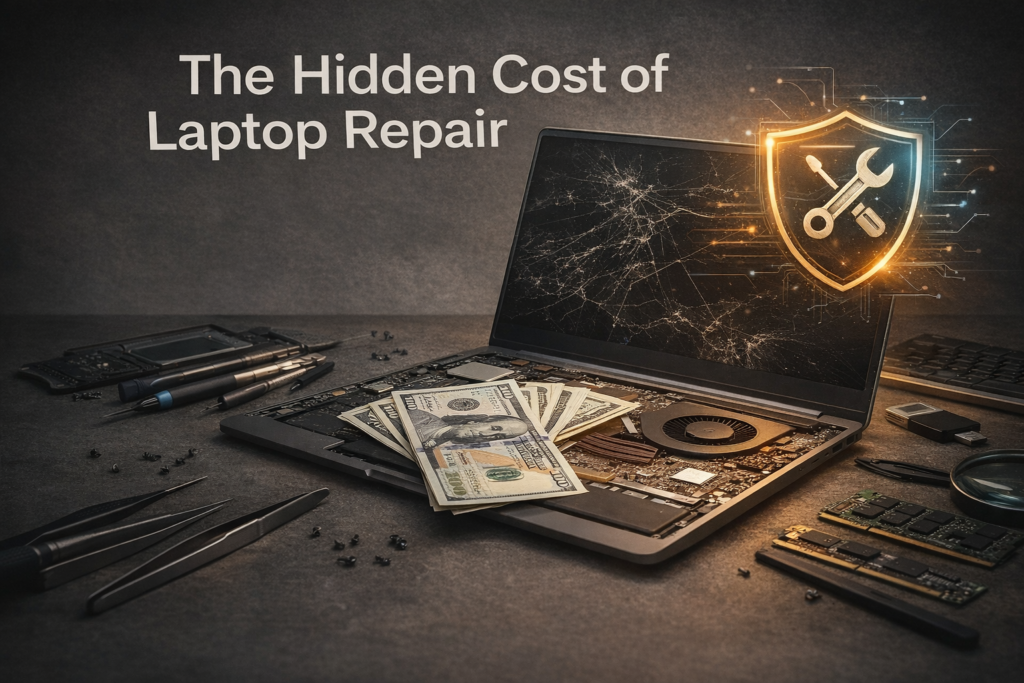
When buying a laptop, the upfront price is obvious—but the hidden costs often emerge only years later. Repairs can be expensive, and understanding laptop repair cost dynamics in 2025 is crucial for both consumers and professionals. From hardware failures to accidental damage, the total lifetime expense often outweighs initial savings on cheaper devices.
Why Laptop Repairs Are So Expensive
Several factors drive high laptop repair costs:
- Component Integration: Modern ultrabooks and thin-and-light laptops often use soldered RAM, integrated GPUs, or proprietary motherboards. Replacing a single component can require extensive labor or complete board replacement.
- Premium Displays: OLED and high-refresh panels increase repair complexity and price. Replacing a 4K OLED screen can rival the cost of a mid-range laptop itself.
- Labor Costs: Skilled technicians and specialized tools are necessary for compact laptops, particularly for devices from Apple, Dell XPS, and ROG series.
Even minor repairs, like hinge replacements or keyboard swaps, can escalate if the design is intricate or parts are hard to source.
Battery, Storage, and Peripheral Repairs
Batteries naturally degrade over time, but replacement in modern laptops isn’t always straightforward. Many devices use internal, non-removable batteries requiring professional service.
Storage and memory upgrades used to be simple, but in 2025, soldered SSDs and RAM limit DIY fixes. Users attempting self-repair risk voiding warranties, adding to potential costs. Even peripheral failures like charging ports or fans often require full-board disassembly.
Mini Snapshot: Typical Laptop Repair Costs in 2025
| Component | Average Repair Cost | Notes |
|---|---|---|
| Screen (LCD/OLED) | $150–$400 | Depends on size/resolution |
| Battery | $80–$200 | Internal, non-removable batteries cost more |
| Keyboard / Trackpad | $70–$180 | Replacement often requires partial disassembly |
| Motherboard | $250–$600 | Repairs may be as costly as new mid-range laptops |
| Hinge / Chassis | $50–$150 | Design complexity drives labor costs |
This table illustrates why laptop repair cost varies widely and why budget devices may become expensive to maintain over time.
How Design Choices Affect Long-Term Expenses
Manufacturers trade off repairability for thinness, weight, and premium aesthetics. Ultrabooks prioritize compactness, leading to higher repair complexity. Gaming laptops often favor modularity for GPU or RAM upgrades, but thick designs and proprietary parts can still drive up costs.
Users need to balance initial purchase price with expected maintenance. Investing in laptops with easier serviceability, spare part availability, and extended warranties can reduce total ownership cost.
Insurance and Extended Warranties
One method to mitigate laptop repair cost is through manufacturer warranties, accidental damage protection, or third-party insurance. While these plans add upfront expense, they often cover high-cost repairs, such as screen replacements or motherboard failures, that would otherwise be financially burdensome.
For heavy users—gamers, creators, or professionals—this insurance may offset repair cost volatility over a laptop’s lifetime.
Practical Tips to Reduce Repair Costs
- Handle your laptop carefully: avoid drops, spills, and pressure on the chassis.
- Maintain cooling and clean dust regularly to prevent thermal damage.
- Avoid unauthorized repairs; always use certified service centers.
- Consider laptops with modular designs for easier upgrades and component swaps.
- Evaluate extended warranty plans for devices with high-end components or integrated parts.
Contrarian Angle: Cheap Laptops Aren’t Always Cheaper
Lower-cost laptops often use cheaper materials, fragile screens, or proprietary parts. While the upfront price may be attractive, laptop repair cost can quickly exceed the initial savings, especially after 2–3 years. Investing slightly more upfront in a durable, serviceable laptop can reduce long-term expenses significantly.
Closing Insight
Understanding laptop repair cost is essential in 2025, where component integration, design choices, and labor intricacy influence long-term ownership expenses. Balancing upfront price, repairability, and warranty options ensures users avoid hidden financial pitfalls while extending device longevity. In essence, choosing the right laptop is as much about anticipating repair and maintenance costs as it is about specs and performance.
Plan Smart, Repair Smart
- Follow our Instagram @vibetric_official for insights into laptop durability, repair trends, and cost-saving strategies.
- Bookmark vibetric.com to explore detailed guides on component longevity and maintenance tips.
- Stay updated on warranties, repair innovations, and design choices that minimize lifetime expenses.
What’s your take on this?
At Vibetric, the comments go way beyond quick reactions — they’re where creators, innovators, and curious minds spark conversations that push tech’s future forward.

Frame Stability in 2026: The Hidden Metric Redefining Gaming Performance
Frame Stability in 2026: The Hidden Metric Redefining Gaming Performance For years, gaming conversations revolved around one number: frames per second. Higher

Personalized Audio in 2026: The Intelligent Shift Beyond Static Presets
Personalized Audio in 2026: The Intelligent Shift Beyond Static Presets For years, audio customization meant choosing a label. “Bass Boost.”“Vocal.”“Rock.”“Podcast.” These presets