
Headphone Driver Size and Sound Quality: The Harsh Truth About Bigger Drivers
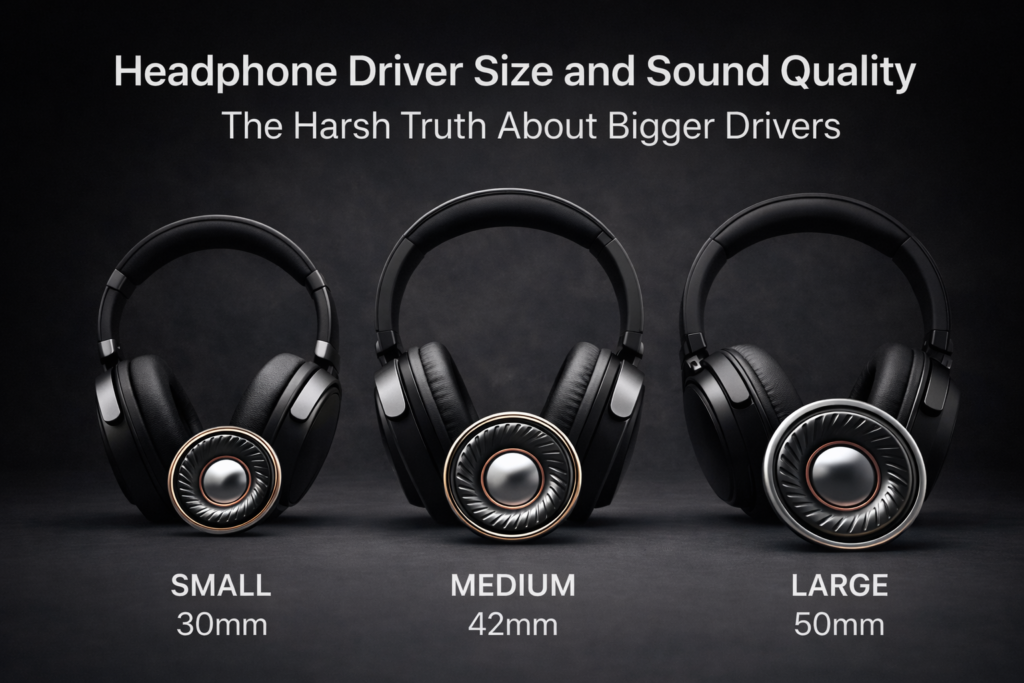
In audio marketing, size often masquerades as substance. Bigger drivers promise deeper bass, wider soundstage, and “room-filling” impact—even in headphones that sit inches from your ears. It’s an intuitive idea, and an enduring one. But when you look closely at headphone driver size and sound quality, the relationship is far less direct than packaging suggests.
Driver diameter matters. It just doesn’t matter in the way most people think.
Why Driver Size Became a Shortcut for Quality
Early headphone designs leaned on larger dynamic drivers because they were easier to tune for bass extension and efficiency with older materials. Bigger diaphragms could move more air with less excursion, which reduced distortion and improved perceived fullness.
That legacy stuck. Over time, driver size became a visual proxy for capability—something consumers could understand without technical context. Even as materials, magnet structures, and damping techniques improved, the narrative barely changed.
The result is a mental shortcut: larger driver equals better sound. It’s convenient. It’s also incomplete.
What Driver Size Actually Influences
Driver diameter primarily affects how much air can be displaced. That has implications, but only within a system that’s properly engineered.
Larger drivers can:
- Achieve bass extension with less movement
- Maintain lower distortion at higher volumes
- Create a sense of scale if tuning supports it
But those benefits depend on enclosure design, diaphragm material, magnet strength, and damping. A poorly controlled large driver can sound bloated and slow. A well-controlled smaller driver can sound fast, textured, and balanced.
This is the first disconnect in headphone driver size and sound quality: size sets potential, not outcome.
A Grounded Comparison
| Driver Size | Common Assumption | Real-World Reality |
|---|---|---|
| Large (50mm+) | Deeper, better bass | Depends heavily on tuning |
| Medium (40–45mm) | “Standard” quality | Often the most balanced |
| Small (<40mm) | Limited sound | Can be precise and efficient |
| Planar (varies) | Always superior | Design matters more than size |
this snapshot reframes expectations. Size is a variable—not a verdict.
Tuning Does More Than Diameter Ever Could
Frequency response shapes what you actually hear. A smaller driver tuned with restraint and control will outperform a larger driver tuned aggressively in almost every listening scenario.
Bass quantity is easy to add. Bass control is not. Many large-driver headphones exaggerate low frequencies to justify their size, masking midrange detail and slowing transient response. Listeners often interpret this as “powerful,” when it’s actually less accurate.
In contrast, smaller drivers are frequently tuned more conservatively. They may feel less impressive at first, but they often reveal more texture and balance over time.
This is where headphone driver size and sound quality diverge sharply from perception.
Speed, Control, and the Myth of Effortless Scale
Sound quality isn’t just about how much air moves—it’s about how quickly and precisely it moves. Driver mass, stiffness, and damping determine transient response.
Larger diaphragms can struggle with speed if materials aren’t optimized. Smaller diaphragms, especially with modern composites, can start and stop faster, improving clarity and separation.
That’s why some compact headphones feel more “detailed” than larger ones. They’re not louder or deeper—they’re more controlled.
Scale without control becomes blur.
Why Planar and Hybrid Designs Complicate the Story
Planar magnetic drivers often sidestep the size debate entirely. Their effective radiating area differs from dynamic drivers, and force is distributed more evenly across the diaphragm.
This is why planar headphones can sound clean and effortless without relying on traditional size cues. But even here, execution matters. Poor damping or enclosure choices can still undermine performance.
The takeaway isn’t that one technology wins—it’s that headphone driver size and sound quality can’t be evaluated in isolation from the rest of the system.
Listener Expectations Shape the Outcome
Perception plays a quiet role. When listeners expect larger drivers to sound bigger, they often focus on bass and volume first. Smaller drivers are judged more critically on detail and balance.
This bias reinforces the myth. People hear what they’re primed to hear, especially during short demos. Over longer listening, those expectations often flip—but first impressions tend to stick.
Driver size influences perception before it influences sound.
The Contrarian Reality: Bigger Can Be Harder to Tune Well
Larger drivers demand more internal space, careful airflow management, and precise damping. Any misstep is amplified. Resonances become harder to control. Enclosures grow more complex.
Smaller drivers are often easier to manage acoustically. That simplicity can translate into more consistent results across different head shapes and listening volumes.
In other words, bigger drivers raise the ceiling—but also raise the difficulty. Many designs never reach that ceiling.
What Actually Predicts Better Sound
If driver size isn’t the answer, what is?
Consistency. Controlled bass. Smooth midrange. Treble that reveals detail without fatigue. These traits come from system-level design, not millimeters.
When evaluating headphone driver size and sound quality, the most reliable indicator isn’t diameter—it’s how the headphone behaves across time, volume, and genre.
Learning to Look Past the Numbers
Driver size is easy to print on a box. Sound quality isn’t. That’s why size remains a popular selling point long after it stopped being decisive.
Bigger drivers aren’t bad. Smaller drivers aren’t limited. What matters is how intelligently each is used.
Once you understand that, spec sheets stop being persuasive—and listening starts being the only test that counts.
Stay Curious with Vibetric
- Follow our Instagram @vibetric_official for deeper insights into audio engineering choices.
- Bookmark vibetric.com to keep track of how specs translate into real listening.
- Stay connected as perception and design continue to evolve beyond numbers.
What’s your take on this?
At Vibetric, the comments go way beyond quick reactions — they’re where creators, innovators, and curious minds spark conversations that push tech’s future forward.
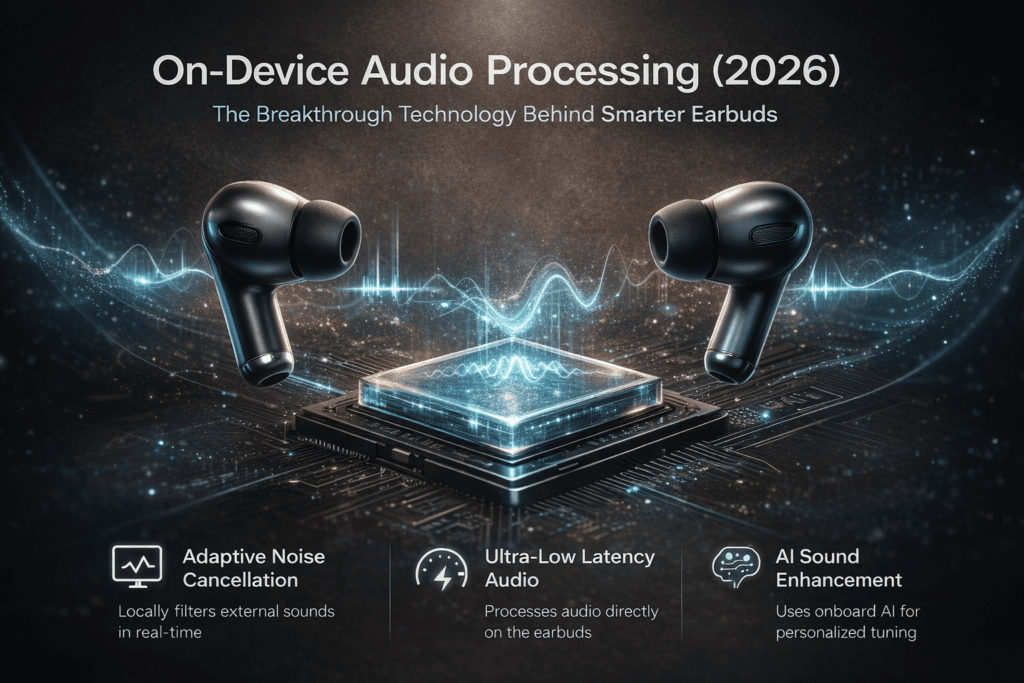
On-Device Audio Processing (2026): The Breakthrough Technology Behind Smarter Earbuds
On-Device Audio Processing (2026): The Breakthrough Technology Behind Smarter Earbuds A commuter taps play on the subway. The train roars into the
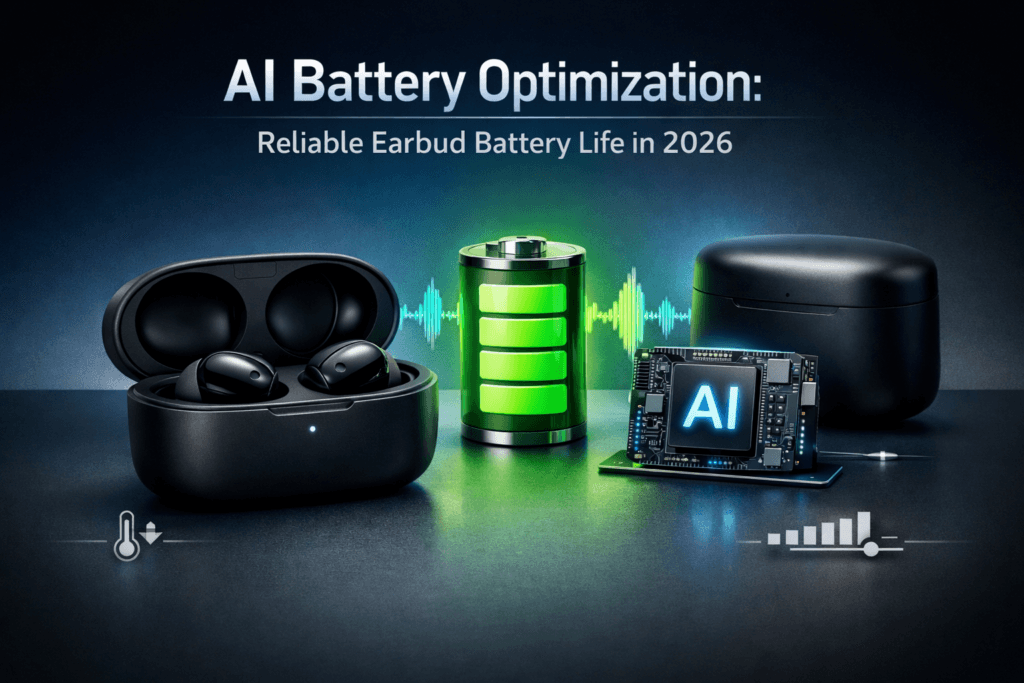
AI Battery Optimization Is Finally Making Earbud Battery Life Reliable in 2026
AI Battery Optimization Is Revolutionizing Earbud Battery Life in 2026 The spec sheet still says ‘30 hours.’ What it doesn’t say is