
Hardware Advantage in Modern Gaming: Why Skill Now Matters More

For decades, better hardware meant better results. Higher frame rates, lower input lag, faster CPUs—each upgrade translated directly into competitive advantage. That assumption still shapes buying behavior, but it no longer maps cleanly to outcomes. In today’s ecosystem, hardware advantage in modern gaming is shrinking, not because hardware stopped improving, but because the ceiling of meaningful gains has been reached for most players.
Performance hasn’t disappeared. Its leverage has changed.
When Diminishing Returns Quietly Took Over
Modern gaming hardware is extraordinarily capable. Even mid-tier systems now deliver stable frame rates, fast storage, and low-latency input pipelines. Once baseline thresholds are met—smooth frame pacing, responsive controls, minimal stutter—additional gains become marginal.
Jumping from unstable performance to consistency is transformative. Jumping from “very fast” to “even faster” is not. The perceptual difference narrows sharply, especially outside elite competitive tiers. This is where hardware advantage in modern gaming begins to flatten: improvements still exist, but they stop translating proportionally into real-world performance.
Game Engines Started Leveling the Field
Another quiet force reshaping advantage is software maturity. Modern engines are designed to scale gracefully across hardware classes. Techniques like dynamic resolution scaling, temporal upscaling, and intelligent frame pacing smooth out disparities that once separated high-end systems from the rest.
Developers now optimize for consistency rather than raw output. A slightly weaker system that delivers stable frame timing often feels better than a more powerful one with spikes and drops. As engines absorb complexity, hardware differences are increasingly normalized before they ever reach the player.
Skill Expression Has Shifted Up the Stack
As hardware variance narrows, skill expression moves elsewhere. Mechanical execution, game sense, positioning, and decision-making now dominate outcomes far more than marginal performance deltas. Reaction time advantages from higher refresh rates still matter—but mostly at the extreme competitive edge.
For the majority of players, losses are rarely caused by insufficient silicon. They’re caused by timing errors, poor reads, or inconsistent fundamentals. This is uncomfortable to acknowledge, which is why hardware remains an easy scapegoat. It’s simpler to upgrade than to practice.
The Cultural Lag: Why the Hardware Myth Persists
Marketing hasn’t caught up with reality. The narrative of hardware as a decisive edge is deeply entrenched because it sells. Frame rate numbers are tangible. Skill development is not. This gap sustains the illusion that better gear equals better play.
Communities reinforce this belief. When outcomes disappoint, it’s easier to blame setup limitations than cognitive or mechanical gaps. As a result, hardware advantage in modern gaming continues to be overstated, even as its real influence declines.
The Contrarian Truth: Consistency Beats Peak Performance
Here’s the counterintuitive part: the most meaningful “hardware advantage” today isn’t maximum output—it’s consistency. Stable frame times, predictable latency, and ergonomic comfort over long sessions matter more than headline specs.
A system that performs slightly below the top end but does so reliably supports better learning and execution. Peaks impress. Stability improves outcomes. This is why many experienced players prioritize tuning, settings optimization, and comfort over constant upgrading.
Where Hardware Still Matters—and Where It Doesn’t
None of this means hardware is irrelevant. It still defines the baseline. Poor performance creates friction that no amount of skill can fully overcome. But once that baseline is crossed, returns diminish rapidly.
At that point, investment in peripherals that improve control, environments that reduce distraction, and habits that improve focus often yield greater gains than chasing incremental hardware upgrades. The advantage shifts from components to competence.
What This Shift Says About Modern Gaming
The shrinking role of hardware advantage reflects a broader maturation of gaming as a medium. As technology stabilizes, mastery becomes the differentiator. The playing field doesn’t become equal—but it becomes fairer.
Hardware advantage in modern gaming hasn’t vanished. It has been absorbed into the baseline, freeing players to confront a more demanding truth: performance now depends less on what you buy and more on how you play. Silicon still matters—but skill decides.
Stay Grounded as Gaming Evolves
- Follow our Instagram @vibetric_official for signal over spec noise.
- Bookmark vibetric.com to track where real performance gains now live.
- Stay updated as gaming shifts from upgrades to mastery.
What’s your take on this?
At Vibetric, the comments go way beyond quick reactions — they’re where creators, innovators, and curious minds spark conversations that push tech’s future forward.
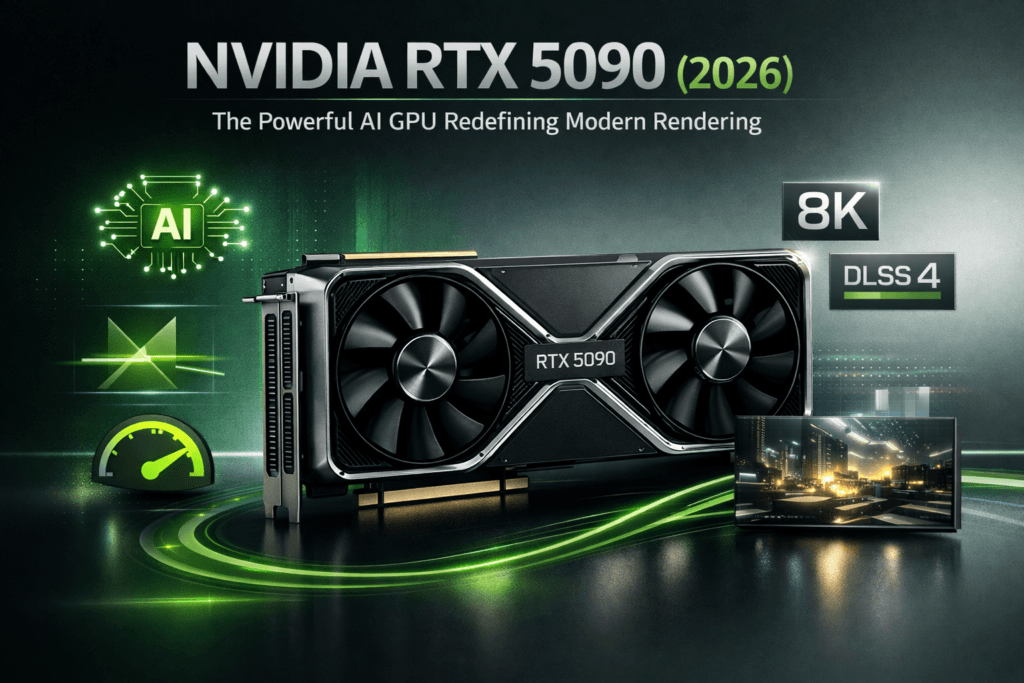
NVIDIA RTX 5090 (2026): The Powerful AI GPU Redefining Modern Rendering
NVIDIA RTX 5090 (2026): The Powerful AI GPU Redefining Modern Rendering Gaming used to be about frames per second. Now it’s about
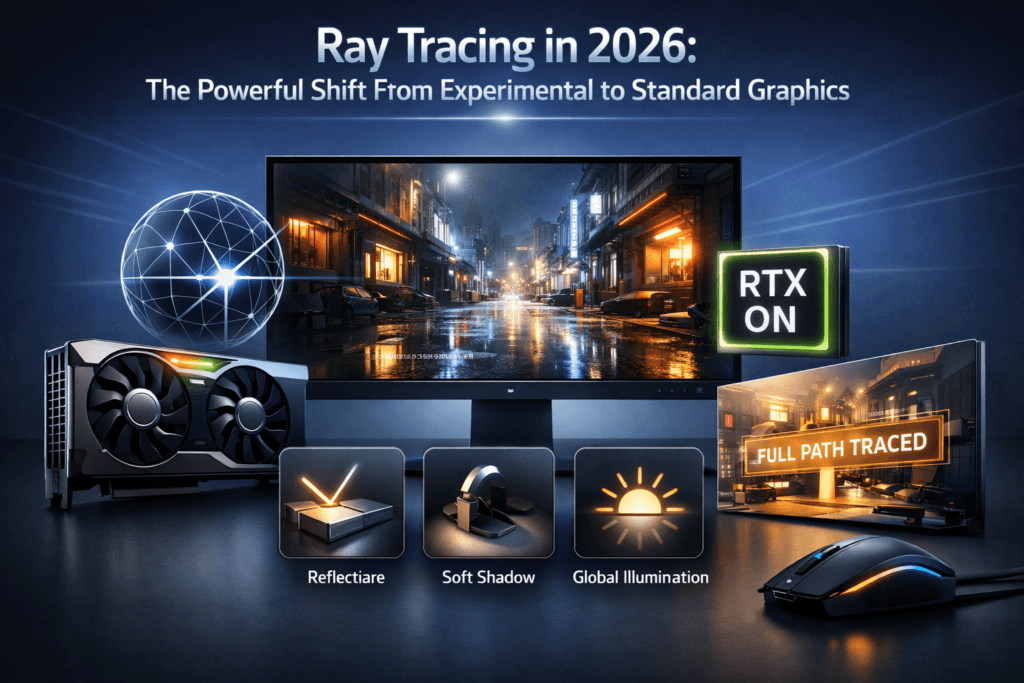
Ray Tracing in 2026: The Powerful Shift From Experimental to Standard Graphics
Ray Tracing in 2026: The Powerful Shift From Experimental to Standard Graphics The technology spent years as a benchmark showcase. Now it’s