
Gaming Laptop or Creator Laptop — What’s Better for 2025 Use?
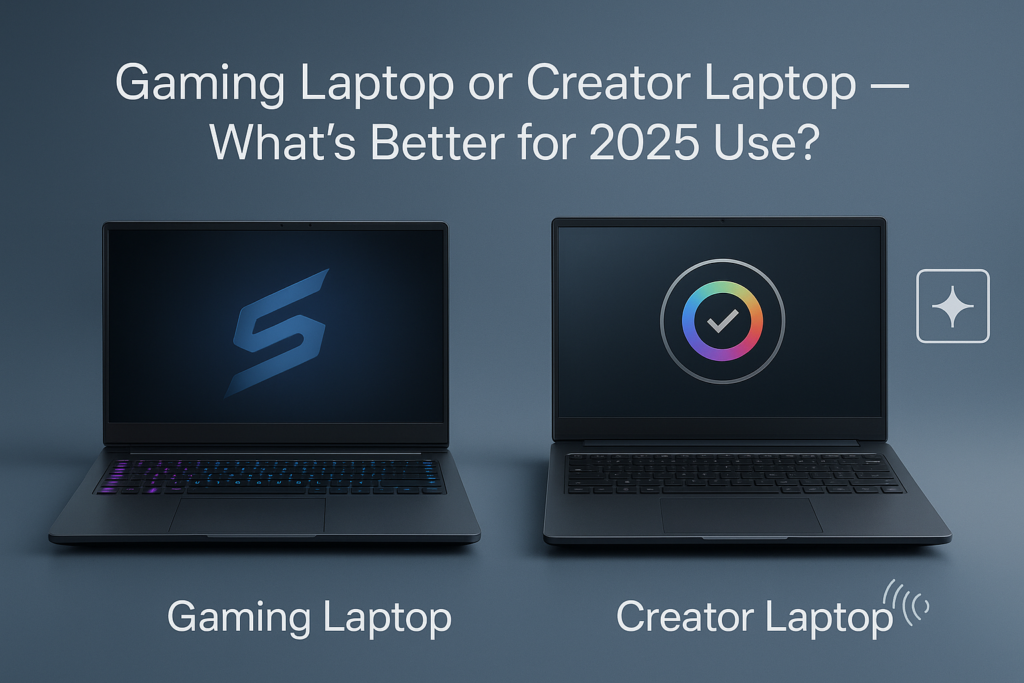
Choosing a portable workstation in 2025 often boils down to one question: should you prioritize raw performance for games or sustained productivity for creative workflows? The gaming vs creator laptop debate has become more nuanced than ever. Modern hardware convergence, AI-assisted software, and evolving content creation tools make the choice less about category labels and more about how your usage patterns align with device strengths.
Why the Distinction Still Matters
At first glance, gaming and creator laptops may share similar specs—powerful CPUs, discrete GPUs, and fast storage. Yet their design objectives differ. Gaming laptops are engineered for peak frame rates, fast response, and thermal headroom during extended play sessions. Creator laptops, meanwhile, emphasize consistent sustained performance, optimized thermals for long-duration tasks, and color-accurate displays for visual work.
In 2025, the lines have blurred: many gaming rigs run creative software perfectly well, and creator-focused machines now handle demanding visuals with ease. But the gaming vs creator laptop distinction still highlights differing engineering priorities that influence everyday experience.
Performance Under Load: Bursts vs Sustained Work
Gaming laptops are built around bursty performance—delivering high clock speeds and sharp GPU boosts for scenes that demand frame-by-frame rendering. This is ideal for competitive titles, fast-paced 3D environments, and high-refresh gameplay. Their thermal solutions are optimized to handle short-term peaks with aggressive fan curves and higher power budgets.
Creator laptops focus on long-duration performance—maintaining stable clock speeds over hours of editing, rendering, or simulation work. This sustained output matters more for tasks like:
- Video encoding
- 3D modeling and animation
- Audio mixing
- Large dataset processing
Thermals tend to be broader and more balanced, reducing throttling under continuous load. While gaming laptops can hike performance briefly, creator machines are engineered to avoid mid-task dips.
Display and Color: Visual Precision vs Visual Responsiveness
A major divergence in the gaming vs creator laptop divide lies in display calibration. Gaming notebooks often boast high refresh rates (165Hz, 240Hz, and beyond) for smoother motion, a boon for FPS titles and action-heavy scenes. However, their factory color calibration may be average, prioritizing speed over accuracy.
Creator laptops, on the other hand, typically feature:
- Wider color gamuts (DCI-P3 coverage)
- Factory calibration to Delta-E targets
- Uniform brightness and contrast across panels
These attributes are crucial for creators whose workflows demand color fidelity—photographers, videographers, and designers who need predictable visuals rather than subjective punch. Gamers can enjoy vibrant, fast-paced visuals, but creators rely on repeatable precision.
Audio and I/O: Toolsets That Support Purpose
Beyond CPUs and GPUs, the ecosystem matters. Gaming laptops often include:
- Mechanical or per-key RGB keyboards
- Enhanced cooling vents
- Stereo-tuned internal speakers prioritizing dynamics for game immersion
- Multiple display outputs for external screens
Creator laptops add value in other areas:
- Thunderbolt / USB4 for high-bandwidth peripherals
- SD / CF Express slots for camera workflows
- Professional audio interfaces and low-noise DACs
- Balanced internal tuning for vocal and instrumental work
These differences influence daily productivity more than raw benchmarks when viewed through the gaming vs creator laptop lens.
Mini Comparison: Gaming vs Creator Laptops (2025)
| Aspect | Gaming Laptops | Creator Laptops |
|---|---|---|
| Primary Focus | Peak frame rates | Sustained compute workloads |
| Thermal Strategy | Short bursts, aggressive cooling | Balanced, sustained performance |
| Display | High refresh, latency-focused | Color-accurate, wider gamut |
| I/O Priorities | Game peripherals, external monitors | High-bandwidth external storage, pro interfaces |
| Typical Users | Gamers, streamers | Creators, editors, designers |
This snapshot clarifies how design choices reflect intended usage rather than generic performance labels.
Contrarian Angle: The Peripherals Often Outperform the Label
Interestingly, the hardware ecosystem around laptops can outweigh category distinctions. A gaming laptop paired with a color-calibrated external monitor and attached high-bandwidth SSD can perform as a serious creator workstation. Conversely, a creator laptop hooked up to external GPUs and optimized RAM can tear through games.
This suggests that gaming vs creator laptop is increasingly a guiding framework for optimization, not a strict performance boundary. Intent and setup often matter more than marketing labels.
Closing Insight
The choice between gaming and creator laptops in 2025 is less about absolute performance and more about how that performance is sustained, displayed, and supported over time. Gaming designs reward responsiveness and peak bursts, while creator machines prioritize endurance, precision, and professional workflow support. Understanding these differences ensures buyers align their investment with real-world use rather than broad category marketing. By focusing on individual needs and long-term workflows, users find that the right machine can both empower creativity and support immersive entertainment.
Choosing the Right Laptop for Your Workflow
- Follow our Instagram @vibetric_official for nuanced comparisons between performance categories and real-use insights.
- Bookmark vibetric.com for detailed breakdowns on displays, I/O ecosystems, and workflow optimizations.
- Stay updated on emerging hardware trends that shape the future of both gaming and creative performance.
What’s your take on this?
At Vibetric, the comments go way beyond quick reactions — they’re where creators, innovators, and curious minds spark conversations that push tech’s future forward.
Next-Gen Smartphones Feel Dramatically Better in 2026 — Even If They Look the Same
Next-Gen Smartphones Feel Dramatically Better in 2026 — Even If They Look the Same The industrial design hasn’t changed much. The camera

AI Intelligence Race in 2026: The Real Battle Beyond Speed
AI Intelligence Race in 2026: The Real Battle Beyond Speed For years, consumer technology sold us speed. Every keynote celebrated higher clock