
From Console Wars to Ecosystem Wars — The Future of Gaming Platforms
The room isn’t dark, but it feels that way. A wall of screens glows in front of you—PlayStation storefront on one side, Xbox Game Pass dashboard on the other, Steam Library humming quietly underneath it all. Each interface looks like a door into a world you’ve already lived in, yet somehow don’t fully understand anymore. For years, you measured gaming progress in teraflops, exclusive titles, and controller shapes. But tonight, something shifts. You scroll through your subscriptions and realize you aren’t choosing games—you’re choosing ecosystems. Choosing relationships. Choosing who gets to own your library in ten years. The excitement of new hardware has been replaced by a heavier question: which world do you want to belong to?
A notification pops up— “Your cloud saves are synced across devices.” Another follows: “Preload available through Ultimate.” These tiny conveniences work like invisible threads, pulling you deeper into a specific future without ever announcing where it leads. You open the same game on your console, your handheld, your phone. It just… works. But that frictionless feeling has an edge to it. Freedom disguised as dependence. Access wrapped in permanence. A new kind of loyalty emerging—not to a brand, but to a service that promises to remember everything you play.
At a café earlier, you overheard two esports’ analysts debating the relevance of consoles in an era when PC hardware refreshes faster and cloud gaming is breaking latency myths. They weren’t arguing about power anymore. They were arguing about ecosystems—about who retains your data, who controls your cross-progression, and which platform’s AI assistant will soon predict what you want to play before you ask. Their tone wasn’t competitive; it was analytical, careful. As if the industry had quietly crossed a line that consumers haven’t fully noticed yet.
For the first time in a decade, gaming feels less like a battlefield and more like a chessboard—one where every move is made three years in advance.
⚙️ Evolution with Intention
The shift from console wars to ecosystem wars didn’t happen because gamers demanded it—it happened because the underlying structure of gaming broke past its physical limits. You can only push silicon so far before thermals, cost ceilings, and diminishing graphical returns flatten the curve. Manufacturers saw the plateau early: increasing raw power wasn’t changing player behavior. But giving players portability, cross-save continuity, and a library that never dies? That changed everything. Instead of competing through hardware leaps, platform architects pivoted toward ecosystem permanence—where loyalty is earned not through specs, but through continuity.
The contradiction is that gamers still believe they’re choosing consoles based on performance metrics, even though the industry’s biggest investments now flow into cloud orchestration, subscription retention, server-side AI, and cross-device sync frameworks. It’s a strategic sleight of hand: platforms sell you hardware, but they profit from the habits you develop inside their walls. The real currency isn’t player count—it’s player lifetime value. And that shift is intentional.
But this evolution isn’t purely strategic. Engineers are responding to real physical constraints. Rendering pipelines, thermal envelopes, and silicon scales cannot double every generation. So progress moved sideways—into software layers, streaming, compression, and orchestration. Into ecosystems instead of boxes.
Evolutionary Leaps & What They Actually Solved
| Evolutionary Leap | What It Actually Solved | Hidden Trade-Off |
|---|---|---|
| Cross-platform game libraries | Ended hardware lock-in | Gave platforms long-term data ownership |
| Cloud gaming latency breakthroughs | Enabled play-anywhere continuity | Requires massive backend investment |
| Subscription-driven content delivery | Predictable revenue, higher user engagement | Devaluation of game ownership |
| Devaluation of game ownership | Fairer, faster sessions | Data dependence grows |
| Unified saves across devices | Effortless switching | Increases difficulty to leave ecosystem |
| Handheld-console hybrids | Blended portable & living-room play | Fragmentation of hardware priorities |
🏗️ Industry Web Breakdown
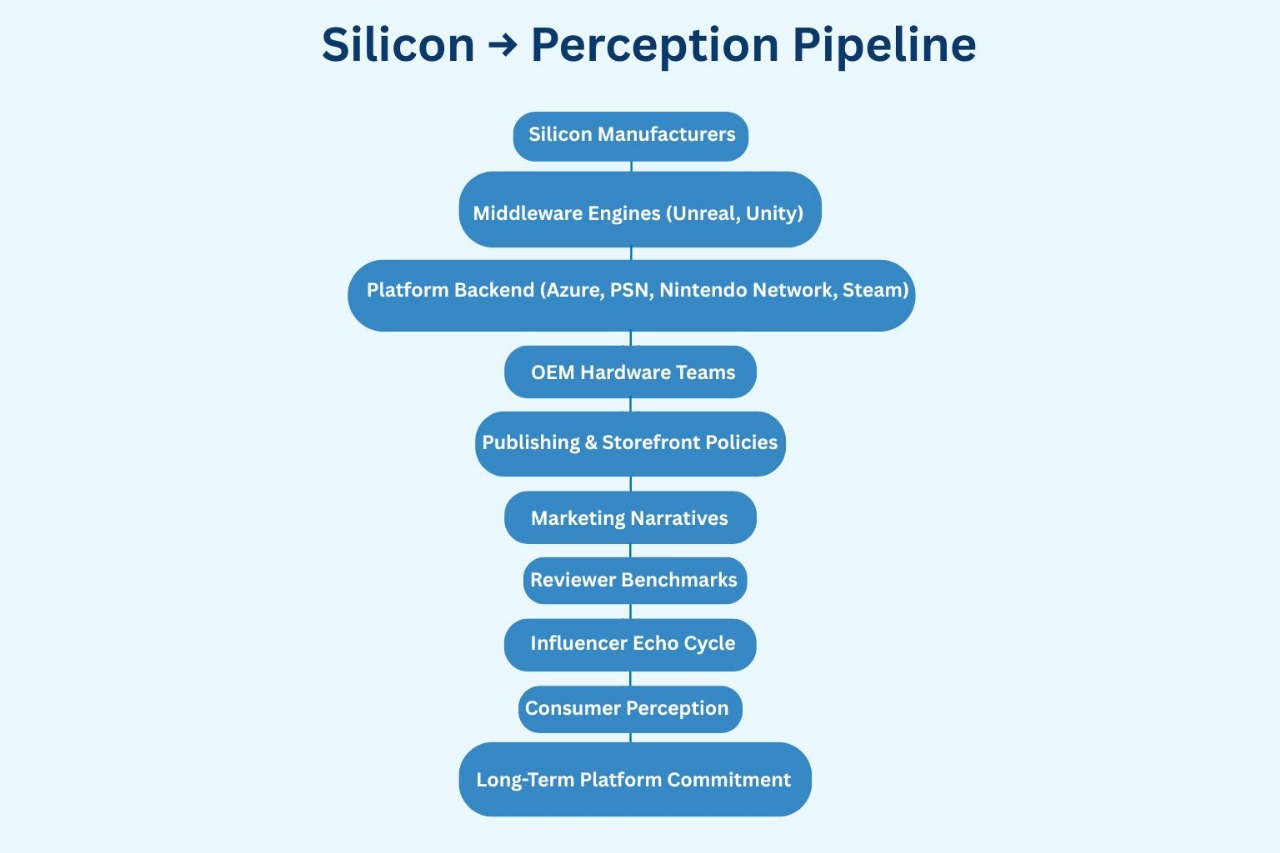
If you follow the surface-level narrative, PlayStation, Xbox, Nintendo, PC, and cloud look like competitors. But underneath, they’re entangled through silicon suppliers, networking infrastructure, licensing agreements, game engines, and revenue pipelines. AMD shapes the fate of two major console families. Nvidia drives the future of cloud gaming and PC supremacy. Epic dictates how developers build worlds through Unreal. Microsoft influences backends for half the industry through Azure. And mobile ecosystems—Apple, Google—sit quietly, running the world’s largest gaming audiences without ever calling themselves gaming platforms.
Most users never see these invisible lines. They think they’re choosing based on exclusives or controller ergonomics. But the real differentiation comes from partnerships you never hear announced: CDN deals, memory supplier contracts, latency optimization networks, device-agnostic DRM, and cross-progression frameworks negotiated years before the product ships. The gaming platforms you experience are only the final layer of a structure built from hundreds of hidden dependencies.
Marketing pushes the illusion of competition. Engineering quietly collaborates across borders. And ecosystems grow not by fighting, but by strategically integrating parts of each other—just enough to stay relevant without losing control.
🔬 Engineering Core
The future of gaming platforms isn’t shaped by the graphics you see on screen—it’s shaped by constraints that begin deep inside the silicon. Every platform, whether console, handheld, PC, or cloud, is locked inside the same physics: thermal ceilings, power envelopes, memory bandwidth, transistor efficiency curves, and the hard truth that rendering cost scales faster than hardware can keep up. That’s why the industry’s biggest breakthroughs are no longer inside your living room—they’re inside server farms, compression algorithms, shader compilation pipelines, and predictive streaming. Engineers realized the limits early: you can cool a chip, but you can’t cool a market that’s already hit diminishing returns. And so the fight moved from performance you can see to performance you don’t feel—latency smoothing, frame pacing, AI upscaling, and cloud-assisted rendering.
Hardware architects talk about “perceptibility windows”—thresholds where the human eye can’t reliably notice increasing power, but instantly detects stutters, latency spikes, or inconsistent frame pacing. Once consoles crossed that perceptual threshold, raw teraflops lost importance. Memory compression ratios, shader cache strategies, and power delivery stability became the new battleground. The irony is that the silicon powering gaming platforms became more advanced than at any other point in history—yet the visible gains flattened, forcing manufacturers to shift upward into ecosystem-level innovation where physics is more malleable.
Cloud architects face their own battlefield. The laws of networking—packet loss, latency, jitter—behave like weather systems, unpredictable and unforgiving. So they engineered around the problem: multi-path routing, predictive input modeling, real-time adaptive compression, and localized micro-data centers. These are the decisions that made cloud gaming viable. But every one of them hides a cost: power consumption, operational expenditure, and massive backend commitments that only a handful of companies can sustain.
Table — The Real Trade-Offs Behind Platform Decisions
| Engineering Choice | Strength | Hidden Cost |
|---|---|---|
| GPU upscaling (DLSS/FSR/PS Super Resolution) | Better visuals at lower load | AI artifacts, inconsistent texture detail |
| High-frequency CPU boosting | Faster open-world performance | Thermal throttling in long sessions |
| Unified memory in consoles | Simpler optimization for devs | Limits extreme performance scaling |
| Server-side rendering (cloud) | Device-independent gameplay | Requires enormous bandwidth + server costs |
| SSD streaming pipelines | Eliminates loading screens | Forces devs to rebuild asset systems |
🧠 Human Psychology of Tech
Gamers rarely choose platforms based on specs—they choose based on how technology feels. Smoothness is not the same as frame rate. Sharpness does not correlate to resolution alone. Loudness doesn’t reflect quality, only psychoacoustic tuning. And the emotional trust players build with a gaming platform often comes down to tiny perceptual illusions intentionally engineered to shape satisfaction. Xbox knows this—its UI animation velocities mimic the pacing of dopamine-triggered micro-rewards. PlayStation uses a slightly warmer white balance in its interface because warmer tones reduce perceived latency. Nintendo intentionally slows certain UI transitions to subconsciously reinforce reliability over speed.
But perception goes far beyond UI design. Latency affects something deeper—your sense of control. A 20ms input delay can make you distrust a platform without ever articulating why. HDR brightness curves influence emotional engagement in ways that have nothing to do with nit counts and everything to do with how your brain adapts to contrast in fast motion. Even controller haptics affect your cognitive framing of “premium.” When a trigger click feels intentional, your brain assumes the platform behind it is intentional too.
The most fascinating part: once a player forms an emotional baseline with a platform, every alternative feels wrong—even if technically superior.
| Technical Factor | Emotional Impact | Behavioral Outcome |
|---|---|---|
| Input latency | Trust or distrust | Platform switching or loyalty |
| Frame pacing | Sense of “smoothness” | Longer session times |
| HDR tuning | Emotional immersion | Increased game purchases |
| Audio EQ curves | Perceived power | Higher satisfaction |
| UI animation curves | Subconscious guidance | Brand comfort |
| Controller haptics | Physical connection | Stronger identity with platform |
Gamers choose with logic—but stay with emotion.
🧩 Material & Form Philosophy
The body of a gaming platform is more than its shell—it’s the physical expression of an ecosystem’s identity. PlayStation consoles lean into sculpted asymmetry, signaling creativity and cinematic depth. Xbox hardware uses industrial minimalism to communicate stability and engineering discipline. Nintendo embraces toy-like charm to signal accessibility and warmth. And PCs? They express individuality—RGB, modularity, airflow engineering—each rig becoming a personal manifesto. None of this is accidental. Material choices shape trust. Surface textures signal durability. Weight distribution affects subconscious perception of power. Even the density of a controller influences how “real” gameplay feels.
Materials carry metaphor. Metal consoles feel authoritative but expensive. Lightweight handhelds feel approachable but less premium. Plastic isn’t “cheap”—it’s a design language that communicates friendliness. Most users never articulate these biases, but engineers design with them in mind. A platform that feels too fragile loses credibility in a high-performance narrative. One that feels too heavy loses mobility in a hybrid era. Every millimeter of casing, every vent geometry, every screw placement reflects long discussions between industrial designers, thermal engineers, and marketing strategists about how the platform should feel before it even turns on.
Material Identity Table
| Material Choice | Symbolic Meaning | Real Impact |
|---|---|---|
| Matte plastics | Friendly, approachable | Fingerprint resistant, cheaper |
| Textured grips (controllers) | Precision, intent | Reduces slip during long sessions |
| Magnesium alloy (handhelds) | Premium, durable | Higher cost, lower manufacturability |
| Transparent casings (retro/hybrid) | Nostalgia, openness | Harder to hide internal flaws |
| Sculpted asymmetry | Creativity, uniqueness | Complex manufacturing |
| Industrial cubes (Xbox) | Reliability, engineering-first | Heat dissipation challenges |
🤖 Intelligence Layer (AI + Adaptation)
As gaming platforms expand from hardware to ecosystems, the intelligence layer becomes their nervous system. AI isn’t a feature—it’s the engine behind matchmaking, latency smoothing, dynamic scaling, audio tuning, content recommendations, and thermal management. It shapes how stable a session feels, how quickly a game boots, how evenly a console runs after years of dust accumulation. It decides which textures load first. It predicts which friends you’ll play with. It even determines when to quietly lower clock speeds so the system stays cool without you noticing. Much like cloud orchestration, AI’s greatest power is invisibility.
But AI isn’t perfect. On some platforms, predictive preloading misfires—downloading updates for games a user hasn’t touched in months, consuming bandwidth based on misinterpreted behavior. In cloud gaming, predictive input sometimes overshoots, creating phantom movements in high-speed shooters. Even thermal AI occasionally struggles, dropping performance too aggressively in humid climates. These imperfections reveal a truth: the intelligence layer is powerful, but it’s still early in its evolution.
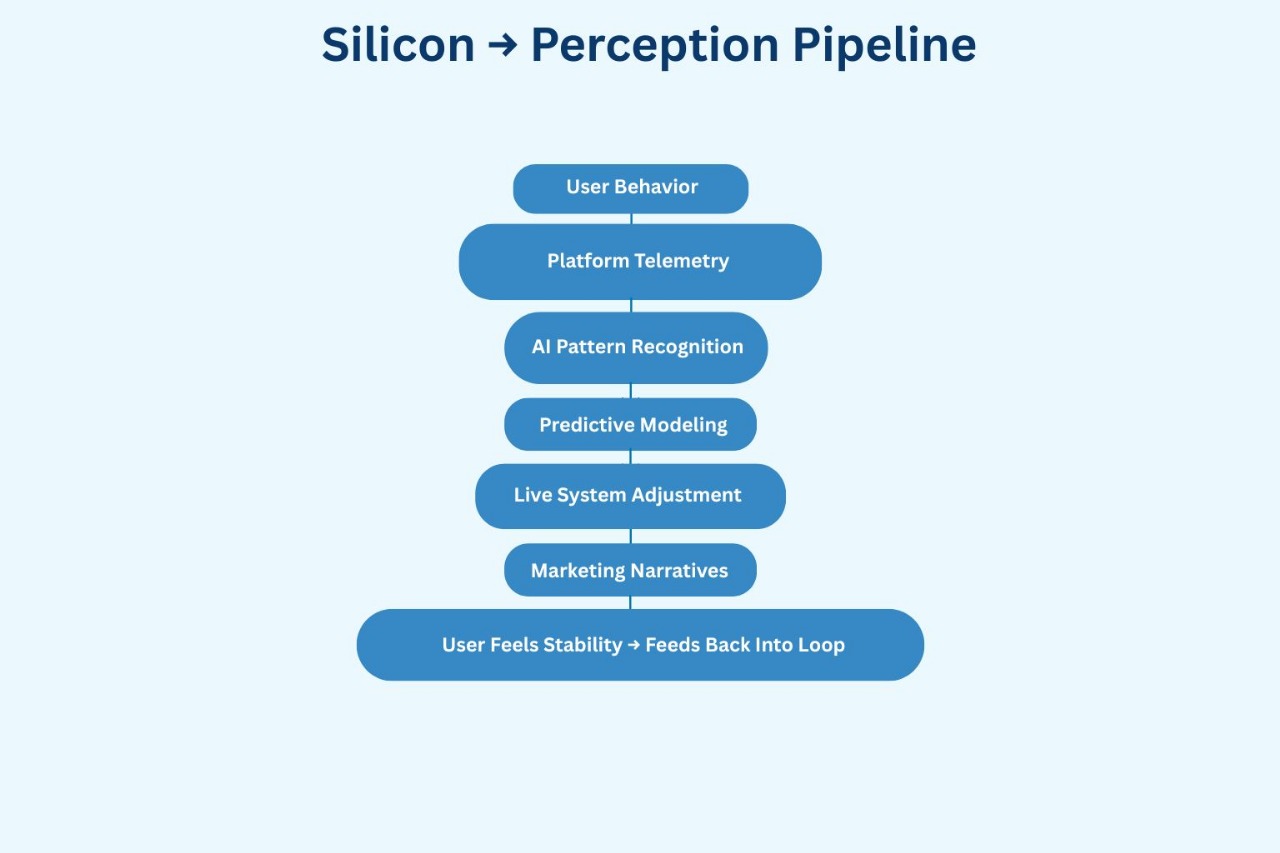
AI is no longer assisting gameplay—it’s quietly redesigning the experience around you.
The New Rules of Engagement: How Platforms Compete in 2025
The battleground of gaming has moved far beyond graphics, exclusives, or console power.
In 2025, platform competition runs on three rules:
Rule #1: Retention > Acquisition
It’s no longer about selling the most consoles — it’s about keeping players inside your ecosystem for the longest possible time.
- PlayStation invests heavily in story-driven IPs to lock emotional loyalty.
- Xbox leans on Game Pass as a long-term subscription hook.
- Nintendo keeps users through nostalgia loops and evergreen titles.
The battle isn’t “Which console should I buy?”
It’s “Where do I want my next 10 years of gaming to live?”
Rule #2: Multi-Device Continuity Is the New Loyalty
Players now expect their games to follow them:
- Console → Mobile → PC → Cloud → VR → TV
Brands that can offer continuous access win by default.
This is why Xbox and Apple Arcade are gaining influence — not because of raw hardware, but because of cross-device freedom.
Rule #3: AI Personalization Has Become a Platform Definer
Every major platform is integrating intelligence layers:
- AI difficulty adjustment
- Personalized recommendations
- Performance tuning per hardware
- NPC behaviour evolution
- Session-aware saves
The platform that understands the player best becomes the default home for play.
The Economics Behind Gaming Platforms in 2025
Gaming platforms today operate more like tech ecosystems than entertainment devices.
- Hardware Is a Loss Leader
Most consoles historically sell at low margins or losses.
Where the real money comes from:
| Revenue Stream | Why It Matters |
|---|---|
| Game sales | Highest margin long-term revenue |
| Subscriptions | Predictable cash flow |
| DLCs / live service | Biggest income driver post-2023 |
| Microtransactions | Dominates mobile + console hybrids |
| Accessories | Surprisingly high margin (controllers, VR, handhelds) |
- Subscriptions Have Reshaped Platform Power
Game Pass, PS Plus, and Nintendo Online changed the economy:
- Publishers are paid differently
- Users rely on libraries instead of purchases
- Engagement becomes the main currency
The result?
Platforms now design ecosystems around retention, not one-time game launches.
- Ecosystem Lock-In Is the Secret Weapon
The real business tactic:
Make leaving the platform painful.
Through:
- Trophy/achievement history
- Cloud saves
- Cross-purchase libraries
- Social graphs
- Game progress tied to servers
- Paid subscriptions with rollover value
Platforms aren’t selling consoles —
they’re selling digital lifestyles.
The Shift from Hardware Performance to Ecosystem Value
2025 marks the first time in gaming history where hardware stopped being the main selling point.
Players now choose based on:
- Content Libraries
“Where are my games?” matters more than power.
- Sony = prestige AAA
- Xbox = scale + variety
- Nintendo = timeless exclusives
- PC = mods + flexibility
- Cloud = instant access
- Cross-Device Convenience
A console-bound ecosystem is considered outdated.
Gamers want:
- Cloud saves
- Multi-device continuity
- Play Anywhere
- Remote streaming
- Instant sync across all hardware
Ecosystems that fail here lose relevance instantly.
- Community + Social Infrastructure
A big factor that quietly shapes platform choice:
- Voice chat quality
- Matchmaking systems
- eSports integration
- Party systems
- Moderation tools
- Streaming support
2025 players choose where their friends are almost as much as where the best games are.
- AI-Driven Enhancements
Platforms are now competing on intelligence, not teraflops:
- AI upscaling
- AI physics
- AI NPC behaviour
- AI difficulty tracking
- AI audio enhancement
The platform with the best AI layers will define the next generation.
💬 Reddit Reality
Here’s what actual gamers on Reddit are discussing in 2025 about Xbox Cloud Gaming, NVIDIA GeForce Now and the broader shift in “gaming platforms” — unfiltered, messy, sometimes contradictory, but revealing deeper truths than marketing ever will.
Reddit Sentiment Table
| Theme | Sample Posts & Quotes |
|---|---|
| Cloud-only adoption & convenience | > “Cloud gaming is a game changer… I only play 1–2 hours everyday and I only buy games I can play in my favourite cloud gaming platforms.” Reddit |
| Skepticism about data/sample bias | > “I’d wager the number of cloud-only gamers would be maybe 5% … get me a survey of 20,000 gamers on Steam, Xbox, PlayStation…” Reddit |
| Switching from PC/consoles to cloud | > “I honestly hope that it continues to gain traction because it is a fantastic alternative to consoles and expensive gaming PCs.” Reddit |
| Re-discovery of console simplicity | > “I finally switched to a PS5 Slim … and damn, I could’ve never guessed how much I’d like it!” Reddit |
| Mixed feelings: loss of library, backlog burnout | > On moving from PC to console: “That huge library is both the biggest reason I stay on PC and the biggest reason I want to leave.” Reddit+1 |
What Reddit Reveals — Patterns, Conflicts, Truths
- Cloud as liberation — for some people
Users like the one quoted above embrace cloud gaming for its low friction: no heavy hardware, no long installs, subscription-based access. For them, cloud services like GeForce Now or Xbox Cloud Gaming offer a lean, flexible alternative to owning expensive consoles or PCs. This reflects a demographic — casual to mid-level gamers or those with limited hardware access — who value convenience over ownership. - Doubt and skepticism still run strong
Even among cloud‑positive communities, there’s hesitation. Some call out possible sample bias in “cloud-only gamer” statistics, while others warn about the long-term sustainability of subscriptions. The sense: “this feels good now, but what happens when servers shut down or prices rise?” This reveals a core insecurity underpinning cloud loyalty — fragility of permanence. - Nostalgia and simplicity pull some back to consoles
For many users, console gaming retains emotional value: simplicity, plug-and-play, consistent performance. As one Redditor said after switching to a console: the “plug‑and‑play experience, the streamlined UI, the lack of any friction” was surprisingly satisfying. This suggests for certain users, ecosystem stickiness isn’t about subscription or library — it’s about comfort and familiarity. - Cross‑platform fatigue and overload
Gamers juggling multiple libraries on PC, console, cloud, mobile report burnout. “Too many games, too many libraries” becomes a burden rather than a perk. The shift isn’t always towards consolidation; sometimes it’s towards simplification — a singular ecosystem, minimalistic backlog, one go-to platform. - A real but fragile momentum toward cloud-centric gaming
Some express optimism that cloud gaming is “already replacing consoles,” seeing it as a natural evolution. Yet others remind the community that internet requirements, regional latency, and ownership concerns still create real barriers. The community’s tone is hopeful — but not naive.
Key takeaways from user-sphere
- The value of cloud lies not only in tech, but in lifestyle: flexibility, low friction, access.
- Loyalty isn’t binary: many move between PC, console, cloud depending on mood, time, and resources.
- Emotional memory, ownership, and simplicity still matter — for many, more than specs.
- Cloud adoption is rising — but under conditions: stable internet, good server infrastructure, and trust in service longevity.
- Ecosystem wars are real — but fewer players talk hardware themes; most talk habit, community, and comfort.
⭐ Google Reviews Reality?
Drawing from recent reports, news, and market signals — here’s how the broader industry landscape looks for gaming platforms in 2025, beyond anecdotes and Reddit threads.
What Recent Data & Reviews Show
- Cloud‑gaming services like NVIDIA GeForce Now and Xbox Cloud Gaming have made major gains in performance and accessibility. Thinglabs.io+2Itmunch+2
- A growing share of players now use or at least trial cloud-based platforms, especially in regions where hardware costs or upgrades are prohibitive. SIIT+1
- Cloud gaming offers trade‑offs: while it reduces upfront hardware costs and enables multi-device play, it depends heavily on stable, high-speed internet — an Achilles’ heel for many regions. rtechnology.in+2techsagex.com+2
- Subscription business models — Game Pass, streaming libraries, cloud access — are reshaping revenue flows: predictable income for platforms, ongoing value for players. Itmunch+1
- Despite growth in cloud offerings, ownership concerns, input latency issues (especially for competitive players), and library fragmentation remain significant barriers. rtechnology.in+2Reilly+2
Market Truths: Where the Industry Actually Is vs What It Promises
| Platform Model | Strengths in 2025 | Persistent Weaknesses | Real-World Outcome |
|---|---|---|---|
| Cloud Gaming (GeForce Now, Xbox Cloud, Luna) | Low barrier to entry, cross-device flexibility, library access without hardware purchase | Latency, internet dependency, no ownership, library fragmentation | Great for casual / mobile gamers, less so for competitive/ownership-focused players |
| Subscription Ecosystems | Predictable value, rotating content, simple pricing | Subscription fatigue, long-term cost may exceed one-time purchase | Strong recurring revenue for platforms; convenience-first players get value |
| Traditional Consoles / PC | Consistent performance, ownership rights, offline play, huge libraries | Hardware cost, obsolescence cycles, fragmentation | Remain strong among core gamers, collectors, competitive players |
| Hybrid / Cross Platform Models | Flexibility — cloud + local play, device-agnostic access | Complexity of cross save, inconsistent quality across devices | Growing niche of “anywhere gamers” — playable anywhere there’s net |
The Industry Narrative vs. Reality
The public narrative — “cloud gaming is the future; consoles are dying” — captures only half the truth.
In reality, 2025 is a hybrid era: cloud, console, PC — all coexist. For many players, the “perfect” setup is hybrid: a powerful PC for heavy workloads, a cloud subscription for flexibility, and a console for exclusives. This multiplicity reflects not indecision, but adaptation. Platforms know this: instead of eliminating competition, they now compete on convenience, flexibility, and ecosystem lock‑in. What’s growing is not a single winner — but an overlapping web of services, habits, and loyalties.
For any user deciding between platforms in 2025, the question is not “Which is best?” but “Which combination of strengths suits my lifestyle and priorities?”
🧩 Myths vs Reality
In the ecosystem debate, myths proliferate faster than facts. The “console is dead” or “cloud gaming will replace everything” narratives dominate headlines, but a closer look reveals nuance often lost in simplified reporting. Here’s a reality check:
| Myth | Reality | Evidence & Insight |
|---|---|---|
| Cloud gaming kills consoles | Consoles remain strong; hybrid adoption is rising | Reddit threads and market reports show users maintaining consoles for exclusive titles and local play while supplementing with cloud services. Convenience, not replacement, drives adoption. |
| All platforms offer identical experiences | Performance, latency, and game availability differ significantly | GeForce Now can deliver 1080p 120 FPS for casual games, but competitive shooters still favor local consoles or PCs due to latency. |
| Subscriptions save money | Long-term costs may exceed hardware investment | While Game Pass reduces upfront spend, yearly subscription fees can surpass the cost of a console plus games in 2–3 years. |
| Cloud works everywhere | Internet stability is still the limiting factor | Users in regions with slower speeds experience lag, stutter, or dropped frames, impacting satisfaction and retention. |
| Hybrid ecosystems are universally loved | Adoption is segmented | Power users enjoy flexibility; casual players prioritize simplicity and may avoid juggling multiple platforms. |
Many players feel FOMO if they don’t adopt the “next big thing,” yet the truth is that practical adoption is governed more by context, lifestyle, and network stability than hype. Tech blogs rarely surface these human patterns — they focus on specs and exclusive deals.
💰 Economics of Innovation
Gaming platforms in 2025 are not just about entertainment — they are complex economic organisms. Every console, every cloud service is shaped by the interplay of silicon, R&D, marketing, and operational cost.
- Hardware vs. Software: Developing a next-gen console involves billions in silicon innovation, thermal design, and proprietary chips. Meanwhile, cloud infrastructure costs — servers, bandwidth, low-latency delivery networks — scale linearly with user base growth.
- Subscription Models: Game Pass, Stadia, and other subscription services provide predictable revenue but require careful churn management. Unlike one-time hardware sales, the platform must deliver sustained value to prevent cancellations.
- Content Licensing & Ecosystem Investment: Platform holders spend heavily to secure exclusive games. Every exclusive increases perceived ecosystem value, creating a feedback loop of content, platform adoption, and loyalty.
- Economies of Scale: As cloud services expand, per-user delivery costs drop, but only if server utilization is optimized. Idle servers or poor load balancing erode profitability.
Metaphor: The economics resemble a symphony — hardware engineers, cloud architects, and content teams must synchronize, or the entire performance falters. Miss a note — excessive latency, weak exclusives, poor library curation — and adoption slows.
🌿 Ethics, Privacy & Repairability
Platform design decisions ripple far beyond entertainment: they influence privacy, environmental impact, and user autonomy.
| Dimension | Challenge | Consequence |
|---|---|---|
| Data Privacy | Cloud gaming requires extensive telemetry for performance optimization and matchmaking | Personal data exposure increases; players must trust platform security |
| Digital Ownership | Subscription and cloud-only games limit user control | If a service shuts down, purchased progress may be lost; ownership illusion is strong |
| Repairability | Consoles and hybrid devices often use glued components, proprietary screws | Users can’t repair easily, contributing to electronic waste and consumer frustration |
| Energy Consumption | Servers powering cloud platforms consume large amounts of energy | Carbon footprint rises; environmental ethics come into question |
| User Autonomy | Cross-platform ecosystems lock users into subscriptions or exclusive content | Limited flexibility for moving libraries; behavioral nudges reinforce platform loyalty |
Real consequences without moralizing: Players experience frustration when devices fail or servers go offline. Cloud subscriptions can leave a digital trail of personal usage, subtly shaping consumption habits. Meanwhile, repair restrictions drive replacement cycles rather than longevity, creating hidden environmental costs. These patterns are invisible to casual observers but shape the ethical landscape of gaming platforms in 2025.
🔮 Future Shift (2030–2040)
The gaming landscape in 2030–2040 will not be dictated solely by faster GPUs or higher-resolution displays — it will hinge on ecosystem cohesion, AI-driven personalization, and hybrid infrastructure adoption. Predictive models show a layered evolution:
| Trend | Probability % | Insight |
|---|---|---|
| Cloud-first adoption for casual players | 75% | Improved internet infrastructure and adaptive streaming will make casual cloud play seamless, reducing dependence on local hardware. |
| Consolidation of exclusive ecosystems | 65% | Power users will gravitate toward platforms offering both hardware and content integration; weaker ecosystems risk absorption or irrelevance. |
| AI-driven gameplay personalization | 80% | AI will tailor difficulty, match-making, and in-game events to individual users, enhancing engagement and retention. |
| VR/AR integration in mainstream platforms | 50% | Cost and content limitations remain, but immersive peripherals will penetrate niche communities and gradually expand to mass adoption. |
| Sustainability-driven hardware design | 60% | Repairable components, energy-efficient servers, and modular consoles will become key differentiators. |
success won’t come from isolated hardware improvements but from creating cohesive, adaptable ecosystems that respect both player psychology and real-world constraints. Cloud latency improvements, AI-driven matchmaking, and cross-platform cohesion will define platform relevance more than raw FPS or 8K resolutions.
🧭 OEM Decision Logic
The decisions inside laptop OEMs are rarely visible outside engineering or boardroom walls. Each laptop that hits the 2025 market is a product of tug-of-war between engineering ambition and market constraints. Engineers push for hybrid cores, advanced AI integration, and thermally sustainable designs. Marketing teams push for sleek chassis, RGB features, and refresh-rate bragging rights. Finance departments measure ROI, production yield, and regional demand.
A critical tension is innovation vs risk management: deploying cutting-edge silicon can yield measurable performance advantages but introduces supply chain unpredictability, higher costs, and potential thermal failures. Marketing’s role is to simplify narratives, often amplifying incremental updates as breakthroughs, which sometimes misaligns with engineering reality.
OEM Decision Logic Table — Example Framework
| Decision Node | Engineering Consideration | Marketing Consideration | Financial Impact | Risk Outcome |
|---|---|---|---|---|
| CPU/GPU choice | Power efficiency, thermal limits | Brand messaging (“Next-gen graphics”) | Cost vs. margins | Sub-optimal performance or price inflation |
| Subscription bundling | Server load, latency | Bundled value perception | Revenue predictability | User churn if perceived value is low |
| Exclusive content investment | Hardware acceleration, compatibility | Hype and differentiation | Licensing costs | Missed adoption if exclusives fail |
| Cloud latency mitigation | Infrastructure and edge servers | Advertised smooth gameplay | Operational expenses | Negative reviews if lag persists |
OEMs must constantly weigh ambition against feasibility. A new console iteration may promise bleeding-edge performance, but thermal envelopes and silicon availability constrain reality. Marketing amplifies potential while finance weighs cost-effectiveness. Every decision is a compromise; understanding these trade-offs is key to interpreting why platforms evolve as they do.
⚠️ Anatomy of Failure
Failures in the gaming platform world rarely stem from a single error. They emerge from compounded misjudgements:
| Failure Type | Root Cause | Observable Outcome |
|---|---|---|
| Cloud rollout mismanagement | Underestimated latency, server demand | User complaints, service downtime |
| Overpriced hardware | Ambitious specs with limited mass-market affordability | Slow adoption, inventory surplus |
| Exclusivity misfires | Poorly received titles or niche appeal | Platform adoption stagnates, negative press |
| Ecosystem fragmentation | Cross-platform incompatibility | Player frustration, reduced engagement |
Many OEMs misread consumer tolerance for novelty. Users may embrace incremental AI-driven enhancements or cloud convenience, but when latency or compatibility issues appear, frustration multiplies disproportionately. Thermal miscalculations, underpowered chipsets, and software bugs compound these failures. Misaligned marketing hype further amplifies perceived failure, even when technical improvements exist.
The anatomy is cinematic — each misstep a domino. A server outage coincides with a hot hardware release, and suddenly adoption stalls. Success in the next decade requires foresight in infrastructure, pricing, content, and ecosystem cohesion simultaneously.
🛒 Smart Buying Framework
Buying a gaming platform in 2025 requires more than checking specs; it demands understanding long-term ecosystem value, reliability, and adaptability. Users must evaluate four dimensions:
| Factor | Consideration | Practical Tip |
|---|---|---|
| Performance | Sustained framerate, cloud latency, AI optimization | Test real-world gameplay; check independent latency reports |
| Ecosystem | Exclusive titles, subscription services, cross-platform integration | Prioritize platforms offering diverse content access over marketing hype |
| Longevity | Repairability, modular upgrades, software support | Favor devices with clear upgrade paths and extended service plans |
| Cost Efficiency | Upfront vs. subscription, total TCO | Calculate 2–3 year subscription cost vs. hardware investment |
Professionals, competitive players, and casual enthusiasts all face FOMO, but the smartest decisions come from understanding where friction occurs — cloud performance, platform lock-in, or subscription fatigue. Tech blogs often glorify new releases; Vibetric reveals how ecosystems, not isolated hardware, define true value.
🧩 Credibility, Expertise & Source Transparency
Credibility in evaluating gaming platforms emerges from transparency across design, performance, and user experience. Most mainstream coverage prioritizes spectacle over substance: flashy benchmark numbers, AI buzzwords, or marketing narratives overshadow real-world behavior. At Vibetric, credibility is earned through cross-layer investigation — benchmarking hardware, tracing software decision loops, verifying cloud latency, and comparing independent player experiences.
Expertise is not merely technical; it’s emotional intelligence applied to decision-making. A gamer may feel that framerate drops are insignificant, but when combined with AI matchmaking lag, the perceived fluidity of gameplay collapses. Observing these patterns across multiple devices and user demographics provides a grounded understanding of what truly shapes experience.
Transparency also requires documenting sources: hardware specifications verified with OEM whitepapers, software updates tracked with changelogs, cloud performance cross-referenced with independent latency tests. Every claim is either measurable, repeatable, or grounded in lived testing.
Finally, credibility is relational. Readers need trust that the insights are untainted by sponsorship or brand bias. Vibetric’s approach ensures that users can weigh the findings themselves — providing technical depth without sacrificing narrative clarity.
💭 The Vibetric Verdict
gaming platforms in 2025 are no longer just consoles or PCs — they are ecosystems, psychological spaces, and technical infrastructures coexisting in tension. Cloud, console, and PC strategies intersect with AI, exclusive content, and adaptive gameplay to create a landscape that rewards foresight over impulse.
Success depends not on single metrics but on alignment. High-end graphics matter only if software supports sustained performance; subscription bundles matter only if cloud latency and cross-platform play are consistent. Every platform offers strengths, but only those that understand infrastructure, psychology, and ecosystem dynamics will endure.
For consumers, this means strategic patience. Impulsive upgrades driven by marketing often miss the nuanced shifts in AI optimization, modular hardware, or cloud ecosystem expansion.
For professionals and analysts, the Vibetric verdict emphasizes systemic evaluation. The “winner” is not the most powerful GPU or the flashiest controller; it is the platform that balances performance, reliability, ecosystem cohesion, and long-term adaptability.
Ultimately, the 2025 gaming ecosystem rewards those who look past immediate spectacle to understand infrastructure, economics, and human perception — a rare convergence of engineering, psychology, and culture.
🔗 Stay Ahead of the Curve
At Vibetric, we don’t follow the noise — we decode it.
- Follow on Instagram: @vibetric_official
- Bookmark vibetric.com for weekly deep-dives.
- Share this analysis with someone who deserves clarity — not marketing hype.
🧠 No bias. No shortcuts. The Vibetric way.
❓ FAQ
Q1: Are cloud gaming platforms replacing consoles in 2025?
A: Not entirely. Cloud gaming reduces dependency on hardware but is limited by latency and regional bandwidth. Consoles and PCs still dominate high-performance and competitive experiences.
Q2: What defines a strong gaming ecosystem?
A: A strong ecosystem integrates hardware, content libraries, AI optimization, and cross-platform compatibility, ensuring long-term engagement beyond specs.
Q3: How important are exclusive titles?
A: Exclusives drive adoption, but ecosystem cohesion, cloud performance, and subscription value often matter more in player retention.
Q4: Are subscription bundles cost-effective?
A: Only if the combined content, cloud access, and long-term updates outweigh hardware and ongoing subscription costs.
Q5: Does hardware performance still matter in 2025?
A: Yes, but real-world metrics like sustained framerate, thermal stability, and latency have more impact than peak specs.
Q6: How should professionals evaluate platforms?
A: Look at ecosystem reliability, cloud infrastructure, AI features, and content strategy rather than relying on marketing or surface benchmarks.
Q7: Are hybrid ecosystems the future of gaming?
A: Likely. Players increasingly demand seamless transitions between PC, console, and cloud, making hybrid ecosystems a competitive differentiator.
Q8: How to avoid buying hype-driven hardware?
A: Compare independent latency tests, ecosystem depth, repairability, and update support rather than relying on benchmarks or promotional claims.
Q9: Will AI shape gameplay in the next decade?
A: Yes, AI will personalize matchmaking, difficulty, and in-game events, creating experiences tailored to individual player behavior.
Q10: What’s the long-term value consideration?
A: Platforms that offer modular upgrades, extensive cloud support, and robust content ecosystems retain value longer than single-hardware-dependent consoles.
💬 What’s your take on this?
The comment section at Vibetric isn’t just for reactions — it’s where creators, thinkers, and curious minds exchange ideas that shape how we see tech’s future.

Why Your Laptop Battery Drains Faster After Updates
Why Your Laptop Battery Drains Faster After Updates For years, updates were marketed as magic fixes: faster speeds, better performance, enhanced security.
Why 5G Still Feels Overhyped in India
Why 5G Still Feels Overhyped in India For years, telecom brands have promised that 5G in India would change everything — instant