
Best Gaming Gear 2025 — Worldwide
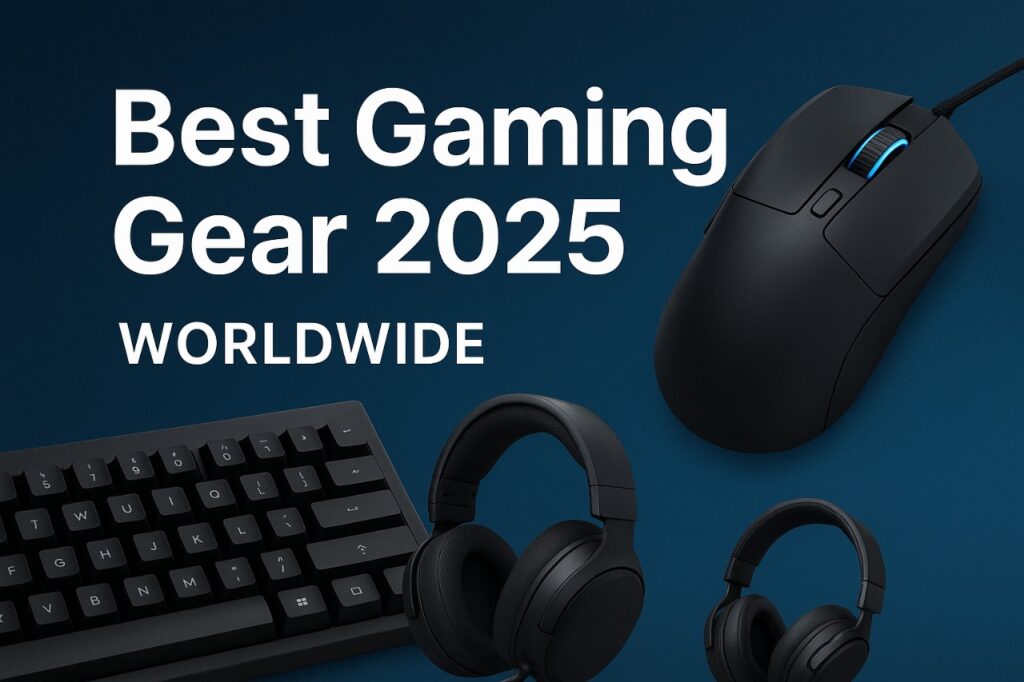
Gaming in 2025 feels different — faster, sharper, and more personal than ever. And behind this shift is a new generation of gaming gear that prioritizes precision over flash. What used to be a niche hobby is now a fully engineered ecosystem where every accessory — from mice to headsets to controllers — shapes performance more than raw hardware alone.
The global market has reached a turning point, where the best gaming gear isn’t about RGB overload but refined engineering. This short read breaks down what defines top-tier gear in 2025, why certain trends dominate worldwide, and how players are redefining what “good” equipment truly means.
⚙️ Core Insight (Depth + Clarity)
The best gaming gear in 2025 isn’t identified by brute specs anymore — it’s shaped by fluidity, responsiveness, and long-session comfort. Across the world, brands are optimizing for reduced latency, improved ergonomics, and smarter firmware tuning rather than raw DPI or wattage. This marks a major shift from visual spectacle to invisible performance.
Another major evolution is standardization. Whether it’s mechanical switches, driverless setup, or adaptive response systems, top gear now focuses on consistency. Players across countries want gear that feels the same every day — not just on its first week.
What most users don’t realize is that the global gaming gear industry matured because hardware bottlenecks moved from the PC to the accessories. When your setup is already powerful, the biggest performance leap comes from the tools in your hands, not the machine on your desk.
📊Bite-Sized Data Table
| Gear Type | What Matters in 2025 | Why It Impacts Performance |
|---|---|---|
| Gaming mouse | Sensor accuracy + latency | Direct aim consistency |
| Mechanical keyboard | Switch precision + travel | Reduces error rate |
| Headsets | Spatial tuning + comfort | Better reaction cues |
| Controllers | Hall-effect sticks | Eliminates drift |
| Monitors | Response time + VRR | Smoother, tear-free gameplay |
| Chairs | Posture alignment | Longer, fatigue-free sessions |
🔍 Micro Analysis
A: The Real-World Impact
The global surge in premium gaming gear directly boosts everyday performance:
- Players experience more predictable aim and smoother tracking with refined sensors.
- Keyboards feel more stable thanks to new pre-lubed switches and tighter stabilizers.
- Gaming headsets add more accurate positional sound, improving reaction speed.
- Hall-effect controllers prevent drift, extending lifespan dramatically.
- Monitors with faster response time reduce motion blur, making competitive titles feel more natural.
These changes translate into fewer missed inputs, less fatigue, and more consistent gameplay sessions — a bigger upgrade than most GPU refreshes.
B: The Hidden Truth
Behind the scenes, brands aren’t upgrading gaming gear because of sudden innovation — they’re doing it to stay competitive in a saturated market.
- Multiple companies now use the same high-end sensors, leveling the playing field.
- Controller drift lawsuits pushed manufacturers toward magnetic stick technology.
- Esports organizations demand standardized gear, forcing brands to refine, not reinvent.
- AI-powered tuning for microphones and sound profiles is becoming the default.
- The accessory market delivers higher margins than core hardware — pushing rapid iteration.
The truth? Much of today’s advancement is industry pressure disguised as breakthrough engineering.
🌍 Culture Angle
Gaming culture in 2025 is globally unified. Whether it’s North America, Europe, or Southeast Asia — players want the same qualities: stability, comfort, low latency, and durability. Streamers favor elegant, minimal setups over flashy RGB. Competitive gamers demand gear that never fluctuates. Even casual players now appreciate the difference high-quality gaming gear makes in longer sessions.
This cultural shift proves one thing: gaming is no longer entertainment — it’s a lifestyle, and the tools reflect that evolution.
🧠 Quick Vibetric Takeaway
- Gaming gear now defines performance more than PC specs.
- Precision sensors and Hall-effect sticks set new durability standards.
- Comfort engineering is replacing RGB as the primary selling point.
- Esports standardization pushes accessory refinement globally.
- AI-based audio and tuning elevate mid-range peripherals.
- Players value consistency and longevity over hype features.
- The best gear feels invisible — letting skill take the spotlight.
💬 Vibetric Verdict
Vibetric Verdict: Gaming gear in 2025 isn’t louder — it’s smarter.
The biggest upgrades are subtle: smoother motion, clearer audio cues, frictionless inputs.
These aren’t accessories anymore; they’re extensions of player instinct.
And in a world where milliseconds define matches,
the gear that disappears in your hands is the gear that wins.
🔗 Stay in the Loop
We don’t sell hype — we explain it.
- Follow @vibetric_official for grounded gaming hardware insights, performance analyses, and real-world testing.
- Bookmark vibetric.com to stay ahead of the tech curve.
- No hype. No bias. Just facts — the Vibetric way.
💬 What’s your take on this?
The comment section at Vibetric isn’t just for reactions — it’s where creators, thinkers, and curious minds exchange ideas that shape how we see tech’s future.

OnePlus 15 Review 2026: Intelligent Performance in the AI Era
OnePlus 15 Review 2026: Intelligent Performance in the AI Era Performance used to be theatrical. Manufacturers showcased peak clock speeds, explosive benchmark
Performance Per Watt in 2026: The Critical Benchmark Redefining Computing
Performance Per Watt in 2026: The Critical Benchmark Redefining Computing For years, performance was measured in absolutes. Faster processors won. Higher benchmark