
The Myth of Gaming Chairs — Comfort or Clever Marketing?
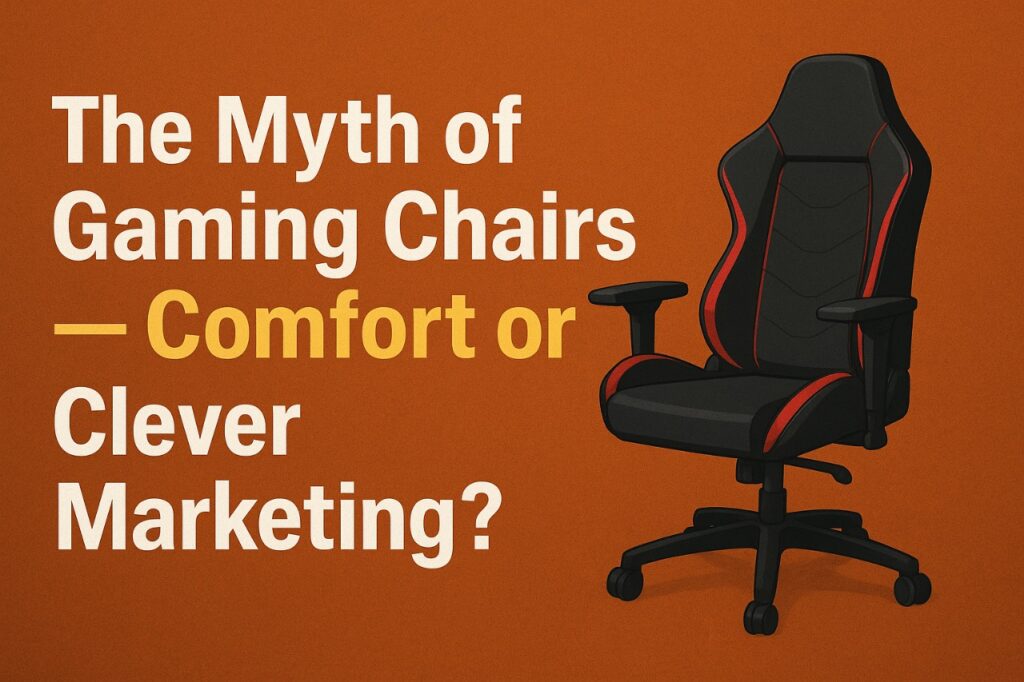
For years, gaming chairs have been sold as a symbol of power and comfort — the throne of every true gamer. Bucket-seat design, race-car styling, and promises of “ergonomic perfection” have turned them into must-have accessories for every setup.
But in 2025, the myth is cracking. Behind the bold colors and racing stripes, one question remains: are gaming chairs actually good for you — or just good at selling the illusion of comfort?
This short read dives into how gaming chairs became a cultural icon, why they might not be as ergonomic as advertised, and what real comfort actually means for gamers who sit for hours every day.
⚙️ Core Insight (Depth + Clarity)
The gaming chair started as a marketing masterclass — not a medical breakthrough.
Inspired by racing car seats, brands promised focus, posture, and performance through design. But the reality? Those same aggressive bolsters and high backs were meant for cars, not desks.
Here’s the simple truth: most gaming chairs are built for aesthetics, not anatomy.
The side wings that look cool in photos often restrict movement. The tall, rigid backs support appearances, not spines. And those “lumbar pillows” — usually an afterthought — rarely match real ergonomic alignment.
Meanwhile, true ergonomic office chairs, designed for corporate use, quietly deliver better posture, adjustability, and long-term support.
So if gaming chairs look like performance, ergonomic chairs feel like it.
📊Bite-Sized Data Table
| Display Type | Typical Response Time | Real-World Experience | Gaming Impact |
|---|---|---|---|
| IPS LCD | 4–5ms | Balanced visuals, minimal blur | Great for most games |
| VA Panel | 6–8ms | Deeper contrast, but some ghosting | Good for slower genres |
| TN Panel | 1–2ms | Sharp and fast, weaker colors | Ideal for esports |
| OLED | <1ms | Perfect blacks, instant transitions | Excellent for all gaming |
Key takeaway: The more a chair looks like a race car seat, the less likely it is to actually help your body.
🔍 Micro Analysis
1. The Psychology Behind the Hype
The success of gaming chairs isn’t about comfort — it’s about identity.
They visually say, “I’m a gamer.” They complete the setup.
From YouTubers to streamers, the gaming chair became a background prop of credibility. It’s part of the visual language of gaming culture — flashy colors, angular stitching, and bold logos create the illusion of belonging to a high-performance tribe.
That emotional validation sells faster than science ever could.
It’s not that gaming chairs are “bad.” Many provide decent comfort for short sessions. But their marketing plays on a deeper psychological loop: gamers don’t buy them to protect their backs — they buy them to project their passion.
2. The Engineering Angle
A good chair distributes body weight evenly, promotes neutral spine posture, and supports movement.
But most gaming chairs use dense foam and rigid frames that limit micro-motion — the small adjustments your body naturally makes to stay comfortable.
Real ergonomics comes from:
- Adjustable lumbar depth (not just a pillow)
- Seat depth tuning for leg support
- Flexible recline tension that moves with your posture
The average gaming chair does none of that. It forces posture instead of supporting it.
This is why professional offices and even esports studios are shifting to hybrid ergonomic chairs — designs that merge gaming aesthetics with genuine body-support systems.
In 2025, the next evolution isn’t louder design. It’s smarter comfort engineering.
🌍 Culture Angle
The gaming chair boom tells a bigger story — how design aesthetics shape consumer psychology.
For a decade, gamers have equated “performance gear” with “identity.” RGB keyboards, curved monitors, and color-blocked chairs became emotional extensions of self-expression.
But as the gaming community matures, priorities are shifting. Health, longevity, and comfort are entering the conversation. The question isn’t how cool does my setup look? — it’s how long can I game without pain?
Brands like Secretlab and Herman Miller are already bridging this gap, creating chairs that look like gaming thrones but function like medical-grade support systems.
The evolution is underway — from marketing to meaningful design.
🧠 Quick Vibetric Takeaways
- Gaming chairs were born from racing culture, not ergonomic science.
- Their designs appeal visually but often lack true comfort longevity.
- Ergonomic chairs offer superior adjustability and support.
- The best setup isn’t about brand — it’s about body balance.
- New-gen chairs blend style + science, not style alone.
- Comfort should never be a marketing feature — it should be a baseline.
💬 Vibetric Verdict
Vibetric Verdict: Gaming chairs gave gamers confidence, not necessarily comfort.
They helped shape gaming culture — and that’s valuable. But as the community matures, the throne needs to evolve.
True comfort doesn’t shout with color — it whispers through balance.
Because endurance, not aesthetics, defines real performance.
The myth of gaming chairs isn’t about deception — it’s about evolution.
And in 2025, smart gamers are finally sitting on the truth.
🔗 Stay in the Loop
We don’t sell hype — we explain it.
- Follow @vibetric_official for insights on design psychology and performance engineering.
- Bookmark vibetric.com to stay ahead of the tech curve.
- No hype. No bias. Just facts — the Vibetric way.
💬 What’s your take on this?
The comment section at Vibetric isn’t just for reactions — it’s where creators, thinkers, and curious minds exchange ideas that shape how we see tech’s future.

AI Infrastructure in 2026: The Critical Shift Reshaping Modern Technology
AI Infrastructure in 2026: The Critical Shift Reshaping Modern Technology For years, artificial intelligence was presented as decoration. Product launches highlighted AI-enhanced

Sennheiser Momentum 5 Review (2026): Acoustic Engineering Meets Adaptive AI
Sennheiser Momentum 5 Review (2026): Acoustic Engineering Meets Adaptive AI Noise-canceling headphones have reached a point of saturation. Every flagship promises deeper