
Flagship Review 2025 — Are Premium Phones Still Worth the Price?
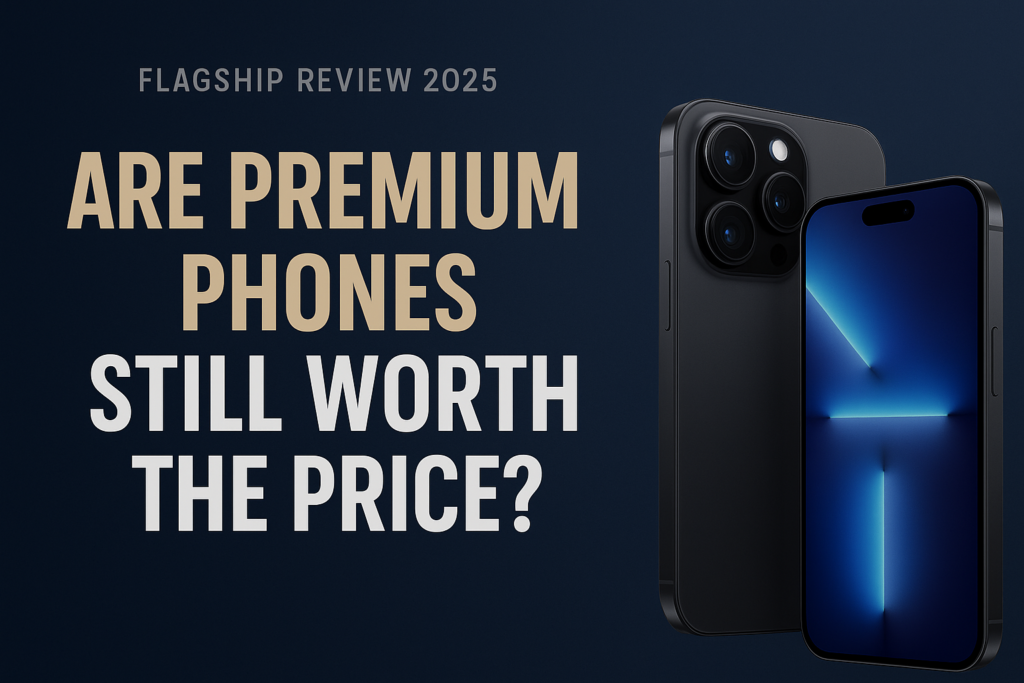
The smartphone industry in 2025 is saturated with flagship phones that promise unparalleled performance, top-tier cameras, and cutting-edge features. But with prices inching closer to the $2,000 mark for some of the latest models, the question on everyone’s mind is: Are flagship phones still worth the price? As tech enthusiasts, we’ve been conditioned to expect perfection, but are these ultra-premium devices truly delivering value, or is the hype starting to outpace the innovation?
The Age of the $2,000 Smartphone
The flagship smartphone market has evolved rapidly in the past decade, with the lines between “premium” and “affordable” blurring more than ever. In 2025, we find ourselves at a crossroads, with devices like the iPhone 17 Pro Max, Samsung Galaxy S25, and Google Pixel 10 Pro XL pushing the envelope in terms of both innovation and price.
As you walk into a carrier store, the new flagship phones gleam under the bright lights, promising cutting-edge technology and features that make you wonder: Is this next-gen innovation worth the cost, or have we reached the point of diminishing returns?
From 120Hz displays to AI-powered photography, flagship phones are now packed with tech that once seemed like science fiction. But are these devices really offering a transformative experience for users, or are we simply paying more for incremental upgrades? It’s time to take a deep dive into the flagship phones of 2025 and assess whether these devices justify their premium price tags.
What’s Changed in Flagship Phones — And What Hasn’t
Flagship phones in 2025 have evolved in ways that were once unimaginable. From 5G to foldable screens to AI-assisted photography, manufacturers have pushed the boundaries of what smartphones can do. Yet, despite all these advances, some users are starting to wonder if they’re getting enough value for their money.
For years, flagship phones have been synonymous with top-tier performance, exquisite displays, and innovative features. But as the competition from mid-range devices grows, it’s important to ask: Are flagship phones still the best option for most people? And, more importantly, are they worth the increasingly steep price tags?
Deep-Dive Explanation
Misconceptions: What We’ve Been Led to Believe About Flagship Phones
There’s a common misconception that flagship phones are the only way to experience “premium” smartphone features. Many users assume that spending $1,500 or more on a device will guarantee the best performance, camera quality, and future-proofing. While flagship phones often deliver on these promises, the reality is more nuanced.
In 2025, mid-range phones are offering impressive specifications and features, including fast processors, high-refresh-rate displays, and solid camera systems. So, are flagship phones really necessary, or are we paying for features we don’t fully utilize? For many, the incremental improvements in flagship devices, such as slightly faster processors, marginally improved cameras, or better build quality, may not be worth the hefty premium.
Technical Reality: How Flagships Actually Perform in 2025
Flagship phones in 2025 are powered by next-gen processors—Apple’s A18 Bionic, Samsung’s Exynos 2400, and Qualcomm’s Snapdragon 8 Gen 3—all of which offer blistering speed, advanced AI capabilities, and substantial power efficiency improvements. But how noticeable are these upgrades for the average user?
For everyday tasks like browsing, streaming, and social media, most flagship phones in 2025 perform at a level that far exceeds what most users actually need. The A18 Bionic in the iPhone 17 Pro Max, for example, is capable of handling AR apps, video editing, and 3D rendering without breaking a sweat. But for users who don’t engage in resource-intensive tasks, these powerhouses may be overkill.
Similarly, while flagship cameras like the Google Pixel 10 Pro XL’s AI-enhanced lens and Samsung’s 200MP sensor are pushing boundaries, it’s worth asking: How many of us are truly capturing professional-grade photos? For most, the incremental improvements in photography and video quality might not justify paying $1,800 for a phone, especially when mid-range models offer impressive results as well.
Industry Behavior: The High-End Smartphone Arms Race
One of the key factors driving the inflated prices of flagship phones is the “arms race” between tech giants. Apple, Samsung, Google, and others are constantly trying to outdo each other with incremental upgrades. Each year, we see the introduction of new features—better displays, faster processors, improved cameras, and more—but few of these changes offer revolutionary experiences for consumers.
The constant push for more advanced features and specifications is also fueled by marketing. Brands highlight every minor improvement to create the illusion of a giant leap forward. In reality, some of the changes—like slightly improved battery life or a 0.1-inch larger display—aren’t game-changers for most users, but they do contribute to justifying the ever-increasing prices.
Future Trajectory: What’s Next for Ultrabooks?
Looking forward, the flagship phone market is likely to see further advancements in AI, camera technology, and display innovation. Companies are heavily investing in foldable and rollable screens, which could change the game in terms of functionality and user experience. But with mid-range phones offering more value, flagship manufacturers will have to ensure that their innovations deliver truly significant benefits.
The next wave of flagship phones will also likely see further integration of AR and VR technologies, providing new, immersive experiences. However, unless these technologies become ubiquitous in daily life, it’s unclear whether they will justify the ultra-high price tags.
Real-World Examples: Are 2025 Ultrabooks Ready for Power Users?
Example 1: iPhone 17 Pro Max vs. iPhone 17 Pro
The iPhone 17 Pro Max is marketed as the ultimate iPhone with its enhanced camera system, faster processor, and longer battery life. However, most users will find that the iPhone 17 Pro delivers nearly identical performance at a significantly lower price point. Unless you’re specifically interested in professional-grade video editing or AR, the Pro Max may not be worth the extra $400–$500.
Example 2: Samsung Galaxy S25 Ultra vs. Galaxy S25
The Galaxy S25 Ultra offers a 200MP camera, 120Hz AMOLED display, and cutting-edge chipset. The regular Galaxy S25, however, provides most of the same performance, battery life, and display quality for a much lower price. The difference lies in the camera and display size—features that only some users will fully appreciate.
Quick Snapshot Table:
| Product | Key Feature | Price Range | Performance Level | Best For |
|---|---|---|---|---|
| iPhone 17 Pro Max | Enhanced camera & AR tech | $1,799–$1,999 | Excellent | Pro Users, AR Fans |
| Samsung Galaxy S25 Ultra | 200MP camera, foldable tech | $1,799–$2,099 | Excellent | Tech Enthusiasts |
| Google Pixel 10 Pro XL | AI-enhanced photography | $1,599–$1,699 | Excellent | Mobile Photographers |
| iPhone 17 Pro | Flagship performance | $1,299–$1,499 | Great | Everyday Users |
Data-Backed Insight: Performance and Value in 2025
In 2025, flagship phones are achieving what was once thought to be impossible—stunning performance, camera clarity, and display quality, all in a device that fits in your pocket. However, the majority of improvements are incremental, with performance improvements of just 10-20% year-over-year in most cases. This means that unless you’re upgrading from a phone that’s 3-4 years old, the new flagship might not offer a huge leap in real-world performance.
Human Impact: The Psychological Cost of Premium Phones
One of the biggest appeals of flagship phones is the status symbol they carry. For some, owning the latest iPhone or Galaxy is more about social validation than practical necessity. But for most consumers, the rapid evolution of technology means that these devices quickly feel outdated, pushing us into an endless upgrade cycle. Is the emotional satisfaction of owning the latest and greatest worth the financial investment? For some, absolutely. But for many, the diminishing returns on these flagship models are starting to outweigh the benefits.
Solution Framework: Should You Buy a Flagship Phone in 2025?
- Everyday Users: If you’re mostly using your phone for social media, streaming, and light apps, a flagship phone might be more than you need. Mid-range phones like the iPhone 17 or Galaxy S25 offer near-identical performance for a fraction of the price.
- Creators/Professionals: For photographers, videographers, and creators who rely on top-tier camera systems and performance, the extra cost of flagship phones may be worth it.
- Tech Enthusiasts: If you’re passionate about having the latest technology and are always after the best performance, the flagship phones of 2025 will likely satisfy your cravings.
- Budget-Conscious Buyers: If you’re looking for high value at a lower price, many mid-range phones are offering exceptional performance in 2025, making the flagship models feel like a luxury that’s hard to justify.
Counter-Perspective: When Flagships Aren’t Worth the Price
For many users, flagship phones simply aren’t necessary. If you’re using your phone primarily for messaging, calls, and light browsing, there’s no reason to spend over $1,500 for a flagship device. Mid-range models offer similar performance in most everyday tasks and come with significantly lower price tags. Additionally, the rapid pace of smartphone releases means that even flagship devices start to feel outdated after just one year.
Reddit / User Reality Section
Discussions on Reddit reveal mixed feelings about flagship phones. While some users swear by the top-tier features and build quality, others feel the prices are unjustifiable for the incremental upgrades they bring.
User Feedback Table:
| User Type | Feedback Summary | Relevance |
|---|---|---|
| Power Users | "I need the latest tech for gaming and video editing. The iPhone 17 Pro Max is worth it." | High |
| Everyday User | "I upgraded from an iPhone 11 to the iPhone 17 Pro, and honestly, the difference isn’t that noticeable." | Medium |
| Budget-Conscious | "Flagship phones are overpriced for what they offer. I get more value with mid-range models." | High |
Future Forecast: What’s Next for Flagship Phones?
The future of flagship phones will likely see even more emphasis on AI, AR/VR integration, and advanced display technologies. As foldable phones become more mainstream and battery life continues to improve, we may witness a redefinition of what “premium” means in the smartphone market. However, with mid-range devices closing the performance gap, flagship manufacturers will have to deliver truly groundbreaking innovations to justify their ever-increasing prices.
Closing Narrative: The Flagship Dilemma
As we look at the flagship phones of 2025, it’s clear that they still represent the best in mobile technology. But are they worth the premium price? For some, the answer is yes—the thrill of having the latest and greatest technology is unmatched. But for many others, the diminishing returns of premium phones in a world of capable mid-range alternatives may make these high-end devices a harder sell.
Vibetric Ending
Flagship phones will continue to push the envelope in 2025, but whether they remain worth the price depends largely on the user. For those who need the absolute best in performance and features, the flagship experience is hard to beat. But for everyone else, the value proposition is becoming increasingly difficult to justify.
Ready to Choose the Right Smartphone for You?
- Follow vibetric_official on Instagram for more premium tech reviews and insights.
- Bookmark Vibetric.com for the latest in smartphone trends and innovations.
- Stay updated on our upcoming flagship vs mid-range comparison for 2025!
Flagship Phone Questions You Need Answered Before Making Your Purchase
- Are flagship phones still worth the price in 2025?
For power users, creators, and tech enthusiasts, the latest flagship phones deliver exceptional performance, cameras, and features. However, for everyday users, mid-range phones offer great value at a fraction of the cost. - What’s the difference between flagship and mid-range phones in 2025?
Flagship phones offer superior performance, cameras, and display quality, but mid-range phones are catching up in many areas, especially in terms of processor speed and camera quality, for a much lower price. - Do I need a flagship phone if I don’t game or edit videos?
If you primarily use your phone for basic tasks like texting, browsing, and social media, a mid-range phone will likely meet your needs. Flagship phones may offer better performance, but most users won’t notice a significant difference in everyday usage. - What makes a phone “flagship”?
Flagship phones are typically the most premium devices offered by brands, featuring the latest processors, best camera systems, and highest-quality displays. They are marketed as top-of-the-line devices with the best technology available at the time. - Are foldable phones considered flagship devices?
Yes, foldable phones, like the Samsung Galaxy Z Fold and Flip series, are often considered flagship devices due to their cutting-edge design, innovation, and premium pricing. - Will flagship phones continue to be this expensive?
As technology advances and new features are introduced, flagship phones will likely continue to rise in price. However, the growing competition from mid-range devices may push manufacturers to find more compelling reasons to justify the premium. - How long do flagship phones last before they feel outdated?
Flagship phones generally remain relevant for 3-4 years, with significant performance degradation only appearing after 2-3 years. However, annual software updates and new features often make older models feel outdated faster.
What’s your take on this?
At Vibetric, the comments go way beyond quick reactions — they’re where creators, innovators, and curious minds spark conversations that push tech’s future forward.

Hardware Innovation Slowdown in 2026: The Surprising Rise of Software Acceleration
Hardware Innovation Slowdown in 2026: The Surprising Rise of Software Acceleration For over a decade, consumer technology moved in visible leaps. Processors
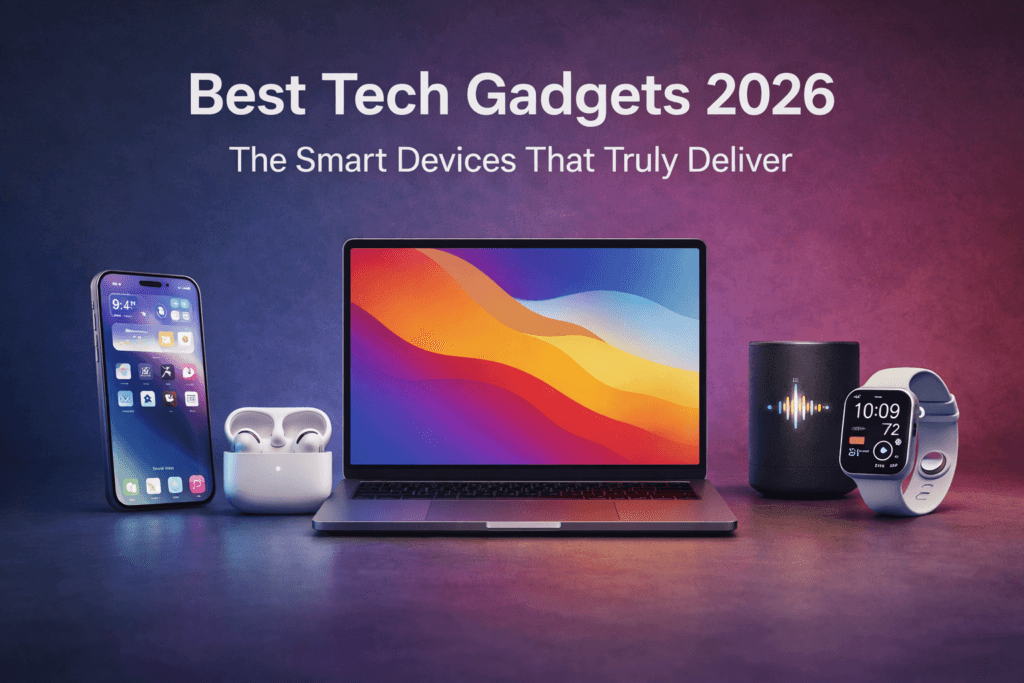
Best Tech Gadgets 2026 — The Smart Devices That Truly Deliver
Best Tech Gadgets 2026 — The Smart Devices That Truly Deliver Every year begins with spectacle. Product teasers promise transformation. Launch events