
Is Expensive Audio Tuning Quality Really Better? The Critical Truth Explained
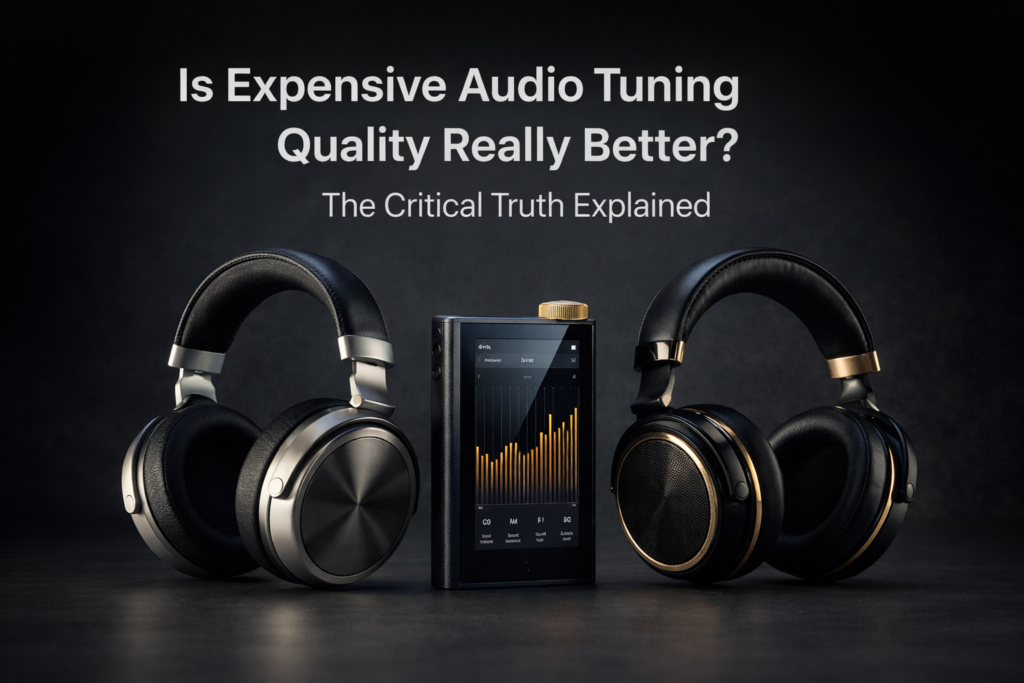
Price has become a shortcut for trust in audio. Many listeners assume that if gear is expensive, it must be tuned better—more accurate, more refined, more “correct.” The reality is less comforting. Expensive audio tuning quality is not guaranteed by cost alone, and in many cases, price obscures the real variables that shape how sound is voiced, perceived, and enjoyed.
The Assumption That Price Equals Precision
High prices suggest access to better engineers, better components, and more rigorous testing. Sometimes that’s true. But tuning is not a linear outcome of budget—it’s a series of decisions. Choices about target curves, listening priorities, and brand identity matter as much as measurement capability.
Two products can be equally expensive and tuned very differently, because they’re solving different problems. One may aim for studio neutrality. Another may prioritize emotional impact. Cost enables options; it doesn’t dictate outcomes. This is where assumptions around expensive audio tuning quality start to break down.
Tuning Is Philosophy Before It’s Engineering
Before any microphone or DSP tool is used, a brand decides what “good sound” means. That philosophy shapes everything that follows. Some companies chase reference accuracy. Others intentionally color sound to stand out or to suit specific genres.
Higher budgets often increase refinement, not objectivity. Expensive gear may reduce distortion, smooth transitions, or improve consistency—but it can still be intentionally non-neutral. Listeners expecting universal “better tuning” often confuse refinement with correctness.
Why Cheaper Gear Sometimes Sounds More Balanced
In the mid-range, brands frequently tune to widely accepted targets because they can’t rely on prestige alone. They aim for broad appeal. Ironically, this constraint can produce more balanced tuning.
Placed here to ground expectations, this snapshot highlights why price doesn’t map cleanly to tuning quality:
| Price Tier | Common Tuning Behavior |
|---|---|
| Entry / mid-range | Target-driven, mass-appeal tuning |
| Upper mid-tier | Refined but still conservative |
| High-end | Philosophy-driven, sometimes polarizing |
| Flagship niche | Identity-first, not neutrality-first |
This is why expensive audio tuning quality can feel inconsistent across brands and models.
The Role of Measurement vs Listening Bias
Expensive manufacturers have access to world-class measurement systems—but measurements don’t tune headphones or speakers by themselves. Human listening sessions still dominate final voicing decisions, and those sessions are influenced by internal bias.
Engineers listen through brand context. They know what the product is “supposed” to sound like. Over time, this creates signature sounds that persist across generations. Price amplifies confidence in these signatures, not necessarily accuracy.
When Refinement Is Mistaken for Better Tuning
Expensive gear often excels at microdetail, dynamics, and control. These traits can mask tuning issues. A slightly elevated treble may feel “resolving” rather than sharp. A boosted bass shelf may feel “authoritative” rather than excessive.
This illusion is powerful. The brain associates clarity and texture with correctness. As a result, listeners may credit expensive audio tuning quality when they’re actually responding to technical refinement layered over subjective voicing.
The Contrarian Truth: Better Tuning Is Contextual
“Tuned better” only makes sense relative to use case. Studio monitoring, casual listening, live performance, and long sessions all demand different compromises. Expensive gear often optimizes for a specific context, not universal preference.
Problems arise when that context isn’t shared by the listener. What sounds exceptional in one scenario can feel fatiguing or unnatural in another. Price doesn’t protect against mismatch.
Why Personal Perception Outranks Price
Human hearing varies more than most spec sheets admit. Ear shape, sensitivity, listening volume, and genre preference all influence perception. A technically impeccable tuning can still sound wrong to the wrong listener.
This is why chasing expensive audio tuning quality without understanding your own preferences often leads to disappointment. The closer you get to the extremes of the market, the more opinionated tuning becomes.
What Actually Improves as Prices Rise
This is the subtle distinction many miss. Higher prices usually improve consistency, build quality, channel matching, and long-term reliability. These matter. They don’t, however, ensure that the frequency balance aligns with your taste.
In other words, expensive gear is often better made—not necessarily better tuned for you.
How to Judge Tuning Without Price Bias
The most reliable approach is comparative listening with intent. Focus on fatigue, balance at low volumes, and how music translates across genres. Ignore initial “wow” moments. They fade quickly.
When evaluated this way, many listeners discover that expensive audio tuning quality is situational, not absolute. Some affordable gear sounds right immediately—and keeps sounding right over time.
The Real Answer Beneath the Question
Expensive audio gear isn’t always tuned better. It’s tuned more deliberately, more confidently, and sometimes more narrowly. That can be an advantage—or a liability.
Good tuning isn’t about price. It’s about alignment between design intent and listener reality. When those align, cost becomes secondary. When they don’t, no amount of refinement can fix the disconnect.
The most “accurate” sound is the one that disappears, leaving only the music. Price can help—but it can’t decide that for you.
Sharpen How You Evaluate Sound
- Follow our Instagram @vibetric_official for tuning insight beyond price tags.
- Bookmark vibetric.com to refine how you judge audio quality.
- Stay connected as perception—not specs—defines real listening value.
What’s your take on this?
At Vibetric, the comments go way beyond quick reactions — they’re where creators, innovators, and curious minds spark conversations that push tech’s future forward.
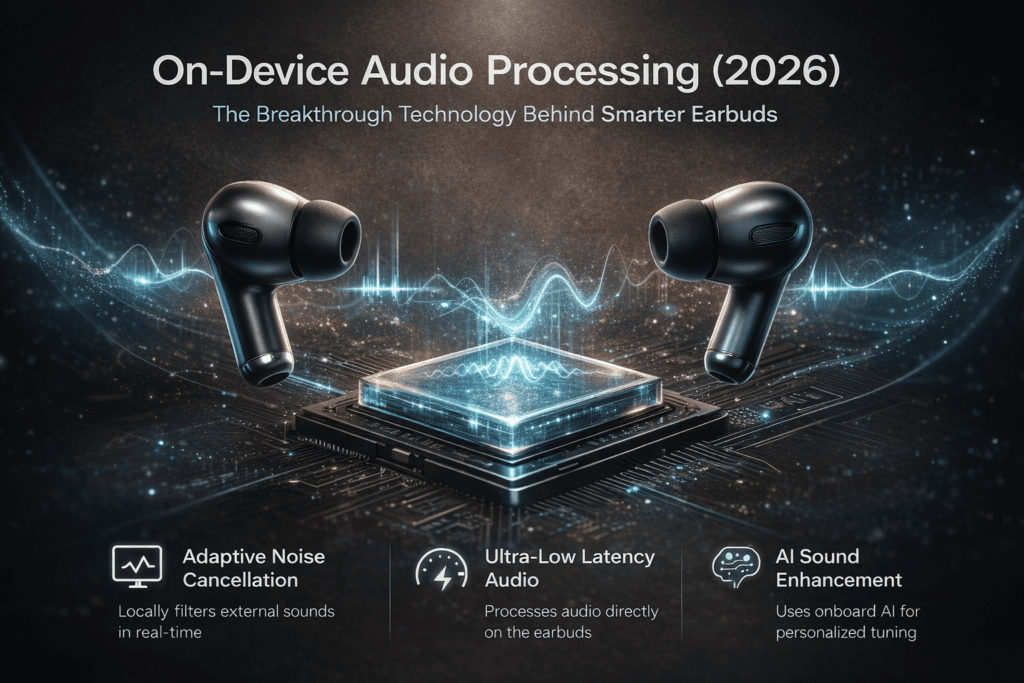
On-Device Audio Processing (2026): The Breakthrough Technology Behind Smarter Earbuds
On-Device Audio Processing (2026): The Breakthrough Technology Behind Smarter Earbuds A commuter taps play on the subway. The train roars into the
Spatial Audio Default in 2026: The Quiet Shift Redefining Immersive Sound
Spatial Audio Default in 2026: The Quiet Shift Redefining Immersive Sound There was a time when surround sound required a living room