
The Return of Compact Phones — But Not How You Expect
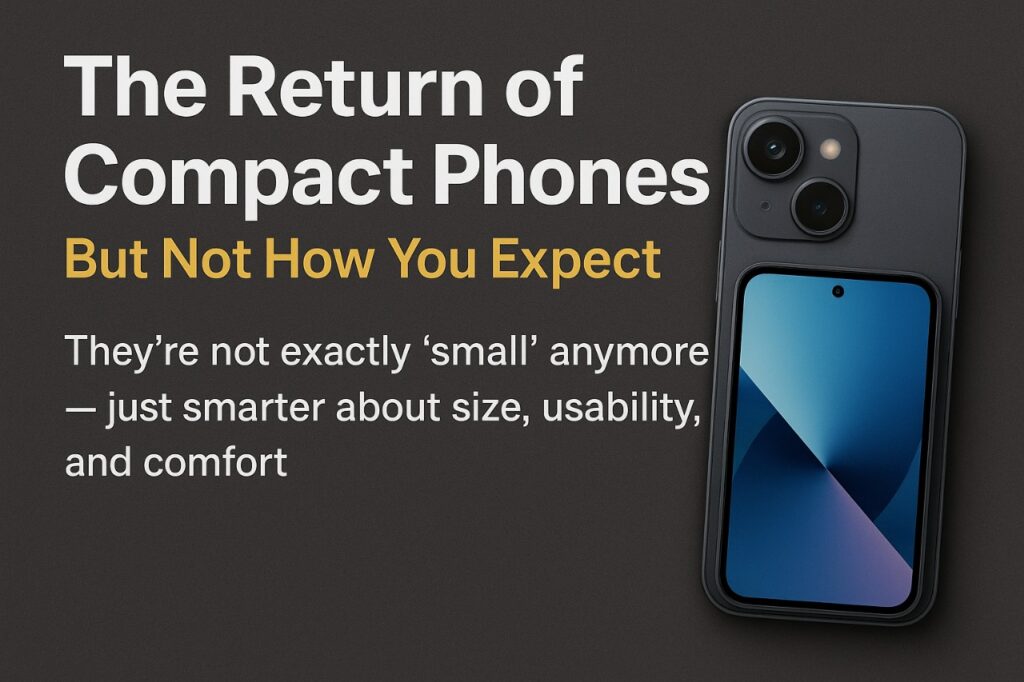
For years, smartphone screens kept growing — stretching pockets, widening grips, and turning every device into a two-handed slab. But in 2025, something unexpected happened: compact phones started making a comeback.
Not the tiny 4.7-inch minis.
Not the old-school “small phone” ideal.
A new version of compact — refined, modern, and engineered around today’s priorities.
compact phones don’t mean what it meant in 2018. In 2025, the return is different: smarter dimensions, balanced ergonomics, and a shift toward “thin, light, and easy to live with” rather than genuinely tiny screens.
This short read explains what’s driving this new wave of compact phones, why brands are making them again, and why their comeback looks nothing like what enthusiasts expected.
⚙️ Core Insight (Depth + Clarity)
Compact phones didn’t just “return.”
They evolved.
Three major industry shifts brought them back into relevance:
1. Practical Size, Not Small Size
Today’s compact phones aren’t tiny — they’re optimized.
Brands have realized users want comfort without sacrificing productivity.
So instead of 5-inch devices, we’re getting:
- 6.1–6.3 inch sweet-spot screens
- Slimmer frames
- Lightweight builds
- Better grip angles
Phones feel compact not because they are small, but because they are designed smarter.
2. Thermal Efficiency Over Raw Size
Bigger phones were popular because chips ran hot.
But with 3nm processors, better vapor chambers, and AI thermal management, brands no longer need huge bodies to cool devices.
This freed them to make phones thinner, lighter, and more compact — without overheating.
3. Lifestyle Recalibration
Consumers now value:
- one-hand usability
- easier pockets
- lighter travel
- less wrist strain
- minimalistic carry
And brands follow lifestyle shifts before tech trends.
What looked like “compact phone nostalgia” is actually ergonomic demand meeting modern engineering.
📊Bite-Sized Data Table
| Factor (2025) | Role in Compact Comeback | Industry Impact |
|---|---|---|
| Thermal efficiency | High | Smaller bodies run cooler |
| Lightweight materials | Medium | Phones feel less bulky |
| Battery density | High | Same capacity in smaller frames |
| Consumer ergonomics | High | One-hand usability returns |
| AI optimization | Medium | No need for big cooling mass |
🔍 Micro Analysis
1. The Real-World Impact
Today’s compact phones change how daily usage feels. They’re easier to grip, cause less fatigue during long scrolling, and fit comfortably into pockets and small bags.
Gamers feel the difference too — better weight distribution reduces wrist strain during long sessions.
And with better chip efficiency, compact phones no longer suffer from:
- rapid heating
- poor sustained performance
- battery collapse
The real improvement isn’t size — it’s balance.
Devices feel premium without feeling heavy, powerful without feeling bulky.
2. The Hidden Truth
Brands didn’t revive compact phones because of fan demand — enthusiasts asking for “small phones” are statistically a tiny minority.
The real trigger was manufacturing economics:
- new materials lowered weight
- better battery density shrunk internal compartments
- AI-based optimization reduced thermal stress
- standardized display sizes cut production costs
In short:
Compact phones are back because they’re cheap to produce, efficient to cool, and easy to sell.
🌍 Culture Angle
The modern user is tired of “bigger is better.”
People want devices that blend into busy lives, not dominate them.
The rise of digital minimalism — fewer apps, smaller pockets, lighter bags — aligns perfectly with compact phones.
And culturally, the shift is clear:
Tech users prefer comfort over spectacle.
Sleek over large.
Practical over powerful.
Compact phones represent a new identity:
the balanced user — someone who values refinement, not excess.
🧠 Quick Vibetric Takeaways
- Compact phones are returning — but as slim, balanced 6.1–6.3″ devices, not tiny minis.
- Thermal and battery engineering improvements make smaller bodies viable again.
- Lifestyle trends favour comfort, portability, and lighter devices.
- Compact design reduces fatigue without sacrificing performance.
- AI optimization reduces heat, letting compact forms survive heavy tasks.
- The comeback is driven by ergonomics + engineering, not nostalgia.
- The future of compact phones is about smart size, not small size.
💬 Vibetric Verdict
Vibetric Verdict: The return of compact phones isn’t a throwback — it’s an evolution.
Today’s devices blend power, portability, and refinement into forms that feel natural in the hand and effortless in daily life.
Compact is no longer about shrinking screens — it’s about enhancing comfort.
And in a world obsessed with bigger specs, balance feels refreshing.
🔗 Stay in the Loop
We don’t sell hype — we explain it.
- Follow @vibetric_official for grounded insights on smartphone trends, human-centric design, and real-world testing.
- Bookmark vibetric.com to stay ahead of the tech curve.
- No hype. No bias. Just facts — the Vibetric way.
💬 What’s your take on this?
The comment section at Vibetric isn’t just for reactions — it’s where creators, thinkers, and curious minds exchange ideas that shape how we see tech’s future.
Snapdragon X Elite Gen 2 Laptops: Powerful Shift for Windows on ARM
Snapdragon X Elite Gen 2 Laptops: Powerful Shift for Windows on ARM For years, Windows laptops have chased performance in familiar ways:

Edge Computing Trends 2026 — The Powerful Shift Toward Distributed Intelligence
Edge Computing Trends 2026 — The Powerful Shift Toward Distributed Intelligence Cloud computing reshaped the last decade. Edge computing is quietly reshaping