
The Rise of Compact Gaming Desktops — Power in Small Spaces
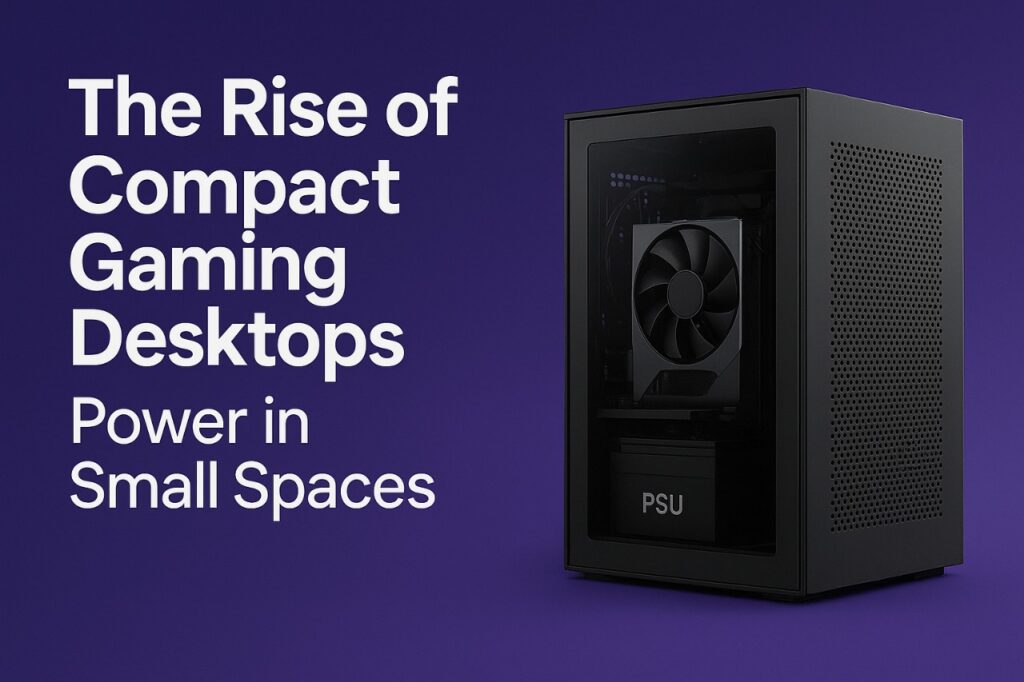
In 2025, gaming no longer demands massive towers and cavernous desks. Enthusiasts crave power without the footprint, and the rise of the compact gaming desktop has answered that call. Small form factor rigs now deliver flagship-level performance, efficient cooling, and style that fits anywhere—from dorm rooms to urban apartments.
The shift isn’t just about size. It’s a cultural statement: efficiency, portability, and engineering excellence wrapped into a chassis that doesn’t dominate your space. Gamers are realizing that high-end GPUs, fast storage, and liquid cooling can now exist in tight enclosures without compromise.
But this evolution raises questions: can compact really match full-sized performance? How do thermal constraints, upgrade paths, and component selection affect longevity? This blog decodes the rise of compact gaming desktops, their design philosophies, and the practical realities every buyer must understand in 2025.
From first impressions to long-term value, we explore why these small machines are rewriting gaming norms.
⚡Quick Summary Table
| Category | Typical Specs (2025) | Performance Notes |
|---|---|---|
| CPU | Intel 14th Gen / AMD Ryzen 7000 | High-end multi-core performance |
| GPU | RTX 4080 / RX 7900 XT | Flagship graphics in small chassis |
| RAM | 32–64 GB DDR5 | Sufficient for gaming + streaming |
| Storage | 1–2 TB NVMe SSD | Fast load times & minimal bottlenecks |
| Cooling | Custom AIO / SFF optimized airflow | Quiet, efficient, but sensitive to dust |
| Build | Mini-ITX / Micro-ATX | Premium aluminum or tempered glass |
| Price | $1,500–$3,000 | Cost depends on GPU & customization |
🧭What This Blog Covers
✅ Included
- Design & build insights for compact gaming desktops
- Performance analysis under real-world gaming loads
- Thermal efficiency, noise levels, and upgrade potential
- Comparative insights with full-sized desktops
❌ Not Included
- Pre-built laptops or console comparisons
- Outdated 2023–2024 SFF models
- Pure benchmark-focused speculation
📌 Evaluation Approach
We prioritize real-world usability, component synergy, and durability over marketing claims or synthetic benchmarks.
🛠️Design & Build Analysis
Small chassis demand precise engineering.
Materials & Construction
- Aluminum & tempered glass remain preferred for premium SFFs
- Plastic enclosures persist in entry-level mini desktops
Ergonomics
- Handles or slide-out trays improve portability
- Cable management is critical; clutter reduces airflow
Durability
- Compact desktops are surprisingly resilient but less forgiving during heavy modifications
📊 Mini Comparison Table
| Aspect | Premium SFF | Entry-Level SFF |
|---|---|---|
| Frame | Aluminum / Glass | Plastic / Aluminum |
| Weight | 5–8 kg | 3–5 kg |
| Port Accessibility | Front + top panels | Front-only |
| Upgrade Ease | Moderate | Limited |
🖥️Display / Audio / Camera
While desktops themselves don’t include these, their output capabilities matter.
Display Support
- SFF rigs handle dual 4K or triple 1440p setups with flagship GPUs
Audio Output
- Onboard sound is comparable to full-size desktops; DAC upgrades still available
Real-World Use
- Gamers pairing compact desktops with high-refresh monitors get immersive, lag-free experiences
📊 Audio Output Table
| Feature | Premium SFF | Entry-Level SFF |
|---|---|---|
| Max Channels | 7.1 Surround | 5.1 Surround |
| Line Out Quality | High fidelity | Mid-range |
| Headphone Amp | Built-in | Optional |
🚀Performance Breakdown
Compact desktops now challenge full-sized rigs:
- CPU/GPU: Flagship processors and GPUs perform near-identical in gaming workloads
- Thermals: Small chassis means tighter heat zones; proper airflow and AIO cooling are key
- Responsiveness: NVMe SSDs + DDR5 RAM maintain near-zero bottlenecks
Real-World Takeaway: Small doesn’t mean weak—planning and quality components matter most.
🔋Battery Life & Efficiency
Not directly applicable, but power efficiency matters:
- Small PSUs are 80+ Gold rated for efficiency
- Thermal design affects fan curves and noise
- Energy consumption slightly lower than full-sized rigs with similar components
📱Software & Experience Layer
Gaming desktops rely on software optimization:
- GPU drivers from NVIDIA/AMD dictate gaming performance
- RGB and lighting management software improves personalization
OS stability (Windows 11/12) critical for SFF reliability
👥Real-World User Insights
| Insight Type | Summary |
|---|---|
| Praise | “Fits my dorm room, still runs everything ultra” |
| Praise | “Quiet under load thanks to AIO cooler” |
| Complaint | “Limited upgrade paths in mini-ITX” |
| Complaint | “Thermals spike in summer without proper airflow” |
| Misconception | “Small = weak performance” — False |
| Long-Term | “GPU swapping is more complicated than in ATX” |
| Buyer Pattern | College students, apartment gamers, content creators |
| Practical Tip | Prioritize cooling over flashy RGB in small builds |
🥊Competitor Comparison
| Brand | Ideal For | Strength | Weaknesses |
|---|---|---|---|
| Corsair One i300 | High-end gamers | Compact, stable cooling | Pricey |
| NZXT H1 | Enthusiasts | Smallest footprint, AIO included | Limited GPU size |
| Intel NUC 13 Extreme | Office + light gaming | Ultra-compact | Thermal throttling under heavy load |
| DIY Mini-ITX | Custom builders | Fully configurable | Complexity + cost |
📌Pros & Cons
✅ Pros
- High performance in small footprint
- Portable across rooms or apartments
- Energy efficient compared to full ATX rigs
- Stylish, modern designs
- Can match gaming laptops in performance
❌ Cons
- Upgrade limitations (GPU, cooling, storage)
- Potential thermal throttling
- Higher cost per component
- Cable management critical
Less forgiving to dust or poor ventilation
🎯Buyer Guide
- Power users: Suitable if you prioritize space over easy upgradability
- Students/Creators: Ideal for dorms or shared spaces
- Travellers: Lightweight models allow LAN-party portability
- Budget-conscious: Entry-level SFF may cost slightly more than standard desktops per spec
⚠️Known Issues & Limitations
- Limited GPU clearance in mini-ITX cases
- Higher fan RPM under load can generate noise spikes
- Cooling solutions may need aftermarket customization
- Some models restrict number of drives
🔮Future-Proofing Score
- Compact gaming desktops remain relevant for 3–5 years depending on GPU upgrades
- OS updates are standard, hardware lifespan depends on cooling efficiency
- Ecosystem stability: most SFF components support current gaming standards
💬 Vibetric Verdict
The compact gaming desktop proves that size isn’t a compromise. With careful design and premium components, small form factor PCs deliver high-end gaming performance, portability, and style. In 2025, they aren’t a niche—they are a practical, forward-thinking evolution in PC gaming.
🔗 Stay in the Loop
We help you choose smarter, not louder.
- Follow @vibetric_official on Instagram for more gaming gear reviews, long-term usage insights.
- Bookmark Vibetric.com for for expert reviews, trend analysis, and buyer guides.
No fluff. No bias. Just honest performance — the Vibetric way.
❓ FAQs
- What is a compact gaming desktop?
A small form factor PC designed to deliver high-end gaming performance in a smaller chassis. - Can compact gaming desktops match full-size towers?
Yes, modern SFF desktops can host flagship CPUs and GPUs with minimal performance loss. - Are compact gaming desktops portable?
Absolutely; most mini-ITX or micro-ATX models are lightweight and easy to move. - Do compact gaming desktops overheat easily?
Proper airflow and AIO cooling mitigate thermal risks, though space is tighter than full towers. - Are they expensive compared to full-size desktops?
Per-component cost is higher due to engineering and SFF parts but balanced by reduced space needs. - Can you upgrade compact gaming desktops?
Yes, but GPU, PSU, and cooling upgrades are limited by chassis size. - Who should buy a compact gaming desktop?
Students, apartment gamers, and anyone needing high performance in a small footprint. - Do compact desktops support multiple monitors?
Yes, depending on GPU output, dual or triple monitor setups are feasible. - Is noise a concern?
Premium cooling solutions and airflow design reduce noise; cheaper builds may be louder under load. - Are compact gaming desktops future-proof?
For 3–5 years, yes; with proper cooling and component upgrades, they can remain relevant well into the mid-2020s.
💬 What’s your take on this?
The comment section at Vibetric isn’t just for reactions — it’s where creators, thinkers, and curious minds exchange ideas that shape how we see tech’s future.

The Evolution of Global Gaming Hardware — From Casual to Esports-Driven Design
The Evolution of Global Gaming Hardware — From Casual to Esports-Driven Design The neon glow of RGB lights reflected off countless monitors
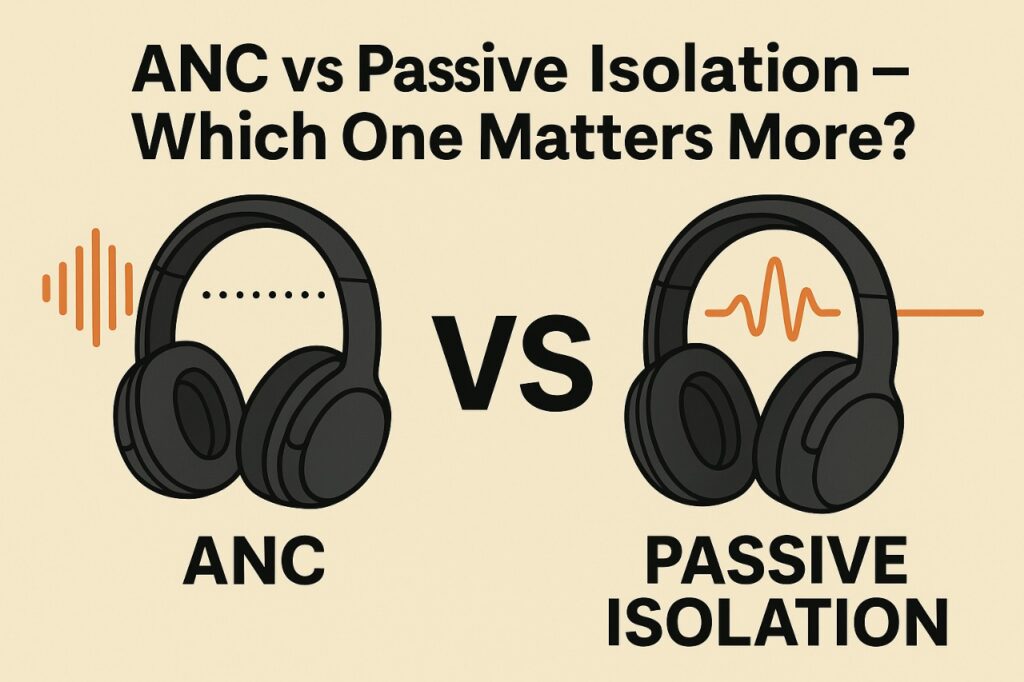
ANC vs Passive Isolation — Which One Matters More?
ANC vs Passive Isolation — Which One Matters More? Silence in headphones isn’t created by magic. It’s created by physics — one