
Are Chromebooks Still Relevant in 2025?
For years, Chromebooks were seen as the “simple” laptops — cheap, lightweight, classroom-focused machines built for browsing and basics. But in 2025, the conversation has shifted. AI workloads are rising, hybrid work is the norm, Windows devices are getting expensive, and macOS sits in a premium bubble.
So the question resurfaces with new weight: Are Chromebooks still relevant in 2025?
This blog breaks down the role Chromebooks play today, how the platform has evolved, the hidden limitations most people overlook, and why Google’s strategy around them is more intentional than it seems.
⚙️ Core Insight (Depth + Clarity)
Chromebooks remain relevant — but for very specific reasons.
Their value in 2025 comes from three forces that define modern computing:
1. Simplicity in a Complex Tech World
Consumers are overwhelmed by layers of apps, OS behaviors, updates, and system requirements.
Chromebooks remove that friction.
- quick boot times
- automatic updates
- clean, controlled ecosystem
- no driver hassle
- minimal background processes
In a world filled with “everything apps,” Chromebooks remain refreshingly single-purpose.
2. Cost-Efficiency in an Expensive Laptop Market
Laptop prices surged between 2020–2025.
Chromebooks stepped into the gap with:
- lower manufacturing costs
- simpler hardware
- lightweight OS requirements
- reliable long-term performance
For students, casual users, and lightweight workflows, Chromebooks still deliver unmatched price-to-value.
3. AI-Driven Google Integration
This is new — and crucial.
Google is pushing on-device AI across Workspace, Search, and Android.
Chromebooks now integrate:
- real-time transcription
- AI-based writing assistants
- smart tab search
- automatic noise reduction
- AI-powered classroom tools
Chromebooks have quietly become AI-first productivity machines.
📊Bite-Sized Data Table
| Factor (2025) | Relevance Today | How It Shapes Value |
|---|---|---|
| Price-to-performance | High | Strong for students & basic users |
| App ecosystem | Medium | Android + web continues improving |
| AI features | High | Better than low-end Windows laptops |
| Offline capability | Medium | Still limited compared to PC/macOS |
| Multitasking power | Low–Medium | Hardware caps remain a limitation |
Chromebooks aren’t universal machines — they’re optimized tools for focused use.
🔍 Micro Analysis
1. The Real-World Effect
Chromebooks continue thriving in three real ecosystems:
- Education
Simple management, low cost, cloud-first workflow.
Schools care about reliability, not specs — and Chromebooks deliver.
- Students & casual users
Browsers are the new workspace.
From YouTube to Docs to entertainment, a Chromebook handles the essentials without drama.
- Enterprise niche roles
Kiosks, frontline workers, remote workflows, and customer-facing terminals prefer stability over complexity.
BUT — the limitations remain.
Chromebooks still struggle with:
- heavy editing (video/photo)
- advanced gaming
- engineering workloads
- pro-grade multitasking
- offline professional workflows
For users whose entire digital life lives inside Chrome + Android apps, they’re perfect.
For everyone else, they’re incomplete.
2. The Hidden Truth
Chromebooks weren’t designed to compete with Windows or macOS.
They were designed to reshape the idea of a computer.
Their philosophy is simple:
“Most people only need the web.”
But 2025 introduced a twist — AI needs hardware, and most Chromebooks are low-power devices.
Google’s strategy is shifting toward:
- ARM-based Chromebooks
- better NPU support
- deeper Android integration
- AI-centric workflows
This means Chromebooks will become more capable… but still not all-purpose machines.
The real truth:
Chromebooks survive because they don’t pretend to be something they’re not.
🌍 Culture Angle
Chromebooks represent a cultural preference emerging in 2025:
Minimal tech. Minimal noise. Minimal maintenance.
Users don’t want bulky Windows updates, thermal issues, or driver conflicts.
They want a clean digital life — email, docs, videos, learning, browsing.
Chromebooks fit the lifestyle of:
- students
- remote learners
- multi-device households
- people avoiding tech complexity
- users who want reliability over raw power
It’s not just a device — it’s a philosophy:
Do the basics extremely well, and don’t pretend to do everything.
🧠 Quick Vibetric Takeaway
- Chromebooks remain relevant — but not universal.
- Their strength is simplicity, not power.
- Price-to-performance still beats low-end Windows laptops.
- Google’s AI push keeps Chromebooks modern and competitive.
- Limitations remain for heavy pro work and offline tasks.
- Culture is shifting toward “simple computing,” keeping Chromebooks alive.
- Chromebooks succeed because they embrace focus instead of complexity.
💬 Vibetric Verdict
Vibetric Verdict: Chromebooks aren’t the future of all laptops — but they are the future of some laptops.
In 2025, they remain relevant because they solve real problems:
- rising laptop prices
- overwhelming OS complexity
- online-first workflows
- the demand for clean, low-maintenance computing
Chromebooks won’t replace full-featured laptops.
But they don’t need to.
Their value lies in clarity — a focused device for a focused user.
As long as the world uses the web for most work, Chromebooks will stay not just relevant, but essential in their category.
🔗 Stay in the Loop
We don’t sell hype — we explain it.
- Follow @vibetric_official for grounded insights on laptop trends, real-world testing, and clear-cut analysis.
- Bookmark vibetric.com to stay ahead of the tech curve.
- No hype. No bias. Just facts — the Vibetric way.
💬 What’s your take on this?
The comment section at Vibetric isn’t just for reactions — it’s where creators, thinkers, and curious minds exchange ideas that shape how we see tech’s future.
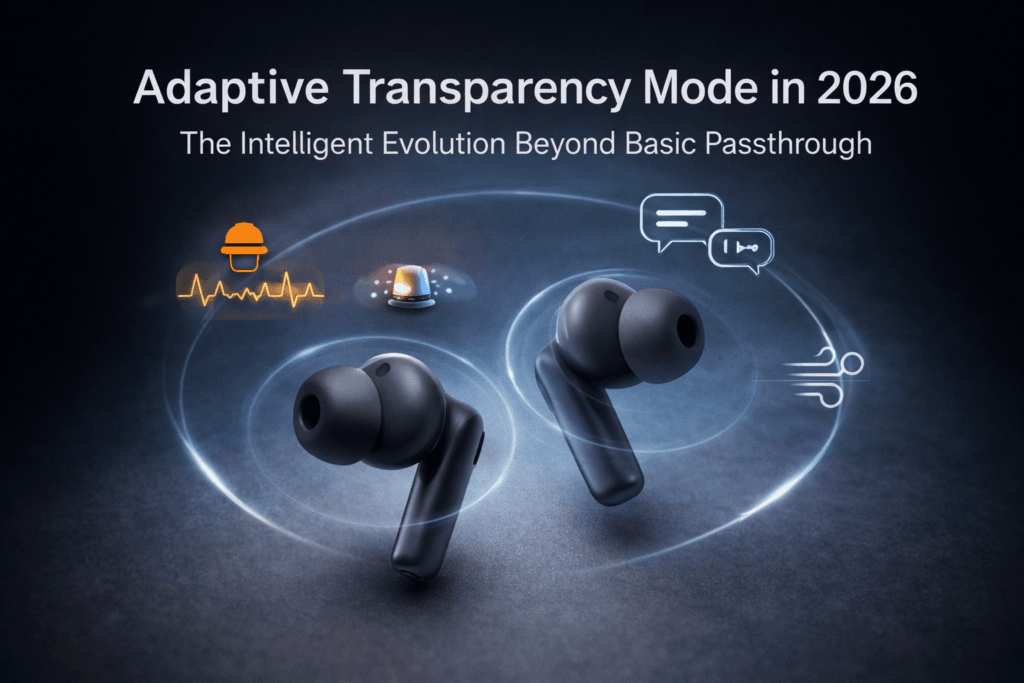
Adaptive Transparency Mode in 2026: The Intelligent Evolution Beyond Basic Passthrough
Adaptive Transparency Mode in 2026: The Intelligent Evolution Beyond Basic Passthrough Noise cancellation used to be the headline feature. Transparency was the
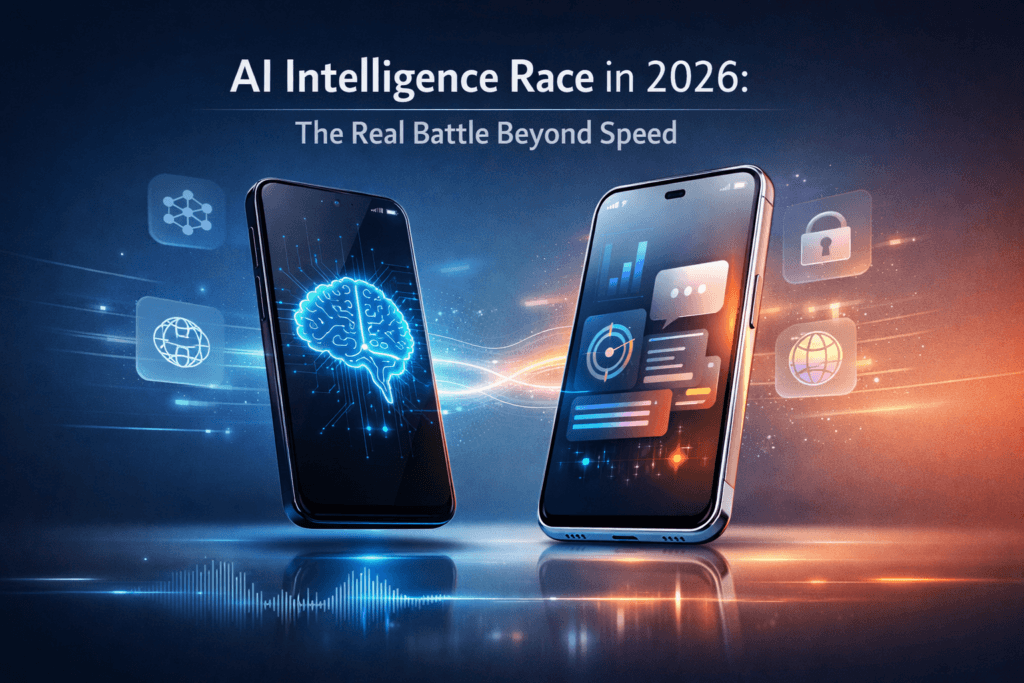
AI Intelligence Race in 2026: The Real Battle Beyond Speed
AI Intelligence Race in 2026: The Real Battle Beyond Speed For years, consumer technology sold us speed. Every keynote celebrated higher clock