
How Chipmakers Quietly Dictate Smartphone Innovation
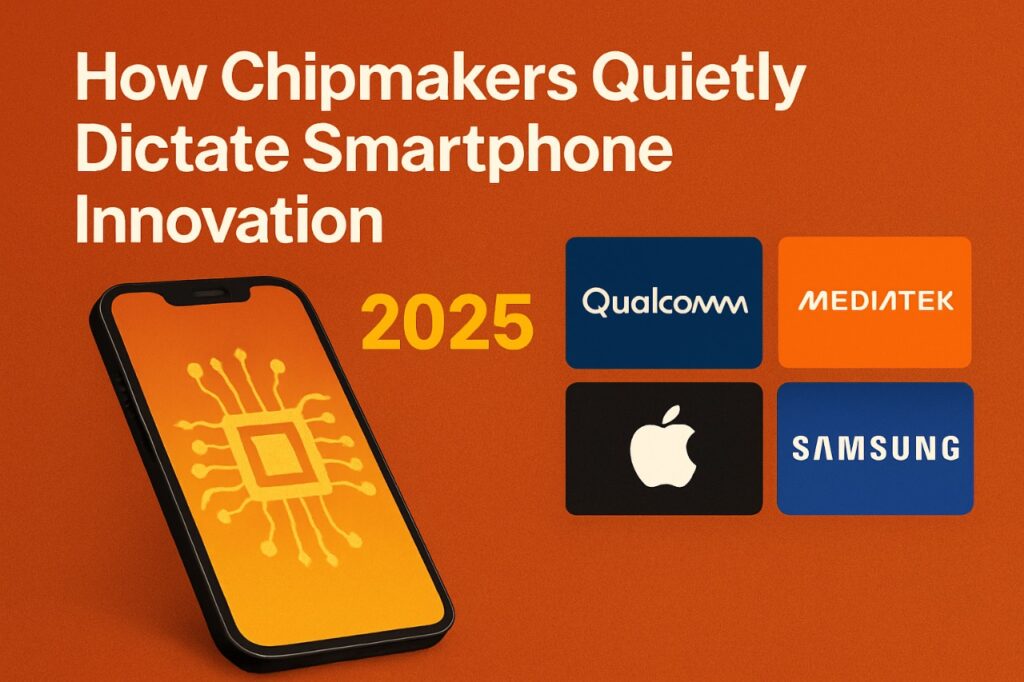
In 2025, smartphone innovation feels like a race between brands — Samsung, Apple, Xiaomi, Google — all promising faster performance, smarter AI, and better cameras.
But behind every “revolutionary” device lies a silent force shaping the industry’s future: chipmakers.
While smartphone brands take the spotlight, Qualcomm, Apple Silicon, MediaTek, and Google Tensor quietly decide what’s possible, when it’s possible, and how fast it reaches consumers.
This isn’t just about nanometres or benchmarks — it’s about control, influence, and evolution. Chipmakers have become the architects of smartphone innovation, dictating trends, capabilities, and even the pace of progress.
🧭 Why This Topic Matters
Every “next-gen” smartphone depends on a chip that was designed years before launch.
Understanding chipmakers means understanding who truly controls innovation — and why the smartphone market evolves the way it does.
Ignoring this dynamic leads to:
- Overrating brand marketing over real performance
- Misjudging innovation cycles and long-term value
- Underestimating how chip-level AI and power efficiency define the daily experience
For creators, professionals, and enthusiasts — this knowledge separates what’s marketed as new from what’s truly innovative.
⚙️ The Silent Architects of Innovation
Every major smartphone leap — from AI photo enhancement to energy-efficient displays — starts in the silicon.
| Chipmaker | Known For | Influence Zone | Real-World Impact |
|---|---|---|---|
| Apple Silicon | In-house control, unmatched efficiency | Hardware–software harmony | Smoothest ecosystem integration |
| Qualcomm Snapdragon | Versatility, global supply | Android ecosystem | Pushes flagship & mid-tier innovation |
| MediaTek Dimensity | Value + power balance | Mid-range & emerging markets | Democratizes AI and 5G features |
| Google Tensor | AI-driven experiences | Pixel ecosystem | Redefines software-led hardware evolution |
Chipmakers don’t just supply processors — they define the limits of innovation for every brand that follows.
🔍 How Chipmakers Influence the Innovation Timeline
- Architecture = Possibility
The chip decides how smart your camera can be, how efficient your battery runs, and how “AI-powered” your phone truly is. - Partnerships = Control
Brands depend on early access to chip blueprints — meaning Qualcomm or MediaTek timelines directly shape Samsung, OnePlus, and others. - Optimization = Differentiation
Even two phones using the same chip can perform differently depending on how brands fine-tune thermal management, NPU tasks, and OS optimization.
Real innovation doesn’t start in smartphone labs — it starts in the clean rooms of chip design firms.
🧠 Expert Insights
- Apple Silicon (A-series & M-series) proves that owning your silicon means owning your destiny — efficiency, synergy, and ecosystem control.
- Qualcomm remains the backbone of Android innovation — every leap in GPU, modem, or AI performance spreads across dozens of brands.
- MediaTek Dimensity has evolved from a budget filler into a legitimate innovation enabler — driving AI and gaming power in sub-flagship devices.
- Google Tensor redefines software-first hardware, letting AI achieve what raw speed can’t — context-aware imaging, translation, and personalization.
Chipmakers are no longer suppliers — they’re the invisible CEOs of the smartphone industry.
💡 The Marketing Mirage
Every year, brands launch “new” flagships boasting:
- 10% faster CPU
- Smarter AI
- Longer battery life
But here’s the truth — most of those gains come from chip-level innovation, not brand breakthroughs.
When Qualcomm releases a new Snapdragon, every Android brand markets similar upgrades.
Innovation becomes synchronized — not because they copy each other, but because they’re all drawing from the same silicon foundation.
The “innovation gap” between brands often reflects how early they access, optimize, and market the same chip, not how different their ideas are.
⚡ AI Processing — The New Battleground
The rise of NPUs (Neural Processing Units) has shifted the focus from raw speed to smart computation.
| Brand | Chip | AI Focus | Lifestyle Impact |
|---|---|---|---|
| Apple | A18 Pro | On-device intelligence | Privacy, creative control |
| Qualcomm | Snapdragon X Elite / 8 Gen 4 | Hybrid AI + gaming | Mobile performance leadership |
| MediaTek | Dimensity 9400 | Power efficiency | AI access for mid-tier users |
| Tensor G4 | Contextual AI | Personalized user experience |
The next smartphone revolution won’t be about design — it’ll be about how your chip thinks.
🔋 Efficiency, Thermal Control & Longevity
Modern chip design defines how your device ages.
- Efficient chips = longer lifespan and smoother performance
- Poor thermal control = faster degradation and shorter upgrade cycles
Chipmakers now influence sustainability narratives too — a more efficient processor isn’t just technical; it’s ethical.
Efficiency isn’t just green — it’s the new luxury.
🧩 What Most Reviews Don’t Tell You
- Brands don’t fully control update longevity — chip support lifecycles do.
- Thermal issues often stem from SoC behavior, not just physical design.
- “AI-powered” features rely on chip-level NPUs, not software magic.
- Even display and camera improvements depend on SoC compatibility.
Most reviews rate the execution, but the chip dictates what’s possible.
💻 Software & User Experience
- Ships with Android 15 / One UI 7, featuring integrated Galaxy AI and S Pen enhancements.
- ~7 years of updates ensure security, new features, and software improvements well beyond competitors.
- Bloatware is minimal and manageable, while update-driven performance improvements enhance AI, camera, and system responsiveness.
Vibetric Insight: The software layer is arguably the S25 Ultra’s strongest differentiator, keeping the device fresh and capable for years.
🥇 The Chipmaker Hierarchy — 2025 Snapshot
| Rank | Chipmaker | Strength | Limitation |
|---|---|---|---|
| 1️⃣ | Apple Silicon | Vertical control | Ecosystem lock-in |
| 2️⃣ | Qualcomm | Cross-brand versatility | Expensive integration |
| 3️⃣ | Google Tensor | AI leadership | Limited scalability |
| 4️⃣ | MediaTek | Cost-effective innovation | Perception gap |
The most innovative brands today are those with the deepest partnerships with chipmakers — not just the boldest designs.
⏳ The Future — Silicon as Strategy
The next decade will redefine what it means to “innovate.”
Chipmakers will:
- Lead AI-first computing across all price tiers
- Merge CPUs, GPUs, and NPUs into cohesive thinking cores
- Push sustainability via power-optimized architectures
- Shape brand hierarchies through exclusive access deals
Tomorrow’s best smartphone won’t be decided by camera specs — it’ll be defined by whose chip defines the future first.
💬 Vibetric Verdict
Chipmakers are the invisible engineers of innovation.
They determine not just how powerful your phone is — but how long it stays relevant.
In 2025, the story of smartphones isn’t written in design studios — it’s scripted in silicon.
🔗 Stay in the Loop
We help you choose smarter, not louder.
- Follow @vibetric_official on Instagram for weekly deep dives, AI insights, and behind-the-hardware breakdowns that cut through the marketing noise.
- Bookmark Vibetric.com for for expert reviews, trend analysis, and buyer guides.
No fluff. No bias. Just honest performance — the Vibetric way.
❓ FAQs
- Main upgrades in S25 Ultra?
Gorilla Glass Armor 2, Snapdragon 8 Elite, refined camera, S Pen integration, 7-year updates. - Update duration?
7 years of OS and security updates. - Camera vs S24 Ultra?
Slightly improved photos, zoom, low-light, and video processing. - Battery & charging?
5,000 mAh, ~45W wired, wireless supported. - Device size?
“6.9″, better for two-hand use. - S Pen support?
Yes, integrated for creativity and productivity. - Worth the premium price?
Yes, for display, camera, ecosystem, and longevity. - Who should avoid?
Budget users, small-hand users, or frequent upgraders. - Will updates improve performance over time?
Yes, One UI 7 and Galaxy AI refine camera, battery, and UI responsiveness. - Is it future-proof?
Very hardware + software + ecosystem promise ensures relevance for 4–5+ years..
💬 What’s your take on this?
The comment section at Vibetric isn’t just for reactions — it’s where creators, thinkers, and curious minds exchange ideas that shape how we see tech’s future.

How Student Needs Are Shaping Laptop Design Trends
How Student Needs Are Shaping Laptop Design Trends Walk into any college library in 2025, and you’ll notice something interesting.Laptops don’t look
Cloud Gaming vs Local Hardware: Which Direction Is Gaming Headed?
Cloud Gaming vs Local Hardware: Which Direction Is Gaming Headed? The future of gaming is rapidly evolving. As new technologies emerge, gamers