
CES 2026 Gaming Gear Reveals the Real Upgrades That Improve Gameplay
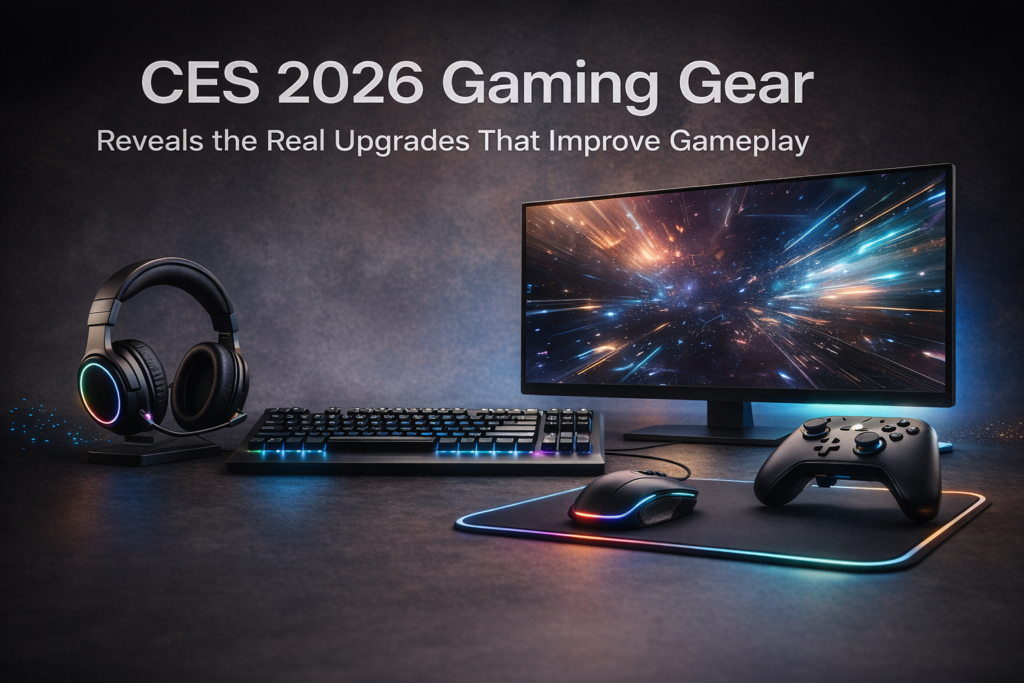
CES 2026 was packed with gaming gear claiming faster response, deeper immersion, and competitive advantage. Yet beneath the RGB glow and spec sheets, a quieter reality emerged: raw power is no longer the bottleneck. Latency ceilings are already low, refresh rates are already high, and performance headroom exceeds what most players can consciously perceive. The real question shaping this year’s announcements wasn’t how much faster, but how much smarter gameplay hardware has become.
For anyone tracking CES 2026 gaming gear, the meaningful gains aren’t where marketing is loudest. They’re embedded in ergonomics, feedback systems, and adaptive behavior that directly affects how consistently a player performs over time.
Adaptive Input Is Rewriting the Controller and Peripheral Playbook
One of the most consequential shifts on the show floor was the rise of adaptive input hardware. Controllers, keyboards, and mice are no longer tuned for a single performance profile. Instead, they dynamically adjust actuation, resistance, and sensitivity based on usage patterns.
High-end controllers showcased variable trigger tension that subtly changes during extended sessions to reduce fatigue. Mechanical keyboards demonstrated per-key actuation depth that adapts to play style rather than forcing gamers into a fixed switch philosophy. These aren’t gimmicks—they directly address endurance, precision drift, and muscle memory degradation.
In the context of CES 2026 gaming gear, this marks a transition from precision as a static spec to precision as a living system, calibrated continuously while you play.
Displays Shift Focus from Speed to Visual Stability
Refresh rate inflation has finally hit diminishing returns, and display makers seem to know it. At CES 2026, the more interesting gaming monitors weren’t chasing extreme numbers—they were targeting visual stability under stress.
New panels emphasized adaptive brightness mapping, micro-contrast control, and eye-strain mitigation during long sessions. Instead of pushing higher peak performance, manufacturers focused on maintaining clarity during chaotic scenes, where motion blur, uneven luminance, and color washout quietly hurt reaction time.
This reframing matters. In competitive and immersive gaming alike, consistency beats extremes. CES 2026 gaming gear in the display category is less about wow-factor demos and more about reducing perceptual noise that interrupts focus.
Audio Hardware Learns to Prioritize Information, Not Volume
Gaming audio also revealed a notable philosophical shift. Rather than chasing louder output or exaggerated spatial effects, newer headsets leaned into context-aware audio processing.
Several designs used adaptive sound staging to emphasize critical cues—footsteps, reloads, directional movement—while de-emphasizing ambient clutter in real time. This isn’t just virtual surround repackaged; it’s selective emphasis driven by gameplay context.
What stood out was how restrained these systems felt. Good audio didn’t demand attention—it delivered information quietly and reliably. In CES 2026 gaming gear, audio innovation is no longer about immersion alone, but about decision support under pressure.
The Ergonomics Renaissance Nobody Bragged About
Perhaps the least flashy but most impactful trend was ergonomic maturity. Chairs, desks, handhelds, and wearables showed a deeper understanding of long-session physiology. Weight distribution, pressure mapping, and posture-aware adjustments were integrated into products without becoming headline features.
This matters because discomfort compounds cognitive load. Fatigue subtly degrades reaction time, accuracy, and decision-making long before players consciously notice it. By addressing these variables, CES 2026 gaming gear quietly targets performance sustainability, not just short-term gains.
The irony is that these improvements are hardest to demo—and easiest to undervalue—despite having some of the most direct gameplay impact.
A Useful Snapshot of What Actually Changed
| Area | Old Focus | CES 2026 Shift |
|---|---|---|
| Controllers | Fixed response | Adaptive resistance & sensitivity |
| Displays | Peak refresh rates | Visual stability & clarity |
| Audio | Immersion & loudness | Information prioritization |
| Ergonomics | Comfort as bonus | Performance longevity |
This snapshot underscores a broader pattern: gameplay improvement now comes from reducing friction, not increasing intensity.
The Contrarian Take: Specs Are No Longer the Advantage
The most counterintuitive insight from CES 2026 is that spec escalation may now hurt more than it helps. Ultra-light mice can destabilize control for some players. Hyper-sensitive triggers can increase error rates. Over-processed visuals can distract rather than inform.
The best CES 2026 gaming gear didn’t maximize capability—it constrained it intelligently. Manufacturers are learning that competitive advantage lies in calibrated restraint, not excess. That’s a mindset shift many gamers haven’t fully internalized yet.
Use-Case Reality: Who Actually Benefits Most
For casual players, these advancements may feel subtle. For competitive players and long-session enthusiasts, they’re cumulative and decisive. Adaptive hardware reduces fatigue, stabilizes performance, and keeps input consistent across hours rather than minutes.
In practice, this means fewer unforced errors, steadier aim late into sessions, and less cognitive drain. CES 2026 gaming gear doesn’t promise instant skill upgrades—it supports repeatable performance, which is far more valuable.
Where This Leaves Gaming Hardware in 2026
CES 2026 didn’t redefine gaming with a single breakthrough device. Instead, it revealed an industry finally optimizing for how games are actually played, not how specs are marketed. The most meaningful improvements are quieter, slower-burning, and harder to sell in a soundbite.
For gamers evaluating upgrades this year, the smartest question isn’t what’s fastest, but what stays consistent when fatigue sets in. That’s where this generation of gaming gear quietly excels—and where real gameplay improvement now lives.
Signals Worth Following
- Follow our Instagram @vibetric_official for grounded analysis beyond gaming hype cycles.
- Bookmark vibetric.com to track which CES 2026 gaming gear trends hold up long-term.
- Stay connected as real-world gameplay data reveals what actually improves performance.
What’s your take on this?
At Vibetric, the comments go way beyond quick reactions — they’re where creators, innovators, and curious minds spark conversations that push tech’s future forward.
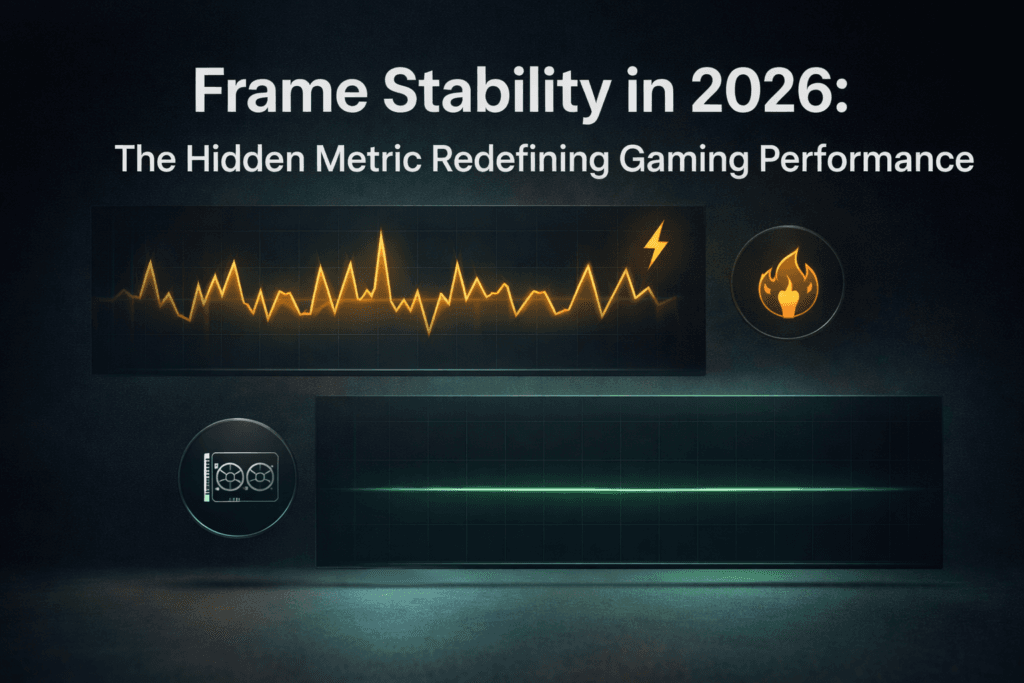
Frame Stability in 2026: The Hidden Metric Redefining Gaming Performance
Frame Stability in 2026: The Hidden Metric Redefining Gaming Performance For years, gaming conversations revolved around one number: frames per second. Higher
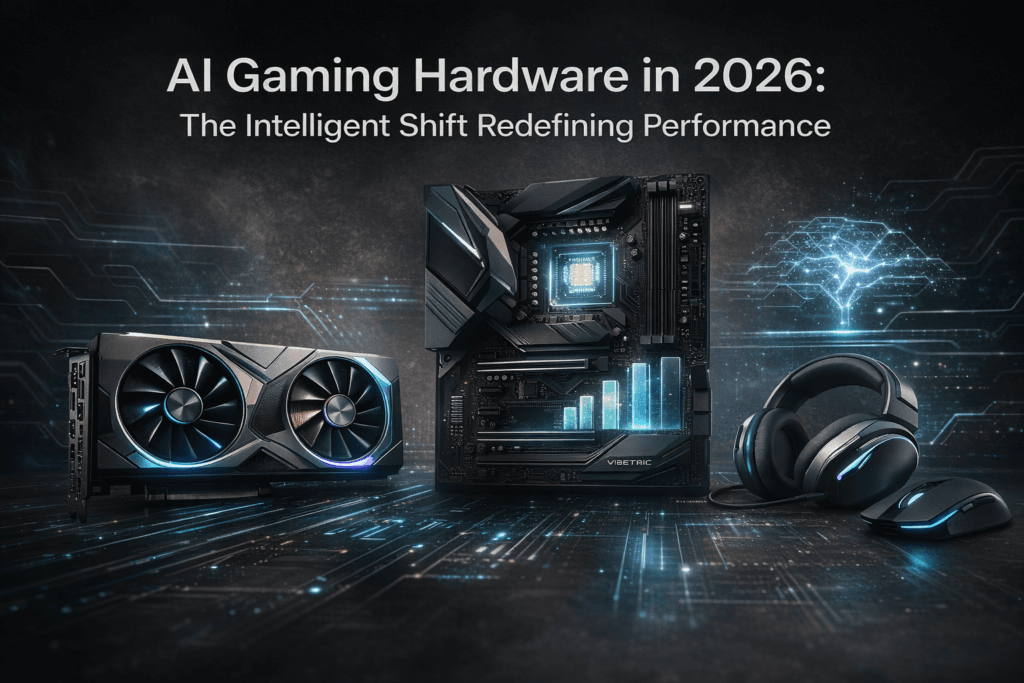
AI Gaming Hardware in 2026: The Intelligent Shift Redefining Performance
AI Gaming Hardware in 2026: The Intelligent Shift Redefining Performance For decades, gaming hardware evolved in predictable increments: more GPU cores, higher