
Camera Battle 2025: How the World’s Top Phones Compare in Real Life
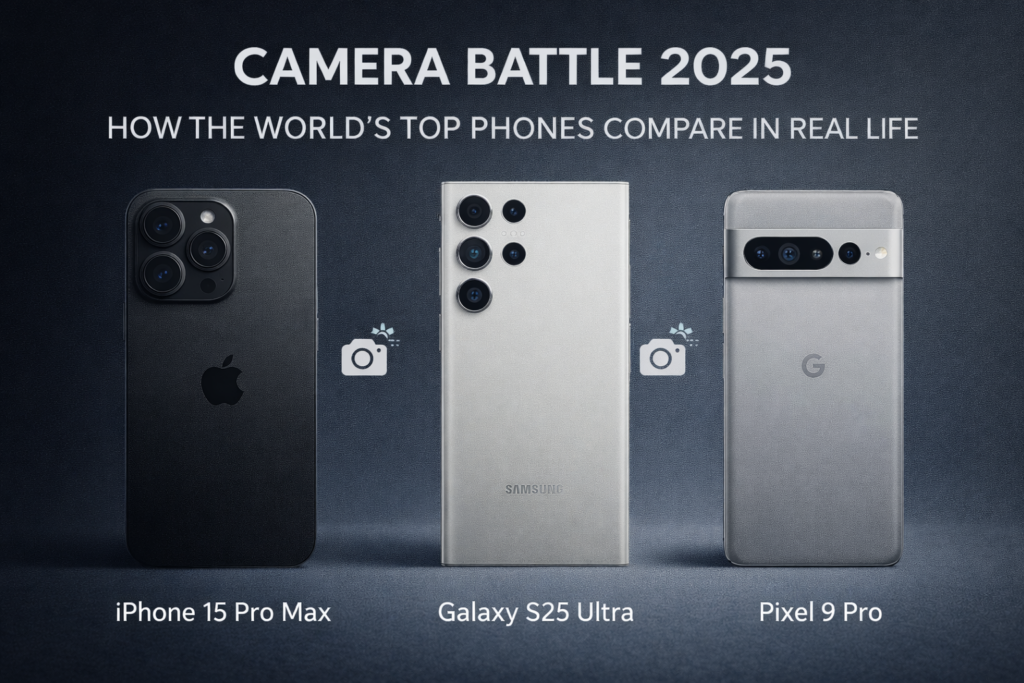
In 2025, smartphones have become our primary tools for capturing the world. Whether it’s the stunning sunset or a quick video call, the camera has become the most important feature for most buyers. The race for the best smartphone cameras is more competitive than ever, with every brand—from Apple to Google to Samsung—claiming to have the ultimate solution. But when it comes down to real-world performance, how do the leading contenders measure up? Let’s dive into the truth behind the camera specs and see how these flagship devices actually perform in the hands of everyday users.
The Reality of Smartphone Photography in 2025
We’ve all been there: an epic moment, the perfect angle, and you’re reaching for your phone. But when you open the camera app, the excitement wanes as you realize that the image doesn’t quite capture the beauty of what you’re seeing. In 2025, flagship phones like the iPhone 15 Pro Max, Samsung Galaxy S25 Ultra, and Google Pixel 9 Pro promise to turn every shot into a masterpiece, boasting advanced lenses, computational photography, and AI-powered enhancements. But do these claims stand up in the real world? Or is there more to the camera battle than megapixels and zoom capabilities?
The Truth Behind Smartphone Camera Specs in 2025
Everyone talks about megapixels, aperture sizes, and zoom capabilities. But the truth is, the best smartphone cameras aren’t determined by specs alone. It’s the combination of hardware, software, and AI that truly defines a phone’s ability to capture reality. While flagship phones boast impressive numbers, the real differentiator comes down to how well these features work together to process light, handle different environments, and make use of AI to optimize every shot. Let’s dig deeper into the key features that make these cameras excel, and uncover which phone truly lives up to the hype.
Dissecting the Key Camera Features in 2025
Misconceptions: What We’ve Been Led to Believe About Smartphone Cameras
It’s easy to think that a higher megapixel count equals a better camera, but this is a common misconception. While megapixels matter for detail, other factors like sensor size, aperture, and image processing play a much larger role. Here’s where the current hype falls short:
- Higher megapixels don’t always mean better quality: A 108 MP sensor may sound impressive, but it’s not the number of pixels that determines the image quality; it’s how much light the sensor can capture and how well the phone processes that information.
- AI isn’t just for Instagram filters: Brands are focusing heavily on AI, but not all AI implementations are the same. Some phones enhance colors or sharpen images artificially, while others intelligently adjust exposure, reduce noise, and fine-tune colors to produce true-to-life images.
Technical Reality: How the Best Smartphone Cameras Actually Work
- Sensor Size and Low-Light Performance: Larger sensors capture more light, resulting in better performance in low-light conditions. The iPhone 15 Pro Max and Google Pixel 9 Pro have made significant advancements in this area, with larger sensors that let in more light for detailed, clearer images even in dimly lit environments.
- Aperture and Depth of Field: A wider aperture (lower f-number) allows more light into the camera, which is crucial for photos taken in low light or to create a blurred background effect (bokeh). The Samsung Galaxy S25 Ultra’s f/1.5 aperture on its main camera allows for excellent control over depth of field, making portraits stand out in any lighting.
- AI and Computational Photography: Phones today rely heavily on AI to enhance images. The Pixel 9 Pro and iPhone 15 Pro Max both use AI to optimize settings, detect objects, and make real-time adjustments for perfect shots. Whether it’s scene recognition or dynamic range adjustments, AI has leveled up smartphone photography.
Industry Behavior: Why Brands Focus on Specific Features
Every phone manufacturer has its strategy when it comes to cameras. Let’s break down how brands position their cameras:
- Apple: Focuses on natural-looking photos with accurate color reproduction. The iPhone 15 Pro Max is designed for users who want high-quality photos without heavy post-processing.
- Samsung: Known for pushing the envelope with zoom capabilities and high-resolution sensors. The Galaxy S25 Ultra emphasizes sharpness and detail, especially for far-away subjects, thanks to its hybrid zoom capabilities.
- Google: Google’s strength lies in AI-powered enhancements, creating photos that often look more refined and detailed than their competitors’ despite lower hardware specifications. The Pixel 9 Pro delivers rich color and stunning dynamic range with a focus on ease of use.
Future Trajectory: What the Next Wave of Smartphone Cameras Will Look Like
- Larger Sensors and Faster Processing: By 2025, expect even larger sensors that push the boundaries of low-light photography. Companies like Apple and Samsung are already working on larger sensors to bring more natural detail into every shot.
- Improved AI and Machine Learning: As AI continues to evolve, smartphones will be able to predict the best settings for every photo. We can expect more accurate subject tracking, better image stabilization, and automatic scene optimization.
- Augmented Reality Integration: In the near future, AR will be integrated into camera systems to enhance both photography and video experiences, creating immersive real-time experiences and more interactive photos.
Real-World Examples: Comparing the Best Smartphone Cameras in Action
- The iPhone 15 Pro Max: The All-Rounder
The iPhone 15 Pro Max excels at delivering natural-looking photos with exceptional detail and color accuracy. Its 48 MP main camera produces sharp images even in challenging lighting conditions, and the addition of a 5x optical zoom gives it a lot of flexibility for a phone camera. However, where it shines the most is in its Night Mode performance. Even in near-darkness, the iPhone captures crisp and clear images, with natural skin tones and accurate light rendering.
- The Samsung Galaxy S25 Ultra: Zoom King
Samsung’s Galaxy S25 Ultra is all about versatility, offering a 200 MP primary camera and 100x hybrid zoom, a truly groundbreaking feature for 2025. Its zoom capabilities allow users to capture distant subjects with incredible clarity. For example, wildlife photographers can zoom in from a long distance and still maintain sharp details. Its low-light performance is also top-notch, thanks to the f/1.5 aperture, although some users may prefer the iPhone 15 Pro Max’s more natural rendering in night settings.
- The Google Pixel 9 Pro: The AI Master
Google’s Pixel 9 Pro continues to impress with its AI-driven camera system. Thanks to Google’s Tensor G3 chip, it excels at computational photography. From HDR+ to Super Res Zoom, it produces stunning results even in challenging conditions. The camera’s real-time adjustments and scene recognition software ensure that even amateur photographers can snap beautiful photos. What sets the Pixel apart is its low-light capabilities and the Night Sight feature, which allows users to capture vibrant images even in near darkness.
Data-Backed Insight: How the Best Smartphone Cameras Stack Up
| Feature | iPhone 15 Pro Max | Samsung Galaxy S25 Ultra | Google Pixel 9 Pro |
|---|---|---|---|
| Primary Sensor | 48 MP | 200 MP | 50 MP |
| Zoom | 5x Optical, 15x Digital | 10x Optical, 100x Hybrid | 5x Optical, 20x Digital |
| Low-Light Performance | Excellent | Good | Best-in-class |
| AI/Computational Features | Smart HDR, Deep Fusion | Scene Optimizer, AI Zoom | HDR+, Real Tone, Night Sight |
| Video Recording | 4K HDR, ProRes | 8K at 24fps | 4K HDR, Cinematic Pan |
These figures represent just a few factors to consider when selecting the right headphones for your travel needs. Battery life, noise cancellation, and comfort are the primary deciding factors, but sound quality and portability shouldn’t be overlooked.
How Camera Quality Affects Us
For most users, a smartphone’s camera affects their daily life in more ways than we realize. From capturing family moments to creating content for social media, the best smartphone cameras influence how we interact with the world. A good camera can help capture fleeting moments with clarity, elevate personal content creation, and even impact our emotional well-being when it comes to how we share and remember memories.
Solution Framework / Buyer Guide: Which Smartphone Camera is Right for You?
| User Type | Best Phone | Pros & Cons |
|---|---|---|
| Everyday Users | iPhone 15 Pro Max | Pros: Consistently great photos, easy-to-use interface. Cons: Expensive, no extreme zoom capabilities. |
| Creators/Professionals | Galaxy S25 Ultra | Pros: Exceptional zoom, great for detailed shots. Cons: Color accuracy can be less true-to-life. |
| Social Media Enthusiasts | Pixel 9 Pro | Pros: Best low-light shots, excellent AI enhancements. Cons: Lower megapixels than competitors. |
| Travelers/Adventure Seekers | Galaxy S25 Ultra | Pros: Zoom capabilities, rugged design. Cons: Heavy and bulky for travel. |
Counter-Perspective: Why Camera Specs Don’t Tell the Whole Story
While high specs are appealing, it’s essential to consider the context of how you’ll be using your phone. A 200 MP camera might seem like a dream, but if you’re only capturing social media content, it might not make a huge difference compared to a 48 MP camera. In many cases, software optimization and AI features matter more than raw numbers.
User Reality: What Are Real Users Saying About the Best Smartphone Cameras?
| User Type | Feedback Summary | Relevance |
|---|---|---|
| Everyday Users | Impressed with iPhone’s ease of use and reliability. | High |
| Content Creators | Loves the flexibility of Samsung’s zoom, but struggles with color accuracy. | Medium |
| Tech Enthusiasts | Pixel’s AI makes a noticeable difference in photos. | High |
| Travelers | Galaxy Ultra is great for distant shots but heavy for on-the-go. | Low |
Future Forecast: The Evolution of Smartphone Cameras
- Larger Sensors: Expect even larger sensors in future phones, especially in low-light situations.
- AI Refinement: As AI algorithms improve, expect more automated features that will allow for near-perfect shots with minimal user input.
- Integrated AR: Augmented Reality will become more integrated into photography, offering real-time enhancements.
Closing Narrative: What Matters Most in 2025?
In 2025, the best smartphone cameras will still be about more than just hardware. The key differentiator is how each brand uses software to enhance and elevate your photos in real-life scenarios. The battle between Apple, Google, and Samsung will continue to evolve, but for now, it’s clear that your choice should depend on what you value most: ease of use, detailed zoom, or AI-driven optimization.
Vibetric Ending
The best smartphone cameras are more than just a marketing gimmick—they shape the way we experience and capture the world. Choose a phone that makes every shot feel like a masterpiece.
Curious About the Best Smartphone Cameras in 2025?
- Follow vibetric_official on Instagram to stay ahead of the latest developments in smartphone tech.
- Bookmark Vibetric.com we continuously update our analysis as new phones are released.
Subscribe for expert opinions and deep dives on the best smartphones for 2025.
Frequently Asked Questions: The Best Smartphone Cameras in 2025
- Which smartphone has the best camera in 2025?
In 2025, the iPhone 15 Pro Max, Samsung Galaxy S25 Ultra, and Google Pixel 9 Pro all offer outstanding camera capabilities. Each excels in different areas, such as low-light performance, zoom, and AI-enhanced photography. The iPhone is known for natural, true-to-life images, Samsung for its powerful zoom, and the Pixel for superior low-light shots and AI optimization.
- How important is the megapixel count in smartphone cameras?
While megapixels do play a role in the overall image resolution, they’re not the most critical factor for a good photo. In fact, larger sensors and advanced computational photography techniques often matter more than sheer megapixel numbers. Phones like the Google Pixel 9 Pro and iPhone 15 Pro Max focus on sensor quality and software optimization over megapixel count.
- Do AI features really improve my photos?
Yes, AI plays a huge role in enhancing photos, especially in terms of dynamic range, color accuracy, and noise reduction. Phones like the Pixel 9 Pro and iPhone 15 Pro Max use AI to optimize exposure, adjust lighting, and enhance details, often resulting in images that look more natural and well-balanced.
- Which phone is best for low-light photography?
The Google Pixel 9 Pro is often regarded as one of the best for low-light conditions, thanks to its AI-enhanced Night Sight feature and large sensor. However, the iPhone 15 Pro Max also performs admirably in dimly lit settings, offering bright and clear images even in challenging light.
- What’s the difference between optical and digital zoom?
Optical zoom uses physical lens adjustments to zoom in on a subject, maintaining image quality. Digital zoom, on the other hand, crops and enlarges the image digitally, often resulting in lower quality. The Samsung Galaxy S25 Ultra offers impressive optical zoom (up to 10x) along with a 100x hybrid zoom, providing exceptional detail even at long distances.
- Which smartphone camera is best for portraits?
Both the iPhone 15 Pro Max and the Samsung Galaxy S25 Ultra offer excellent portrait modes with background blur (bokeh), but the iPhone 15 Pro Max tends to produce the most natural-looking skin tones. The Galaxy S25 Ultra offers more customizable effects and zoom options for portrait photography.
- Is a 100x zoom useful in real-life scenarios?
While 100x zoom on the Samsung Galaxy S25 Ultra sounds impressive, in practical use, the results may not always be perfect due to the limitations of digital zoom. At such extreme distances, images can appear blurry or pixelated. However, for capturing distant subjects in a pinch, it can be incredibly useful, especially when combined with the phone’s stabilization features.
- How does video quality compare between the top phones?
The iPhone 15 Pro Max leads in video recording, offering 4K HDR video with exceptional stabilization and ProRes capabilities. Samsung Galaxy S25 Ultra supports 8K video recording, but in terms of smoothness and color accuracy, the iPhone 15 Pro Max typically offers more polished results for most users.
- Can the camera on a smartphone replace a DSLR?
While smartphone cameras in 2025 have made significant strides in quality, they still fall short of the flexibility and image quality provided by professional DSLRs, especially in terms of depth of field, lens choice, and overall control. However, for everyday photography, social media, and casual use, smartphones like the iPhone 15 Pro Max and Google Pixel 9 Pro can provide stunning results that rival entry-level cameras.
- Which smartphone camera should I buy if I’m a content creator?
For content creators, the Samsung Galaxy S25 Ultra provides great versatility with its powerful zoom and high-resolution sensors, perfect for shooting detailed video or creative shots. The iPhone 15 Pro Max is another excellent choice, especially for its video recording capabilities and natural color reproduction. If you prioritize ease of use and superior AI, the Pixel 9 Pro should be your go-to for effortless yet striking content creation.
What’s your take on this?
At Vibetric, the comments go way beyond quick reactions — they’re where creators, innovators, and curious minds spark conversations that push tech’s future forward.

Frame Stability in 2026: The Hidden Metric Redefining Gaming Performance
Frame Stability in 2026: The Hidden Metric Redefining Gaming Performance For years, gaming conversations revolved around one number: frames per second. Higher
OnePlus 15 Review 2026: Intelligent Performance in the AI Era
OnePlus 15 Review 2026: Intelligent Performance in the AI Era Performance used to be theatrical. Manufacturers showcased peak clock speeds, explosive benchmark