
ANC Showdown: How Global Flagship Earbuds Stack Up in 2025
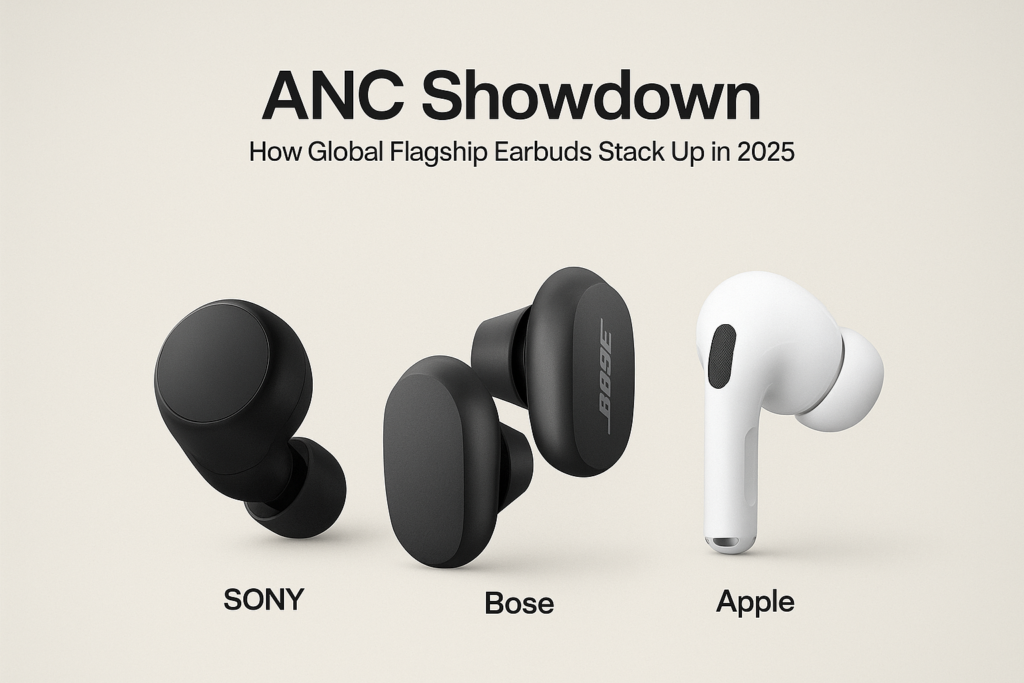
In a world where noise is constantly vying for our attention, the pursuit of perfect silence has become almost an obsession. Flagship noise-canceling earbuds have emerged as a must-have for both professionals and audiophiles, offering sanctuary from the chaotic noise of daily life. But with new players entering the arena every year, and technological advancements pushing boundaries, how do today’s top contenders fare against each other? In 2025, which earbuds truly deliver the best ANC earbuds experience? We dive into the flagship models to see who stands out in this intensely competitive field.
How ANC Earbuds Shape Our World
The buzz of city streets, the hum of a busy office, the drone of a long-haul flight—these are the moments when active noise cancellation (ANC) earbuds promise to be our most trusted allies. Picture yourself on a crowded subway, or perhaps at the airport terminal, where all you want is a moment of peace to concentrate or unwind. You put on your flagship ANC earbuds and, almost magically, the world quiets. But not all ANC earbuds are created equal, and what was once a niche feature is now a race for the most immersive, high-quality silence.
In 2025, top-tier brands like Sony, Bose, and Apple have refined their ANC technology, pushing the boundaries of performance. But how do they truly compare when placed side-by-side? What do we need to know beyond the glossy marketing materials and brand loyalty? Let’s break it down.
The Great ANC Divide: What’s Really Different in Flagship Earbuds?
Many of us expect flagship ANC earbuds to offer a nearly identical experience, but the reality is that each model has its own strengths and limitations. The most notable difference between models lies not just in noise reduction but also in their overall sound quality, comfort, battery life, and usability features. Even the best ANC earbuds on the market today don’t quite agree on what “perfection” in noise cancellation looks like. So how do you choose which one is right for you?
The Truth Behind ANC Technology
Misconceptions: What We’ve Been Led to Believe About ANC Earbuds
When it comes to ANC technology, it’s easy to assume that the more expensive the earbuds, the better the noise cancellation. But this isn’t always the case. While brands like Sony and Bose have long been synonymous with superior ANC, some newcomers to the market—like Apple’s AirPods Max or even brands like Sennheiser—have begun to challenge this paradigm. It’s not just about having more drivers or microphones; the effectiveness of noise cancellation hinges on software optimization, user environment, and personal preferences.
A common misconception is that ANC performance is purely about the loudness of external noise reduction. In reality, it’s about how well the earbuds manage to isolate specific frequencies while maintaining sound quality. Too much noise reduction can result in audio distortion, which is a fine line brands must walk. This brings us to another assumption: that all ANC earbuds perform the same across different environments. The truth is, while some excel in the office or quiet places, others are specifically designed to cancel out the deeper, more consistent noise of long-haul flights.
Technical Reality: The Mechanics Behind Active Noise Cancellation
At its core, ANC technology works by detecting external sound through microphones and then producing sound waves that are the exact opposite (anti-phase) to cancel out that noise. This process is called destructive interference, and it’s what makes ANC earbuds so effective. The difference between high-end models lies in the algorithms, the speed at which they can cancel out noise, and the adaptive nature of their cancellation features.
Sony’s WH-1000XM5 and Bose’s QuietComfort Earbuds II are prime examples. Both feature adaptive ANC, adjusting the intensity of cancellation depending on the noise in your environment. Sony’s models excel with their extra-high precision in cancelling lower frequencies, which is particularly noticeable in environments like airplanes or trains. Bose, on the other hand, tends to perform better in more dynamic, fluctuating noise scenarios, like bustling offices or cafes, where it adapts quickly to sudden changes.
Apple’s AirPods Pro (2nd Gen) employ a hybrid approach, blending in adaptive ANC with the spatial audio features for an immersive listening experience. However, their ability to perform against consistent, higher-frequency noise isn’t quite on par with Sony or Bose.
Industry Behavior: Why Brands Do It This Way
Why are certain brands so fixated on refining their ANC? It’s simple: the demand for noise cancellation in earbuds is at an all-time high. As the work-from-home trend grows, so does the need for distractions to be blocked out. Additionally, the rise of video conferencing, streaming, and personal audio experiences have made audio isolation a top priority.
The differences in ANC technology across brands reflect how companies strategically position themselves in the marketplace. Sony, for instance, emphasizes long-term comfort with the ability to adjust sound cancellation according to usage patterns. Meanwhile, Bose focuses on offering a balanced listening experience, which prioritizes not just noise cancellation but the overall sound clarity and user comfort.
Future Trajectory: Where ANC Earbuds Are Headed
Looking ahead to 2025 and beyond, ANC earbuds are poised to become smarter and more adaptive. The next generation of earbuds will likely feature real-time environment scanning, allowing for a deeper understanding of sound profiles and automatically adjusting to deliver superior noise isolation. Additionally, advancements in hybrid ANC and machine learning will result in even more precise cancellation, adapting dynamically to unpredictable environments such as street noise or crowded cafes.
Furthermore, expect to see better battery performance coupled with low-latency algorithms that enhance ANC without compromising audio quality. The integration of AI-driven features will also allow users to personalize the ANC experience, fine-tuning it for individual needs, from deep immersion to light background noise suppression.
Real-World Scenarios: How ANC Earbuds Perform in Daily Life
To understand the true difference between ANC flagship models, let’s look at some real-world scenarios:
- Office Environment:
Sony WH-1000XM5 performs exceptionally well here, with an adaptive ANC that calibrates to changes in ambient noise, blocking out the hum of air conditioning or background chatter without sacrificing sound quality. - Air Travel:
The Bose QuietComfort Earbuds II are king when it comes to deep, consistent noise cancellation on flights, blocking out engine hums and chatter with ease. - Outdoor Noise (Traffic, City Streets):
The AirPods Pro (2nd Gen) are great for the casual user, offering strong ANC that can manage the unpredictable fluctuations of street noise while providing a more dynamic sound experience for casual listening.
Data-Backed Insight: Understanding the Performance Breakdown
Across flagship models, data shows a clear trend: the ANC performance is tied to how well the earbuds balance noise cancellation with sound quality. Brands that excel in noise cancellation (Sony and Bose) often have lower frequencies well-controlled, but this sometimes comes at the cost of treble clarity. Apple’s AirPods Pro focus more on balancing frequencies and delivering an overall rich audio experience, but its ANC is a bit less aggressive in high-noise environments.
The Human Impact: How ANC Enhances Daily Life
The right pair of ANC earbuds can do more than just block out noise—it can significantly improve productivity and mental well-being. In crowded spaces or noisy environments, being able to filter out distractions helps with focus and reduces stress. Whether you’re a remote worker trying to concentrate or someone looking to escape the chaos of a commute, effective noise-canceling technology offers real-world benefits beyond just the specs on paper.
Solution Framework / Buyer Guide
| User Type | Recommended Model | Pros | Cons |
|---|---|---|---|
| Everyday Users | AirPods Pro 2nd Gen | Great balance of ANC and sound quality, intuitive controls | Less powerful ANC in high-noise areas |
| Creators/Professionals | Sony WH-1000XM5 | Top-tier ANC, customizable sound modes | Heavier, larger form factor |
| Gamers/Enthusiasts | Bose QuietComfort Earbuds II | Superior comfort, best for travel | Lacks some bass depth compared to Sony |
| Future-Proof Buyers | Sony WH-1000XM5 | Excellent battery life, adaptive ANC | Pricey |
Counter-Perspective: When ANC Isn’t the Priority
Not all users prioritize ANC equally. Some audiophiles prefer open-back headphones for soundstage, even though they don’t offer ANC. Similarly, budget options, like the Anker Soundcore Liberty 4, provide surprisingly strong noise isolation for a fraction of the price, making them a solid choice for those who don’t mind sacrificing premium features.
Reddit / User Reality: Real Feedback from the Trenches
| User Type | Feedback Summary | Relevance |
|---|---|---|
| Everyday User | Finds AirPods Pro ANC good but not perfect for noisy environments like flights | Moderate |
| Professional Worker | Loves Sony’s adjustable ANC but dislikes the bulk for long sessions | High |
| Traveler | Bose's quieter sound helps them relax during flights but misses the bass | Moderate |
| Gamer | Prefers the dynamic ANC of Sony for immersion in gaming | High |
Users across forums and reviews emphasize the importance of comfort, noise isolation quality, and battery life. A common theme is that while Bose leads for travel, Sony’s customizability and sound quality often win in more dynamic environments.
Future Forecast: The Next Big Thing in ANC Technology
By 2025, we anticipate major breakthroughs in adaptive ANC technology. Expect noise-canceling earbuds to utilize environmental sensors and AI to provide real-time adjustments based on a user’s location and activity. This shift could also see a reduction in bulkier designs, with a greater focus on ultra-light materials and more compact builds without sacrificing performance. Battery life will continue to improve, pushing past 30 hours of usage in some models.
Closing Narrative: The Future of ANC Earbuds
As we journey through this ever-evolving world of audio technology, it’s clear that the best ANC earbuds are no longer just about blocking out noise—they’re about creating personalized, immersive experiences that adapt to your life. Whether you’re a commuter, a professional, or a gamer, the choice is clear: the best earbuds are the ones that understand your needs, not just your noise.
Vibetric Ending
In a world inundated with noise, the true luxury lies in silence—perfected by the earbuds that make it possible.
Want to See How the Best ANC Earbuds Will Evolve in the Future?
- Follow vibetric_official on Instagram to keep up with the latest trends and insights into ANC earbuds.
- Bookmark Vibetric.com we continuously update our analysis as new developments emerge in audio technology.
- Subscribe for updates and receive ongoing, in-depth breakdowns and expert opinions on noise-canceling earbuds.
Everything You Need to Know About ANC Earbuds in 2025
- What’s the best ANC for traveling?
The Bose QuietComfort Earbuds II are excellent for blocking out consistent, low-frequency noises like airplane engines. Their deep noise reduction is perfect for long-haul flights.
- Are Sony WH-1000XM5 better than AirPods Pro for sound quality?
Yes, Sony typically offers richer, more customizable sound with a wider range of frequencies. The AirPods Pro, while providing great sound, focus more on ease of use and spatial audio.
- Can I use ANC earbuds while working out?
Yes, many models like the Sony WH-1000XM5 are suitable for workouts, especially with their sweat resistance and stable fit. However, models like the Bose QuietComfort Earbuds II may be bulkier for some.
- Do ANC earbuds affect sound quality?
High-end models like the Sony and Bose series are designed to minimize any degradation in sound quality despite powerful ANC. However, overactive noise cancellation can sometimes cause slight distortion, especially in mid-to-high frequencies.
- What’s the difference between hybrid and adaptive ANC?
Hybrid ANC uses both internal and external microphones to adjust the noise cancellation depending on the sound environment, while adaptive ANC adjusts dynamically based on changing external noise levels.
- How do I know if my ANC earbuds are working properly?
ANC earbuds should effectively block out consistent background noise, like engine hums or office chatter, without distorting the audio. You can test them by comparing the experience in a noisy environment versus a quiet one.
- Can ANC earbuds be used for video calls?
Yes, many flagship ANC earbuds, such as the Sony WH-1000XM5 and Bose QuietComfort, are equipped with microphones that also filter out background noise during calls, providing a more professional and clear conversation.
- What is the battery life like on ANC earbuds?
Battery life can vary significantly by model. The Sony WH-1000XM5 can last up to 30 hours on a full charge with ANC activated, while others like the AirPods Pro (2nd Gen) offer around 6 hours with ANC on, but have fast-charging capabilities.
What’s your take on this?
At Vibetric, the comments go way beyond quick reactions — they’re where creators, innovators, and curious minds spark conversations that push tech’s future forward.
AI Smartphones in 2026: The Powerful Infrastructure Shift You Can’t Ignore
AI Smartphones in 2026: The Powerful Infrastructure Shift You Can’t Ignore The most important transformation in mobile technology isn’t visible on the
Next-Gen Smartphones Feel Dramatically Better in 2026 — Even If They Look the Same
Next-Gen Smartphones Feel Dramatically Better in 2026 — Even If They Look the Same The industrial design hasn’t changed much. The camera