
How Modern Audio Technology Shapes Everyday Listening
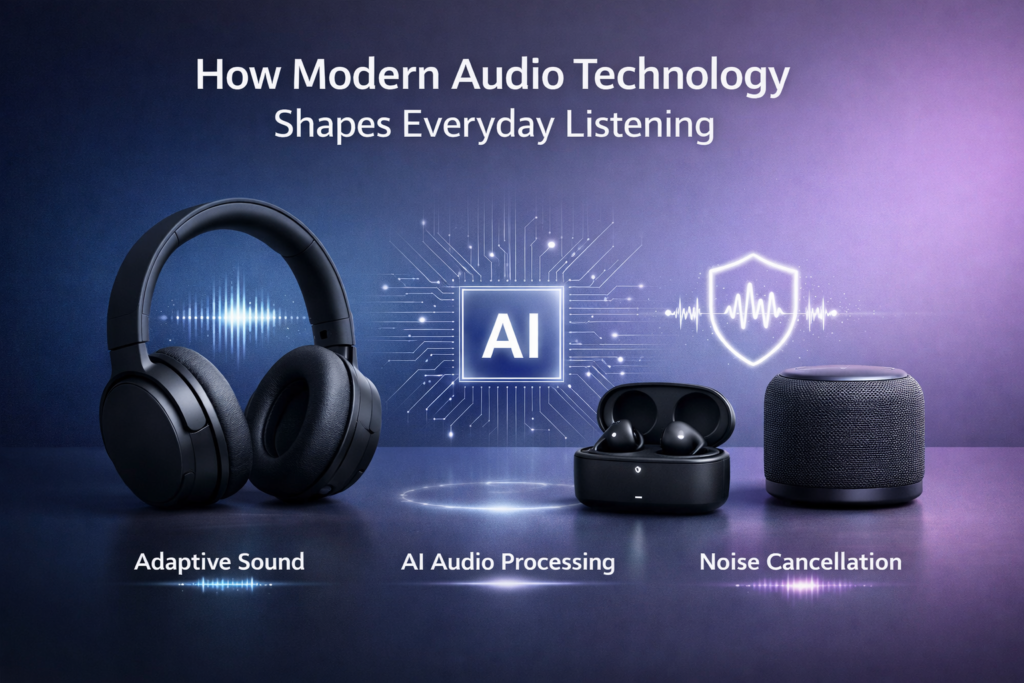
Most people don’t wake up thinking about codecs, drivers, or spatial algorithms. They just press play. Music starts instantly. Voices sound clearer than they used to. Background noise fades away. Somewhere between your commute, your study session, and late-night scrolling, modern audio quietly does its job. The change hasn’t been dramatic or loud—it’s been invisible. And that’s precisely why it matters.
What we experience today isn’t just better sound. It’s the result of deeper audio technology trends reshaping how listening fits into everyday life. The real impact isn’t measured in specs—but in habits we barely question anymore.
A Morning Commute, Rewritten by Sound
Picture a typical morning. Wireless earbuds connect before your phone even leaves your pocket. Traffic noise drops into the background. A podcast host sounds like they’re sitting next to you, not broadcasting from across the internet. You’re not analyzing fidelity—you’re immersed.
That seamlessness is new. A decade ago, audio required compromises: wires, hiss, dropouts, inconsistent volume. Today’s listening feels frictionless. The scene isn’t impressive because it’s flashy—it’s impressive because nothing gets in the way. That’s the baseline modern audio has quietly established.
The Real Shift: From “Better Sound” to Smarter Sound
Everyone sees progress as louder bass, higher resolution, or bigger drivers. The deeper truth is different. The biggest leap in modern audio isn’t raw quality—it’s adaptation.
Audio systems no longer deliver a fixed sound signature. They react. They adjust. They learn. Many current audio technology trends are built around context awareness rather than brute-force performance. Your headphones behave differently on a train than they do in a quiet room. Your speaker adjusts output based on placement. Your calls prioritize voice clarity over music richness.
Sound is no longer static. It’s situational.
Inside the Engine: How Modern Audio Actually Works
The Assumptions We Still Carry
Many listeners assume better audio comes from higher bitrates or more expensive hardware. While those elements matter, they’re no longer the main drivers. Hardware improvements have plateaued relative to perceptual gains. The real evolution is happening in software layers most users never see.
The Technology Behind the Experience
Modern listening relies on a stack of technologies working simultaneously:
| Layer | What It Does |
|---|---|
| Digital Signal Processing (DSP) | Shapes sound in real time based on environment |
| Adaptive EQ | Adjusts tonal balance dynamically |
| Active Noise Control | Cancels external sound using phase inversion |
| Psychoacoustic Modeling | Optimizes what the brain perceives, not just measurements |
| Machine Learning | Recognizes patterns in usage and environment |
DSP has become the backbone of audio. Instead of tuning sound once at the factory, manufacturers tune it continuously during use. This is why two people can hear the “same” headphones differently—and both experiences feel correct.
Why Brands Design Audio This Way
From an industry perspective, adaptive audio solves multiple problems at once. It improves perceived quality without dramatically increasing hardware costs. It allows products to age better through firmware updates. And it aligns with subscription-driven ecosystems where software improvement is ongoing.
This strategy explains why many brands emphasize features like spatial audio, personalized sound profiles, and AI-driven noise control. These aren’t gimmicks—they’re scalable advantages.
Where This Is Headed Next
Looking forward, audio technology trends are converging around predictive sound. Systems won’t just react to noise; they’ll anticipate it. Audio will adapt before you enter a loud environment, not after. We’re moving toward sound that behaves like a digital assistant—quietly proactive.
Real-World Listening Scenarios That Didn’t Exist Before
Modern audio shows its value in everyday moments:
Scenario 1: Hybrid Learning
Students switch between recorded lectures, live calls, and music without changing devices. Voice-optimized tuning ensures clarity without manual adjustments.
Scenario 2: Remote Work Calls
Microphones isolate speech while suppressing keyboard noise and room echo. The listener experiences consistency even when the speaker’s environment changes.
Scenario 3: Fitness and Movement
Audio adjusts volume and EQ dynamically during movement, maintaining clarity without distortion.
Scenario 4: Casual Entertainment
Streaming platforms deliver audio mastered specifically for small speakers and earbuds, not just studio monitors.
Quick Snapshot: How Audio Adapts Daily
| Situation | Audio Adjustment |
|---|---|
| Public transport | Strong noise suppression, vocal emphasis |
| Quiet room | Wider soundstage, lower processing |
| Calls | Speech frequencies prioritized |
| Music streaming | Loudness normalization |
| Video content | Spatial cues enhanced |
| Gaming | Directional sound emphasis |
| Exercise | Dynamic compression |
| Late-night listening | Bass reduction, clarity boost |
Patterns That Matter More Than Specs
Instead of chasing numbers, modern audio follows principles:
- Consistency beats peak performance: Users prefer reliable clarity over occasional brilliance.
- Perceptual tuning outweighs measurement perfection: Sound optimized for human hearing feels better even if graphs look imperfect.
- Latency matters more than resolution: Instant feedback improves perceived quality more than ultra-high bitrates.
- Software longevity extends product life: Updates now improve sound months after purchase.
These patterns define current audio technology trends far more accurately than marketing terms.
How This Changes Human Behavior
The impact isn’t technical—it’s psychological.
People listen longer because fatigue is lower. They multitask more comfortably because audio adapts instead of demanding attention. Silence becomes optional; sound fits into life rather than interrupting it.
For students, clearer speech reduces cognitive load. For creators, consistent monitoring builds confidence. For everyday users, audio fades into the background—until it needs to stand out.
This shift subtly changes how people work, relax, and connect. Audio becomes infrastructure, not an event.
Choosing Audio That Matches How You Live
Everyday Users
- Prioritize comfort, adaptive sound, and battery efficiency.
- Pros: Seamless experience, minimal setup.
- Cons: Less manual control.
Creators & Professionals
- Look for low latency, accurate mids, and software tuning options.
- Pros: Reliable monitoring, consistent output.
- Cons: Learning curve.
Gamers & Enthusiasts
- Directional audio and spatial processing matter most.
- Pros: Immersion, positional accuracy.
- Cons: Heavier processing can affect natural sound.
Future-Proof Buyers
- Focus on update support and platform integration.
- Pros: Longevity, evolving features.
- Cons: Higher upfront cost.
Pros & Cons Snapshot
| Strengths | Trade-Offs |
|---|---|
| Adaptive sound | Less raw control |
| Software updates | Dependency on apps |
| Smarter noise handling | Battery usage |
| Personalization | Privacy considerations |
When Modern Audio Isn’t the Answer
There are cases where simplicity wins. Studio purists may prefer unprocessed sound. Wired setups still offer consistency without latency. Not every listener wants sound shaped by algorithms.
This counterpoint matters. The rise of smart audio doesn’t invalidate traditional approaches—it redefines the mainstream while leaving space for specialists.
What Real Users Actually Say
Across forums and community discussions, patterns emerge:
| User Type | Feedback Summary | Relevance |
|---|---|---|
| Students | “Voices sound clearer during lectures” | High |
| Remote workers | “Calls feel less tiring” | High |
| Audiophiles | “Too much processing” | Medium |
| Casual listeners | “Everything just works” | Very High |
| Gamers | “Directional audio helps” | High |
| Commuters | “Noise control is essential” | Very High |
| Creators | “Consistency matters more than tone” | High |
| Minimalists | “Prefer fewer features” | Low |
The contradiction is telling. Power users debate purity, while everyday listeners value reliability. That tension defines current audio technology trends—and explains why adaptive sound continues to dominate.
The Next Five Years of Everyday Audio
Expect audio to become more contextual, more predictive, and less visible. AI-driven tuning will blur the line between hardware and software. Devices will share audio profiles across ecosystems. Ethical design—privacy, transparency, and user control—will become competitive differentiators.
Most importantly, sound will continue to disappear into daily life. When technology works perfectly, you stop noticing it.
Coming Full Circle to That Morning Commute
Back where we started—the earbuds connect instantly. The world quiets down. You don’t think about codecs or algorithms. You just listen.
That’s the real success of modern audio. Not that it sounds impressive—but that it fits. The evolution of audio technology trends isn’t about chasing perfection. It’s about shaping sound around people, not the other way around.
Vibetric Ending
When audio becomes invisible, it’s no longer just technology—it’s part of how we experience life.
Curious About the Science Behind Audio Technology?
- Follow vibetric_official on Instagram to keep up with the latest trends and insights into audio technology.
- Bookmark Vibetric.com we continuously update our analysis as new developments emerge in audio technology trends.
Subscribe for updates and receive ongoing, in-depth breakdowns and expert opinions on modern audio.
Key Questions Around Modern Audio Listening
- What are the most important audio technology trends today?
Adaptive sound processing, AI-driven tuning, and context-aware noise control lead the shift. - Does higher bitrate always mean better sound?
Not necessarily. Perceptual tuning often matters more than raw resolution. - Why do modern headphones rely so much on software?
Software allows real-time adaptation and long-term improvements via updates. - Is spatial audio just a marketing term?
When implemented well, it improves immersion and directional awareness. - Are wired headphones obsolete?
No. They still offer consistency and low latency, especially for professionals. - How does adaptive EQ affect listening fatigue?
It reduces harsh frequencies over time, making long sessions more comfortable. - Will AI completely control future audio?
AI will assist tuning, but user control will remain essential. - Is modern audio less “pure” than older systems?
It’s different. Purity is traded for consistency and adaptability. - Do audio updates really improve sound after purchase?
Yes, many devices gain noticeable improvements through firmware updates. - What should buyers focus on for long-term value?
Software support, ecosystem compatibility, and comfort matter more than specs alone.
What’s your take on this?
At Vibetric, the comments go way beyond quick reactions — they’re where creators, innovators, and curious minds spark conversations that push tech’s future forward.
AI Audio Tuning in 2026: The Intelligent Shift Redefining Sound
AI Audio Tuning in 2026: The Intelligent Shift Redefining Sound The next major leap in audio isn’t louder drivers or wider frequency
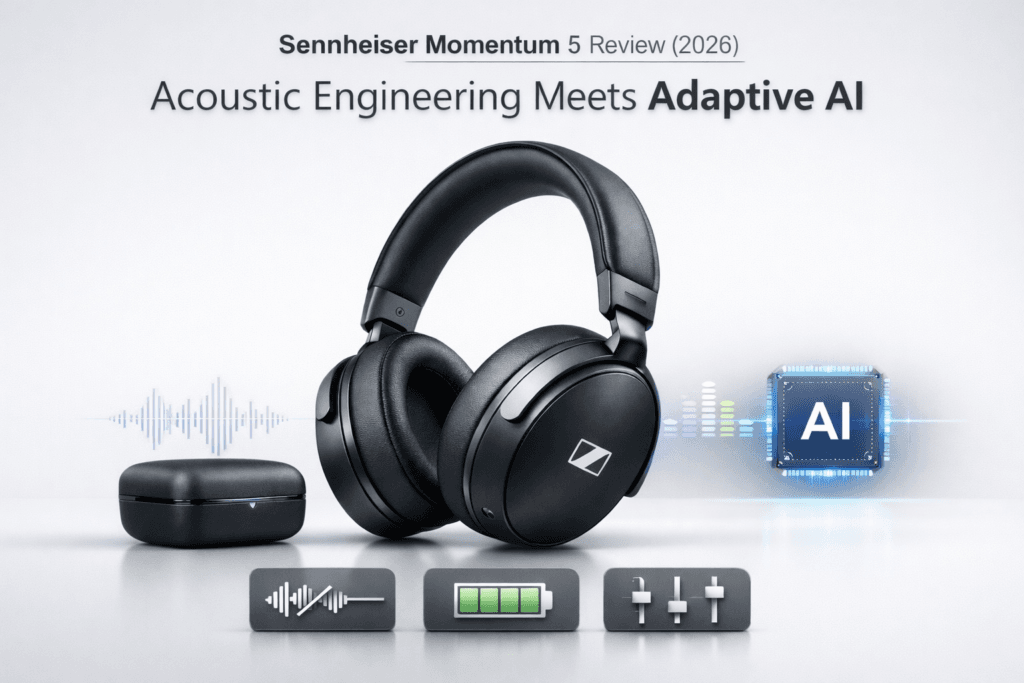
Sennheiser Momentum 5 Review (2026): Acoustic Engineering Meets Adaptive AI
Sennheiser Momentum 5 Review (2026): Acoustic Engineering Meets Adaptive AI Noise-canceling headphones have reached a point of saturation. Every flagship promises deeper