
ASUS Vivobook S16 OLED Review — The Best Student Laptop of 2025?
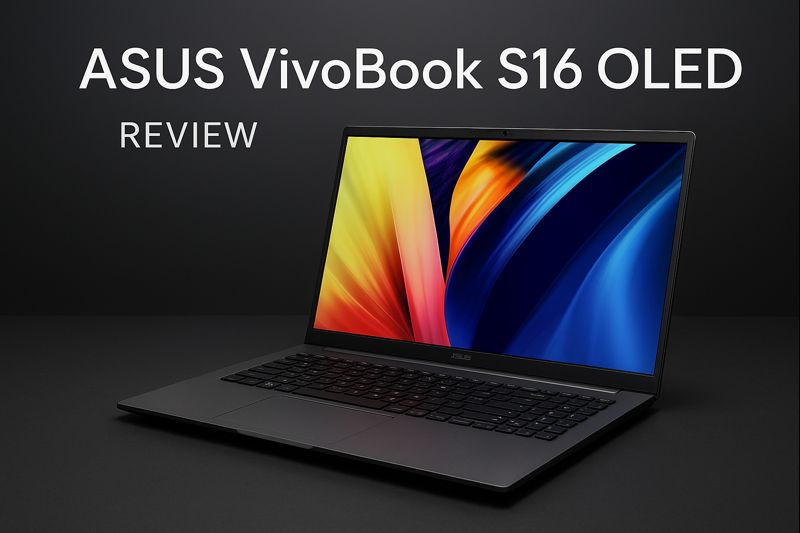
Choosing the right laptop for school is a delicate balancing act—students demand performance, portability, and affordability, all without sacrificing style. But can a laptop offer all this, while also feeling like it’s built for the future? Enter the ASUS Vivobook S16 OLED, a machine that promises just that. With its stunning OLED display, solid performance, and sleek design, could it be the perfect companion for students in 2025? Let’s dive in and find out if this laptop truly stands out, or if it’s just another contender in the crowded student laptop market.
First Impressions — Is This the Future of Student Laptops?
The ASUS Vivobook S16 OLED immediately catches your eye with its bold and refined design. The aluminum chassis feels robust yet lightweight, making it feel premium without tipping the scales too much. When you open it, the first thing that strikes you is the OLED display—sharp, vivid, and capable of colors that make even mundane school assignments look more engaging. But does this blend of aesthetic and technology translate into the performance students actually need for 2025?
It’s important to remember that students demand more than just looks. They want a machine that can handle everything from long hours of study sessions to media consumption and, yes, even a little bit of gaming or creative work on the side. In that sense, the ASUS Vivobook S16 OLED seems like it could hit all the right notes—if it can back up the promises.
The Core of the ASUS Vivobook S16 OLED Review — Performance Breakdown
Display — A Game Changer for Content Consumption
The OLED screen is where the Vivobook S16 shines brightest. While it’s not the first laptop to feature an OLED panel, it is one of the most affordable, and it delivers incredible value for students. With 100% DCI-P3 color accuracy and stunning contrast ratios, this screen is perfect for students working on graphic design projects, watching educational videos, or simply enjoying their downtime with movies or games.
For anyone who spends a lot of time looking at their screen, the OLED technology provides a level of depth and clarity that’s hard to beat at this price point. And with a 16-inch form factor, there’s plenty of screen real estate to work with, whether you’re drafting essays, reading eBooks, or creating presentations.
Performance — A Smooth Ride for Everyday Tasks
Under the hood, the Vivobook S16 OLED is powered by Intel’s 12th Gen Core i7 or i5 chips, paired with 16GB of RAM and an 512GB SSD. This combination offers more than enough power for the average student’s daily workload. Whether you’re juggling multiple browser tabs, running research-heavy software, or editing a video, the laptop holds up surprisingly well. In fact, it handles multitasking without stuttering, and applications launch quickly, thanks to the SSD.
While not the most powerful laptop on the market, it’s more than enough for the majority of student use cases. Heavy-duty tasks like video editing or 3D rendering may require more powerful machines, but for writing papers, video calls, and creative projects, this machine is plenty capable.
Portability — Light Enough for Campus Life
Weighing in at around 1.65 kg (3.64 lbs), the ASUS Vivobook S16 OLED strikes a good balance between being lightweight enough to carry around all day and still offering a full-size keyboard and screen. The slim profile and all-day battery life make it a solid option for those long study sessions in coffee shops or the library.
On a full charge, the Vivobook offers up to 10 hours of use, depending on the workload. That’s enough to get through a full day of classes and studying, making it a reliable companion for a busy student schedule.
Battery Life — Staying Power When You Need It
Battery life is a crucial consideration for students, especially those who rely on their laptops throughout the day without always having easy access to a charger. The ASUS Vivobook S16 OLED doesn’t disappoint here, offering up to 10 hours of use under typical conditions. During regular web browsing, document editing, and video streaming, you can expect to get through an entire day of classes without worrying about plugging in. When it does run low, fast charging (up to 60% in 49 minutes) ensures that you’re back up and running quickly.
How the ASUS Vivobook S16 OLED Stacks Up Against Competitors
| Feature | ASUS Vivobook S16 OLED | Dell Inspiron 16 | HP Pavilion 15 | MacBook Air (2025) |
|---|---|---|---|---|
| Display | 16-inch OLED, 100% DCI-P3 | 16-inch LCD, 72% NTSC | 15.6-inch LCD | 13.6-inch Retina |
| Processor | Intel Core i7 (12th Gen) | Intel Core i5/i7 | Intel Core i5 | Apple M2 |
| RAM | 16GB | 8GB/16GB | 8GB/16GB | 8GB/16GB |
| Storage | 512GB SSD | 512GB SSD | 512GB SSD | 512GB SSD |
| Battery Life | Up to 10 hours | Up to 8 hours | Up to 9 hours | Up to 15 hours |
| Weight | 1.65 kg (3.64 lbs) | 1.75 kg (3.85 lbs) | 1.63 kg (3.59 lbs) | 1.24 kg (2.73 lbs) |
| Price (approx) | $899 | $849 | $799 | $1,199 |
Verdict: Who Should Buy the ASUS Vivobook S16 OLED?
The ASUS Vivobook S16 OLED is the ideal laptop for students who need a machine that delivers on the basics: a powerful processor, an incredible screen, and long-lasting battery life, all in a portable, affordable package. If you’re someone who:
- Needs a laptop for research, writing papers, and video calls
- Loves to watch movies or play casual games during downtime
- Wants a stunning OLED screen but doesn’t want to pay a premium for it
Then the Vivobook S16 OLED is a solid choice.
However, if you’re a student working with demanding software like video editing tools, CAD programs, or games, you might want to consider something with more GPU power or a higher-end Intel or AMD Ryzen processor. Similarly, if you value portability over screen size, the MacBook Air or a smaller Windows ultrabook might be a better fit.
Pros & Cons Table
| Pros | Cons |
|---|---|
| Stunning OLED display | Heavier than ultra-portables |
| Excellent performance for multitasking | Lacks dedicated GPU for gaming/creative work |
| Long battery life and fast charging | Audio quality could be better |
| Affordable price for an OLED laptop | Screen bezels could be thinner |
Real-World Scenarios — How Does the ASUS Vivobook S16 OLED Perform?
Scenario 1: The Study Marathon
For students who spend their days hopping between lecture notes, online classes, and research papers, the ASUS Vivobook S16 OLED provides an ideal balance of performance and comfort. The high-res OLED display is a joy to read, and the full-size keyboard with well-spaced keys makes typing long essays less of a chore. Plus, with 10 hours of battery life, you won’t need to search for a charging outlet in the middle of the day.
Scenario 2: The Creative Side
If you’re a student dabbling in graphic design or video editing, the OLED screen’s color accuracy provides a level of detail and richness that’s hard to find in similarly priced laptops. While it’s not a powerhouse in terms of GPU performance, light photo or video editing can be done effectively, and the fast SSD ensures smooth transitions between projects.
Scenario 3: Casual Gamer
Casual gaming on the Vivobook S16 OLED is more than doable. Games like League of Legends, Fortnite, or The Sims run smoothly, and the OLED screen adds vibrant detail. For more intensive titles, like AAA games, the lack of a dedicated GPU shows—frame rates drop and performance can stutter under heavy load, but it still offers a satisfactory experience for lighter gamers.
Counter-Perspective — When the ASUS Vivobook S16 OLED Might Not Be Ideal
While the ASUS Vivobook S16 OLED is an excellent student laptop, it won’t suit everyone. If you’re pursuing a career in game design, video production, or engineering, where GPU performance and multithreaded CPU power are essential, this laptop won’t be enough. Similarly, if you’re already committed to Apple’s ecosystem or need something ultra-light for commuting, there are better options, like the MacBook Air or a premium ultrabook.
Future Forecast — What’s Next for Student Laptops?
As we move into 2025 and beyond, the trend toward OLED displays in affordable laptops is likely to increase, making high-quality visuals accessible to more students. Battery life will continue to be a focal point, with more efficient chipsets and better power management systems extending how long students can work away from a plug. We can also expect more AI-driven optimizations for performance, making even mid-range laptops feel faster and more intuitive.
Closing Narrative — The Student Laptop That Delivers
The ASUS Vivobook S16 OLED is a well-rounded choice for students who need a dependable laptop that won’t break the bank but still offers stunning visuals, solid performance, and long battery life. It’s not flashy or over the top, but it’s exactly what many students need in 2025: an affordable, powerful tool that helps them thrive in both schoolwork and downtime.
Vibetric Ending
The ASUS Vivobook S16 OLED might not be perfect, but for most students in 2025, it’s the best kind of machine: one that offers everything you need—and more.
Want to See How the ASUS Vivobook S16 OLED Will Evolve in the Future?
- Follow vibetric_official on Instagram to stay up to date with the latest trends and insights into the laptop market.
- Bookmark Vibetric.com we’ll continue to track new developments and updates on the ASUS Vivobook S16 OLED.
- Subscribe for ongoing expert breakdowns and reviews of student laptops and tech.
Everything You Need to Know About the ASUS Vivobook S16 OLED
- Is the ASUS Vivobook S16 OLED suitable for gaming?
Casual gaming is fine, but demanding titles will struggle due to the lack of a dedicated GPU. - Does the OLED display have any downsides?
OLED screens can suffer from burn-in over time, but with proper use, it shouldn’t be a major issue. - How does the ASUS Vivobook S16 OLED compare to a MacBook Air?
While the MacBook Air offers better battery life and portability, the Vivobook S16 OLED offers superior display quality at a lower price point. - Can the ASUS Vivobook S16 OLED handle video editing?
It can handle light video editing, but for more demanding tasks, you’ll want something with a dedicated GPU. - How is the keyboard on the ASUS Vivobook S16 OLED?
The keyboard is comfortable for long typing sessions, with decent key travel and a responsive feel. - What is the battery life like?
Expect up to 10 hours of use, which should cover a full day of classes. - Can you upgrade the RAM or storage?
No, the RAM is soldered, but the SSD is upgradeable if you need more storage. - Does the ASUS Vivobook S16 OLED come with Windows 11?
Yes, it comes pre-installed with Windows 11, offering a smooth and modern operating system experience. - Is the ASUS Vivobook S16 OLED good for schoolwork?
Absolutely. It’s perfect for writing papers, attending online classes, and handling day-to-day academic tasks. - Does the laptop come with a stylus?
No, the Vivobook S16 OLED does not include a stylus, but it supports touch gestures.
What’s your take on this?
At Vibetric, the comments go way beyond quick reactions — they’re where creators, innovators, and curious minds spark conversations that push tech’s future forward.
Adaptive Transparency Mode in 2026: The Intelligent Evolution Beyond Basic Passthrough
Adaptive Transparency Mode in 2026: The Intelligent Evolution Beyond Basic Passthrough Noise cancellation used to be the headline feature. Transparency was the

Spatial Audio Default in 2026: The Quiet Shift Redefining Immersive Sound
Spatial Audio Default in 2026: The Quiet Shift Redefining Immersive Sound There was a time when surround sound required a living room