
AI Cameras 2026 Features — The Powerful Shift Toward Smarter Imaging
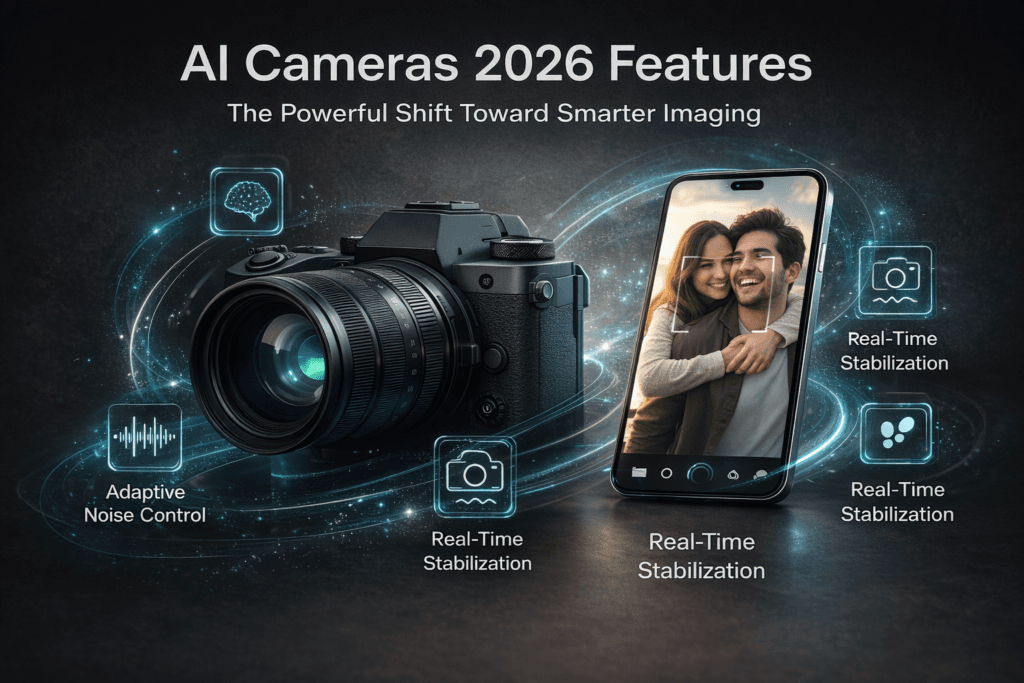
Camera hardware stopped being the main innovation lever years ago. Sensor improvements still matter, but by 2026, the most meaningful progress in imaging is happening after light hits the sensor. AI cameras 2026 features are redefining what cameras do with visual data—interpreting scenes, predicting intent, and making real-time decisions that previously required manual control or post-processing. The shift is not about turning everyone into a photographer; it’s about removing friction between capture and usable results.
From Image Capture to Scene Understanding
Traditional cameras record light; AI-enhanced cameras interpret context. Modern imaging pipelines now include on-device neural models trained to recognize subjects, environments, motion patterns, and lighting conditions simultaneously. This allows cameras to adjust exposure, focus behavior, stabilization, and processing priorities before the shutter fully engages.
The practical impact of AI cameras 2026 features is that cameras no longer react after mistakes occur. They anticipate problems—subject movement, backlighting, or uneven illumination—and compensate in advance. This predictive behavior is what separates current-generation AI cameras from earlier “smart” camera modes that merely applied presets.
What AI Is Actually Doing During a Shot
Much of the intelligence in 2026 cameras operates invisibly within milliseconds. Instead of relying on a single autofocus or exposure calculation, AI systems continuously evaluate multiple potential outcomes. For example, face recognition models may prioritize eye sharpness, while motion models adjust shutter behavior to preserve clarity in fast-moving scenes.
Importantly, these processes now run locally on dedicated imaging or AI processors rather than depending on cloud analysis. This enables real-time responsiveness and preserves privacy for sensitive visual data. The result is experience without needing to understand the underlying complexity.
Key Capabilities That Actually Matter in 2026
| Capability | What It Enables | Real-World Impact |
|---|---|---|
| Scene-aware processing | Context-based tuning | Fewer failed shots |
| Subject priority detection | Intelligent focus & exposure | Sharper people and motion |
| Real-time noise modeling | Adaptive noise control | Cleaner low-light images |
| Multi-frame prediction | Pre-emptive stabilization | Reduced motion blur |
| On-device AI processing | Instant decisions | Lower latency, better privacy |
This table highlights an important reality: AI cameras 2026 features focus less on novelty and more on reliability. The goal is not artistic automation, but consistent technical accuracy across unpredictable conditions.
Why “Smarter” Doesn’t Mean Less Control
A common concern around AI-driven imaging is loss of creative control. In practice, most 2026 camera systems treat AI as a baseline safety net rather than a creative override. Manual controls still exist, but AI handles error prevention—ensuring focus accuracy, exposure balance, and motion clarity even when users intervene creatively.
This layered approach explains why AI cameras 2026 features feel helpful rather than intrusive. Instead of replacing user intent, AI amplifies it by reducing technical mistakes that previously distracted from composition and timing.
Video Is Where AI Gains Are Most Visible
While still photography benefits from AI, video capture shows the clearest improvement. Continuous subject tracking, dynamic framing, horizon correction, and intelligent stabilization now operate together. AI models can distinguish intentional camera movement from accidental shake, preserving cinematic motion while removing unwanted jitter.
For creators, this means fewer retakes and less reliance on post-production correction. In practical terms, AI cameras 2026 features are narrowing the gap between handheld capture and stabilized professional rigs—without adding physical complexity.
The Behavior Shift: Cameras That Learn Usage Patterns
Another subtle evolution is adaptive learning based on user behavior. Cameras increasingly recognize shooting habits—preferred subjects, lighting conditions, or framing styles—and optimize defaults accordingly. Over time, devices feel more responsive because they adapt to how they are used rather than forcing users to constantly adjust settings.
This personalization layer reinforces the idea that AI cameras 2026 features are not static upgrades. They evolve through usage, gradually aligning camera behavior with individual needs without requiring explicit configuration.
The Contrarian Reality: AI Doesn’t Fix Poor Composition
Despite advances, AI cannot compensate for weak framing, storytelling, or timing. It improves technical execution, not creative judgment. This distinction matters because it sets realistic expectations. The smartest cameras reduce friction, but they do not replace human decision-making.
Understanding this limitation helps explain why the best AI systems operate quietly. They solve technical problems so users can focus on creative ones, rather than attempting to automate artistic choices.
Intelligence as Invisible Infrastructure
The defining trait of AI cameras 2026 features is subtlety. The most effective systems don’t announce themselves; they simply reduce failure rates and increase consistency. By shifting cameras from reactive tools to predictive systems, AI changes how imaging fits into daily life—less adjustment, fewer retries, and more usable results by default. As this intelligence becomes standard, users may stop thinking about “AI cameras” altogether, expecting all modern devices to understand scenes as well as they capture them.
Keep Vibetric in Focus
- Follow our Instagram @vibetric_official for insight-driven imaging technology analysis.
- Bookmark vibetric.com to track how AI is reshaping device intelligence.
- Stay connected for deeper breakdowns of next-generation camera systems.
What’s your take on this?
At Vibetric, the comments go way beyond quick reactions — they’re where creators, innovators, and curious minds spark conversations that push tech’s future forward.
Smartphone Stagnation 2026: The Hidden Shift Behind Slower Upgrade Cycles
Smartphone Stagnation 2026: The Hidden Shift Behind Slower Upgrade Cycles The review unit arrived on schedule, exactly as expected — sealed packaging,

Galaxy S26 Ultra On-Device AI: Powerful Privacy Upgrade or Smart Marketing?
Galaxy S26 Ultra On-Device AI: Powerful Privacy Upgrade or Smart Marketing? Upgrading a flagship phone used to feel obvious. Faster chip. Brighter