
How AI Audio Enhancements Change the Way We Hear Music
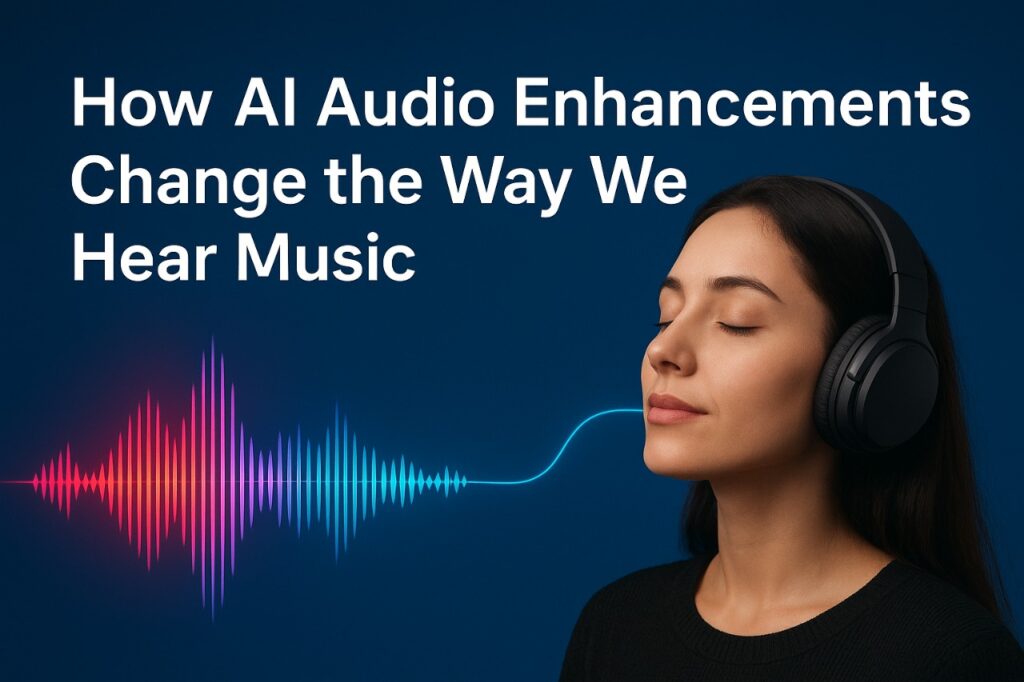
Your favorite songs don’t sound the same anymore — not because artists changed, but because AI audio did. Modern devices now reshape every track you play in the background, making music cleaner, louder, and sometimes noticeably less authentic.
⚙️ Core Insight
From smartphones to earbuds, AI audio systems analyze your music in real time — lifting vocals, boosting clarity, reducing noise, and balancing frequencies automatically. It sounds impressive, and to most listeners, it feels like an upgrade.
But there’s a trade-off.
Neural processors inside your device act like mini mastering engines, constantly tweaking the mix based on your environment and listening habits. You get consistent clarity, but you also lose some of the original texture. Many listeners describe this shift perfectly:
“It sounds better, but also kind of artificial.”
Because at that point, the music you hear is no longer purely the artist’s intent — it’s the algorithm’s reinterpretation layered on top.
📡 Where AI Audio Helps — and Where It Hurts
✅ Where it helps:
- Makes vocals clearer on streaming apps
- Enhances podcasts and dialogue
- Improves sound on small earbuds
- Adjusts audio based on noise and location
- Revives older tracks with smart processing
These improvements genuinely help everyday users who listen on wireless gear with small drivers.
❌ Where it hurts:
- Reduces dynamic range
- Makes songs sound overly clean or “same-ish”
- Alters emotional tone
- Can change bass or treble from the original mix
- Adds a subtle digital aftertaste
All of this creates a “universal sound” across devices — consistent, but not always authentic or emotionally accurate.
🎛️ Why Music Sounds Different Now
Most modern platforms apply multiple layers of AI audio processing:
- AI EQ adjusts tone automatically
- AI loudness levels match track volumes
- AI compression flattens harsh peaks
- AI spatial modes widen sound artificially
- AI clarity filters boost mids and vocals
Each layer slightly alters the original mix. Over time, listeners adapt to this polished, enhanced sound — and raw studio versions begin to feel flat by comparison. Even major streaming services like Spotify, YouTube Music, and Apple Music apply enhancement modes automatically, meaning your music rarely reaches you untouched.
Audio engineers summarize it well:
“When AI handles the mix, you’re hearing its taste, not yours.”
🎶 Are We Still Hearing the Artist?
That’s the real question.
Yes, AI audio can clean up imperfections — but sometimes those imperfections are part of the emotion. A quiet breath, a warm analog bassline, a natural reverb tail — these elements give music character.
When AI “fixes” them, the result can be technically impressive but emotionally flat. And as more devices rely on intelligent tuning, the personal signature of each song starts to fade. The experience becomes optimized, but also slightly detached from the artist’s original expression.
🧩 Key Takeaways
- AI audio boosts clarity but can alter authenticity
- Enhancements influence the mix more than listeners realize
- Universal processing makes tracks sound more similar
- Many apps apply enhancement by default
- Turn off AI filters for lossless or studio-quality sound
💬 Vibetric Verdict
Vibetric Verdict: AI audio makes everything sound polished — but not always honest. The future of listening shouldn’t only chase clarity; it should protect the emotion and intent behind every track.
🔗 Stay in the Loop
We don’t sell hype — we explain it.
- Follow @vibetric_official for grounded audio insights and tech truths.
- Bookmark vibetric.com to stay ahead of the tech curve.
- No hype. No bias. Just facts — the Vibetric way.
💬 What’s your take on this?
The comment section at Vibetric isn’t just for reactions — it’s where creators, thinkers, and curious minds exchange ideas that shape how we see tech’s future.
AI Battery Optimization Is Finally Making Earbud Battery Life Reliable in 2026
AI Battery Optimization Is Revolutionizing Earbud Battery Life in 2026 The spec sheet still says ‘30 hours.’ What it doesn’t say is
Creator Tools for Everyday Users 2026: Powerful Shift in Digital Making
Creator Tools for Everyday Users 2026: Powerful Shift in Digital Making Every morning now starts with a familiar tension: a spark of