
Mechanical Keyboard Trend in 2026 — The Switch Obsession Is Fading
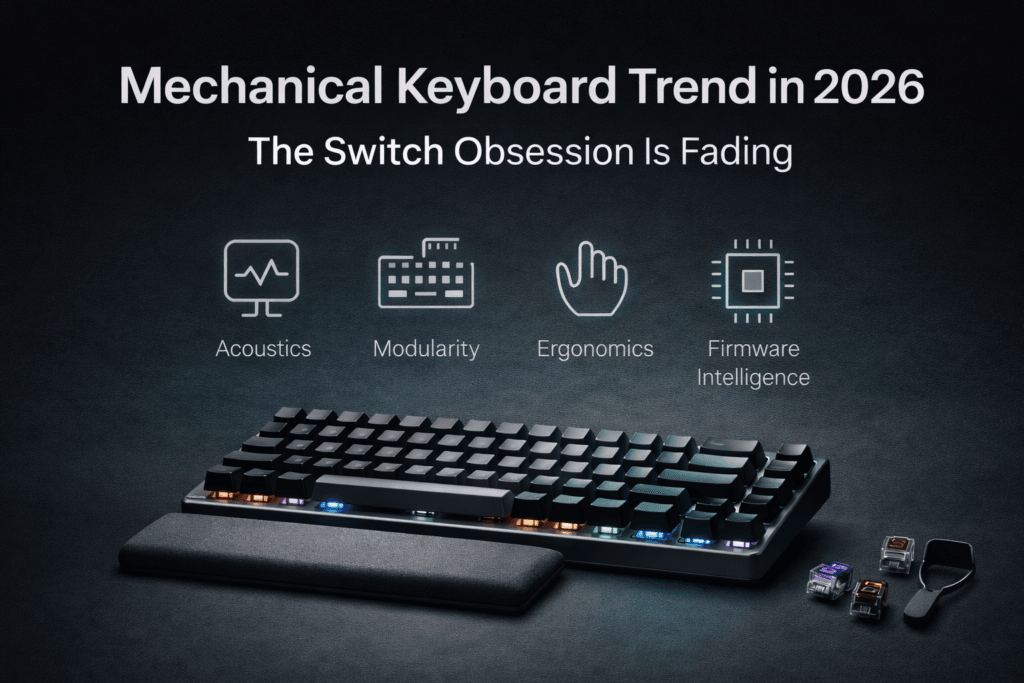
For years, mechanical keyboard discussions revolved around a single axis: switch choice. Linear, tactile, clicky—enthusiast debates rarely moved beyond feel and sound. By 2026, that conversation feels incomplete. The category has matured, and the mechanical keyboard trend in 2026 is defined less by switch variety and more by how the entire typing system is engineered.
Keyboards are now designed as integrated performance environments where acoustics, ergonomics, firmware intelligence, and modularity collectively shape the experience. Switches still matter, but they’re no longer the headline innovation.
Acoustic Engineering Became a Primary Design Layer
One of the most noticeable shifts in the mechanical keyboard trend in 2026 is the rise of intentional acoustic tuning. Manufacturers now treat keyboard sound as a measurable engineering output rather than a byproduct.
Case materials, internal mounting systems, and layered damping structures are tuned to produce consistent tonal signatures across the board. Instead of relying on aftermarket modifications, many keyboards ship with pre-optimized acoustic profiles designed for office environments, content creation, or gaming setups.
This approach reflects a broader realization: typing comfort isn’t just tactile—it’s auditory. Reduced resonance, cleaner keystroke feedback, and predictable acoustic response significantly improve long-session usability.
Layout Flexibility Quietly Expanded
Another defining aspect of the mechanical keyboard trend in 2026 is layout adaptability. Rather than forcing users into fixed formats, many modern keyboards now support modular configurations that allow subtle layout adjustments without requiring full custom builds.
Split-capable boards, adjustable spacing modules, and firmware-controlled layout remapping make keyboards more responsive to workflow diversity. Professionals moving between coding, writing, editing, and gaming benefit from setups that adapt without replacing hardware.
This flexibility marks a shift from enthusiast tinkering toward mainstream customization, where meaningful adjustments are accessible without technical complexity.
Firmware Intelligence Is the New Differentiator
Perhaps the least visible but most influential development is firmware evolution. Keyboards in 2026 increasingly feature context-aware firmware layers capable of dynamically switching profiles based on application detection, device pairing, or user-defined scenarios.
Instead of manually toggling modes, keyboards automatically adjust macros, lighting cues, and performance parameters depending on workflow context. Latency optimization, wireless stability, and power management are also handled more intelligently, ensuring consistent responsiveness across use cases.
In the mechanical keyboard trend in 2026, firmware quality often matters more than raw hardware specifications—because it determines how effectively the keyboard integrates into daily routines.
Ergonomics Moved from Niche to Default Consideration
Ergonomic awareness has expanded beyond specialized split boards into mainstream keyboard design. Subtle curvature, adjustable typing angles, and refined wrist alignment features are now integrated into a wider range of products.
Manufacturers recognize that typing performance declines long before discomfort becomes obvious. Micro-fatigue, finger strain, and wrist positioning inconsistencies quietly affect accuracy and endurance. By addressing these variables, modern keyboards support sustained productivity rather than short-term comfort.
This ergonomic emphasis is a major reason the mechanical keyboard trend in 2026 feels more mature. The focus has shifted from enthusiast aesthetics to long-session performance stability.
Materials and Build Philosophy Evolved
Material selection has also undergone refinement. Instead of prioritizing weight alone as a premium signal, designers now consider vibration behavior, thermal stability, and longevity. Composite cases, layered structural frames, and refined plate materials allow keyboards to maintain consistent typing characteristics across environments.
These changes rarely appear as headline features, yet they directly influence reliability and feel over years of use. Mechanical keyboards are increasingly positioned as long-term tools rather than interchangeable accessories.
The Contrarian Reality: Customization Is Becoming Simpler, Not More Complex
A surprising development within the mechanical keyboard trend in 2026 is that customization is becoming easier, not more technical. Early enthusiast culture often required soldering, manual firmware flashing, and extensive modification knowledge. Today, many keyboards support hot-swappable components, guided firmware interfaces, and modular upgrades accessible to non-enthusiasts.
The contrarian insight is that mainstream adoption grows when customization feels approachable. The industry is shifting from exclusivity-driven hobby culture toward accessible personalization, expanding the category’s reach without losing depth.
| Area | Earlier Focus | 2026 Direction |
|---|---|---|
| Innovation driver | Switch types | System-level typing experience |
| Acoustics | Aftermarket mods | Built-in acoustic tuning |
| Layouts | Fixed formats | Modular adaptability |
| Firmware | Static profiles | Context-aware intelligence |
| Ergonomics | Specialty niche | Integrated design priority |
This evolution highlights why conversations around mechanical keyboards feel different in 2026.
A Snapshot of What Actually Changed
What This Means for Buyers
For buyers, evaluating keyboards now requires a broader perspective. Switch preference remains important, but long-term satisfaction depends on acoustic balance, firmware ecosystem, ergonomics, and build stability. A well-engineered keyboard supports consistency across thousands of hours of typing, not just first impressions.
The mechanical keyboard trend in 2026 rewards users who think in terms of typing systems, not isolated components. When all elements are tuned together, the difference in daily workflow efficiency becomes surprisingly noticeable.
Where the Category Is Heading
Looking ahead, mechanical keyboards are likely to become even more adaptive—integrating deeper cross-device synchronization, smarter power management for wireless setups, and refined ergonomic calibration. The goal isn’t to reinvent typing, but to remove friction that users previously accepted as normal.
In that sense, the mechanical keyboard trend in 2026 represents maturity rather than disruption. Innovation is happening quietly, at the level where small refinements accumulate into meaningful long-term gains.
Signals Worth Following
- Follow our Instagram @vibetric_official for grounded insights on evolving mechanical keyboard design.
- Bookmark vibetric.com to track how the mechanical keyboard trend in 2026 shapes productivity tools.
- Stay updated as typing hardware shifts from enthusiast niche to precision workflow infrastructure.
What’s your take on this?
At Vibetric, the comments go way beyond quick reactions — they’re where creators, innovators, and curious minds spark conversations that push tech’s future forward.
Community Triage (0)