
AI Driven Device Innovation 2026 Is Quietly Redefining Every Product
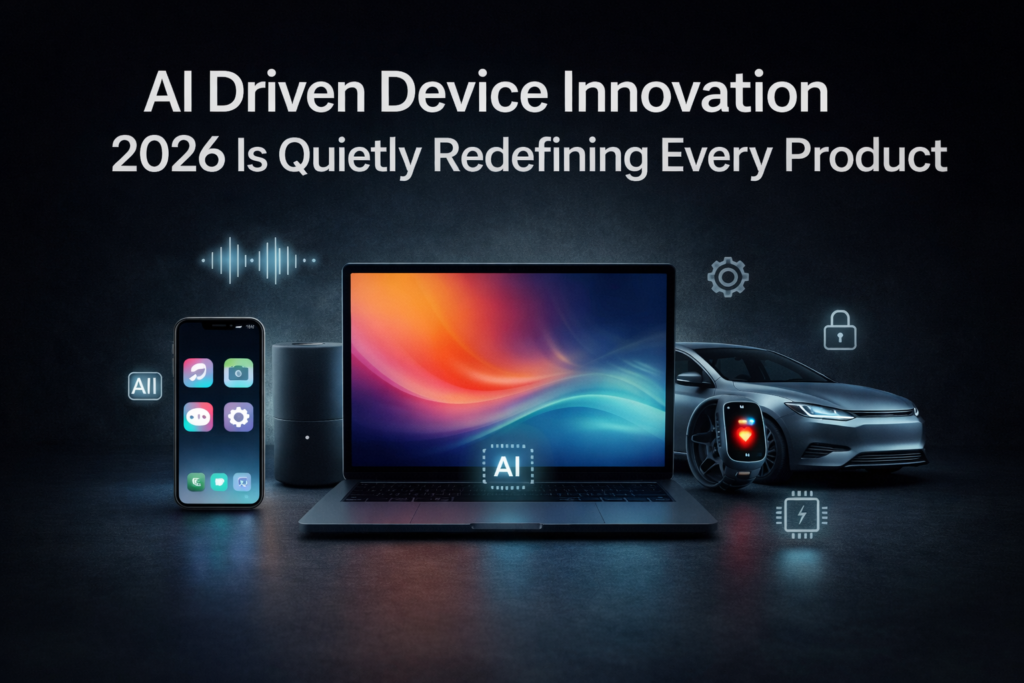
By 2026, artificial intelligence is no longer a feature layer you notice—it’s the silent logic shaping how every modern device behaves. From personal electronics to industrial systems, AI driven device innovation 2026 isn’t defined by spectacle but by integration. Devices are less concerned with impressing users and more focused on anticipating them. That shift marks a turning point: innovation is no longer about adding capability, but about refining judgment.
From Feature AI to Behavioral Infrastructure
What distinguishes 2026 from earlier AI cycles is where intelligence lives. Instead of isolated “smart” features, AI has become behavioral infrastructure—deeply embedded in operating systems, firmware, and silicon-level decision loops. Smartphones dynamically rebalance performance based on usage intent. Wearables adjust sensing priorities depending on physiological trends rather than fixed modes. Even displays modulate brightness, color behavior, and interaction flow based on environmental and cognitive signals.
This evolution reflects a broader engineering philosophy: devices are designed to observe patterns first, act second. AI driven device innovation 2026 prioritizes continuity and coherence over raw computational power, aligning hardware behavior with real-world context rather than lab benchmarks.
The Human Expectation Gap AI Is Closing
One reason AI is accelerating across every category is psychological rather than technical. Users increasingly expect devices to reduce friction, not demand attention. Manual configuration, mode switching, and constant input feel outdated in a world conditioned by predictive systems.
AI bridges this expectation gap by translating implicit behavior into explicit action. Instead of asking users what they want, devices infer it—through usage history, environmental cues, and cross-device signals. This is why AI driven device innovation 2026 shows up as fewer taps, fewer alerts, and fewer decisions imposed on the user. Intelligence is measured by how little it interrupts.
Industry Logic: Why Every Category Is Following the Same Path
At an industry level, AI’s ubiquity isn’t about trend-chasing—it’s about survival. Hardware differentiation has plateaued across most mature categories. Marginal gains in performance or resolution no longer justify upgrade cycles. AI becomes the lever that reintroduces value without reinventing form factors.
Manufacturers are using AI to extend product relevance over time:
- Adaptive performance tuning lengthens usable lifespan
- Predictive maintenance reduces failure rates
- Context-aware interfaces evolve without hardware refreshes
In this sense, AI driven device innovation 2026 is an economic strategy as much as a technical one. Intelligence allows companies to ship devices that improve post-purchase, shifting value from point-of-sale specs to long-term experience.
A Quiet Technical Shift Most People Missed
Behind the scenes, much of this progress comes from distributed intelligence architectures. Instead of relying solely on cloud processing, devices increasingly combine on-device models with edge and hybrid compute. This reduces latency, improves privacy, and enables real-time responsiveness that cloud-only AI can’t deliver.
What’s notable is how invisible this shift is to consumers. Devices feel faster, more reliable, and more intuitive, but rarely advertise why. That invisibility is intentional. In 2026, good AI doesn’t announce itself—it simply works, consistently, across conditions and use cases.
The Contrarian Truth: AI Isn’t Making Devices Smarter—It’s Making Them Quieter
A common assumption is that AI innovation leads to more interaction. The opposite is proving true. The most advanced devices of 2026 are less noisy, less demanding, and less intrusive than their predecessors. Notifications are filtered more aggressively. Interfaces surface only what’s relevant. Automation handles background tasks without fanfare.
This runs counter to the idea that progress means more features or more engagement. Instead, AI driven device innovation 2026 is about selective presence—technology that knows when not to intervene. That restraint is where real sophistication now lives.
Use-Case Reality: How This Shows Up Day to Day
In practical terms, this intelligence-first approach reshapes everyday interactions. A laptop prioritizes battery efficiency during passive tasks without user input. A car adjusts driver assistance sensitivity based on fatigue patterns rather than static profiles. Home systems coordinate energy usage dynamically instead of following rigid schedules.
None of these moments feel revolutionary in isolation. Collectively, they redefine what “modern” technology feels like. Devices stop behaving like tools and start behaving like systems that understand the rhythms of use. That experiential consistency is the true output of AI driven device innovation 2026.
Where This Leaves the Next Wave of Innovation
As AI becomes foundational, the competitive frontier shifts again. The next differentiator won’t be whether a device uses AI, but how well it aligns intelligence with human behavior. Poorly tuned AI will feel intrusive or erratic. Well-designed AI will feel almost invisible.
The most successful products in 2026 won’t advertise intelligence—they’ll demonstrate judgment. And that may be the clearest signal yet that AI has moved from novelty to necessity across every device category.
Signals Worth Tracking
- Follow our Instagram @vibetric_official for clear-eyed analysis on how AI reshapes everyday tech.
- Bookmark vibetric.com to track device innovation beyond launch-day narratives.
- Stay updated as AI driven device innovation 2026 moves from promise to lived experience.
What’s your take on this?
At Vibetric, the comments go way beyond quick reactions — they’re where creators, innovators, and curious minds spark conversations that push tech’s future forward.
AI Driven Device Innovation 2026 Is Quietly Redefining Every Product
AI Driven Device Innovation 2026 Is Quietly Redefining Every Product By 2026, artificial intelligence is no longer a feature layer you notice—it’s
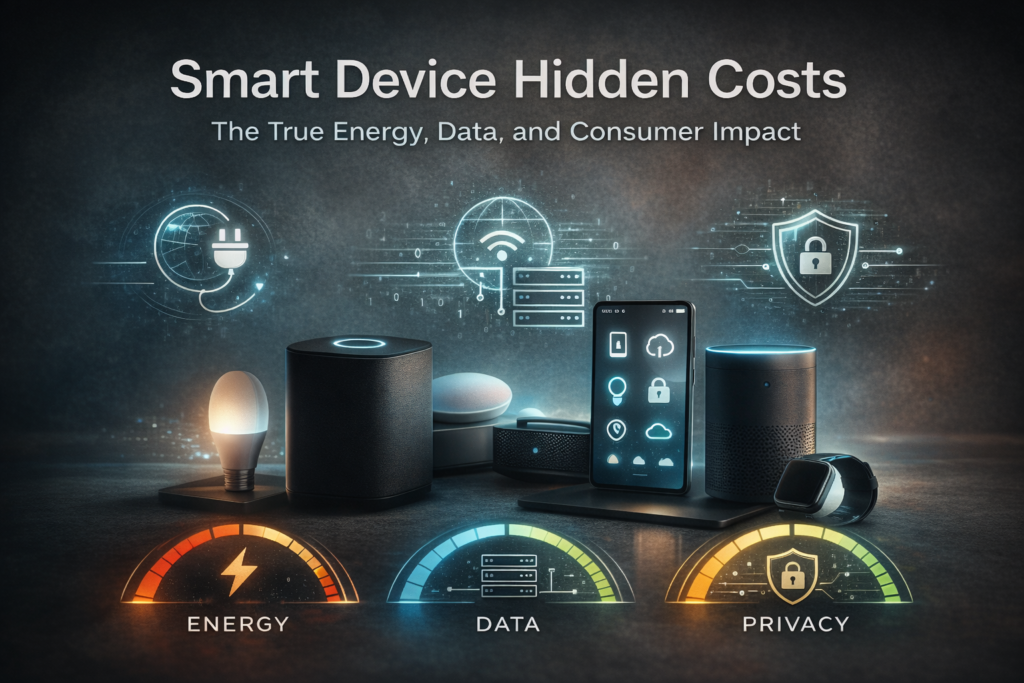
Smart Device Hidden Costs: The True Energy, Data, and Consumer Impact
Smart Device Hidden Costs: The True Energy, Data, and Consumer Impact Smart technology didn’t arrive as a disruption. It crept in quietly.