
Modular Gaming Gear: The Smart, Unstoppable Future of Repairable Performance
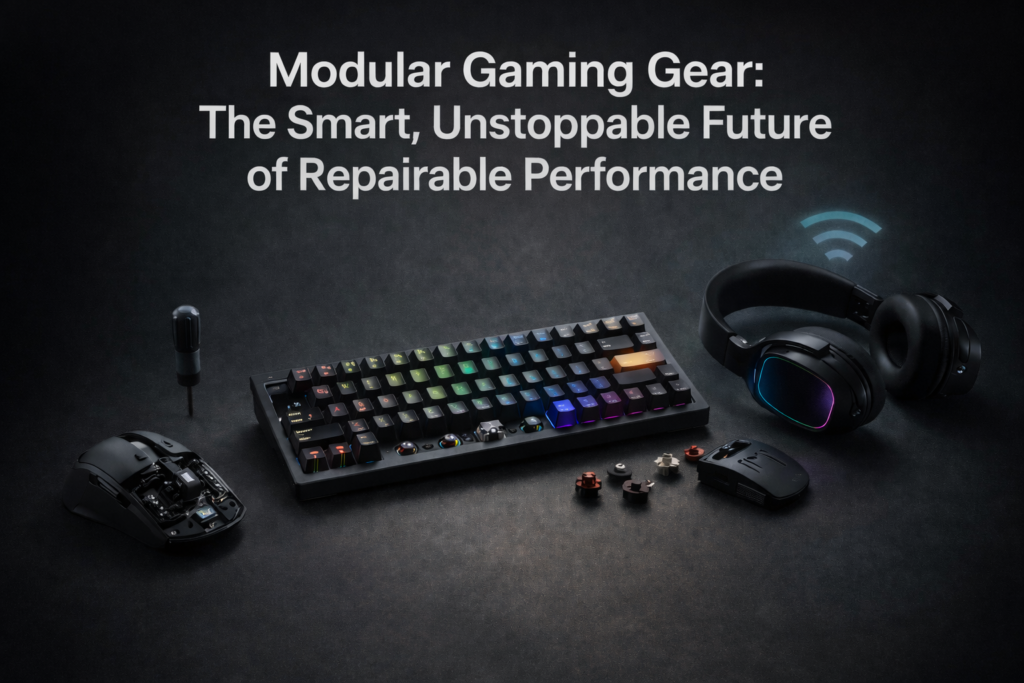
For years, gaming gear evolved like fast fashion. New releases arrived on fixed cycles, each promising marginal gains wrapped in fresh aesthetics. That rhythm is starting to break. Rising costs, environmental pressure, and performance plateaus are forcing a rethink—and modular gaming gear sits at the center of that shift. Not as a niche experiment, but as a structural correction to how gaming hardware has been designed and consumed.
The future isn’t about adding more features. It’s about building gear that stays relevant longer.
Performance Has Stopped Being the Bottleneck
Modern gaming peripherals are already fast enough. Sensors track with near-perfect accuracy, latency sits below human perception, and switches register inputs instantly. Further gains exist, but they’re increasingly theoretical rather than experiential.
When performance ceilings flatten, weaknesses elsewhere become visible. Broken scroll wheels, worn switches, degraded batteries, and outdated firmware now end the useful life of gear long before performance does. Modular gaming gear reframes the problem: instead of replacing the entire device, you replace the failing component.
This isn’t nostalgia for old-school durability—it’s an acknowledgment that peak performance without longevity is inefficient design.
Repairability as a Design Philosophy, Not a Feature
Most gaming gear isn’t difficult to repair because engineers lack skill. It’s difficult because repairability was never a priority. Glued shells, proprietary fasteners, and sealed batteries optimize for assembly speed and aesthetics, not ownership lifespan.
Modular gaming gear flips that logic. Screws replace adhesives. Standardized components replace custom layouts. Internal access becomes intentional rather than accidental. These decisions don’t just help users—they reduce manufacturing waste and simplify revisions.
Importantly, repairability changes user behavior. When fixing is possible, replacement slows. Gear stops feeling disposable and starts feeling personal.
Upgrade Paths Replace Product Cycles
Traditional gaming hardware relies on full refreshes to justify new sales. Modular systems introduce a different economic model: incremental upgrades.
Instead of buying a new mouse for a better sensor, you swap the sensor module. Instead of replacing a keyboard for different switches, you change the switch plate. Firmware updates extend relevance without physical waste.
This model aligns better with how gamers actually evolve. Preferences change gradually—grip style, switch feel, weight balance—not all at once. Modular gaming gear adapts alongside the player, rather than forcing a reset every year.
A Snapshot of Modular Advantages
| Aspect | Conventional Gear | Modular Gaming Gear |
|---|---|---|
| Failure response | Full replacement | Component-level repair |
| Upgrade method | New product purchase | Targeted module swap |
| Lifespan | Fixed, short-term | Flexible, extended |
| User control | Minimal | High |
Placed here to ground the discussion, this contrast shows why modularity isn’t just ethical—it’s practical. It optimizes ownership, not just performance.
The Cultural Shift Gamers Haven’t Fully Noticed
Gaming culture celebrates mastery and optimization, yet hardware ownership remains oddly passive. Players fine-tune sensitivity curves and keybinds, but accept sealed devices as unchangeable.
Modular gaming gear aligns better with gamer psychology than current designs do. It rewards experimentation, customization, and long-term refinement. Gear becomes part of the skill journey, not a recurring purchase.
There’s also a trust factor. When a brand designs for repair and upgrades, it signals confidence that the core product is worth keeping. That message resonates more deeply than any esports endorsement.
Industry Resistance—and Why It’s Fading
Modularity complicates supply chains and challenges predictable upgrade cycles. That’s why adoption has been slow. But resistance weakens as external pressures grow: higher material costs, stricter sustainability regulations, and consumers pushing back against disposable tech.
Some brands are already testing modular ideas quietly—replaceable batteries, hot-swappable switches, detachable wireless modules. These aren’t experiments. They’re probes into a future where selling fewer complete products may still generate stronger loyalty and recurring revenue.
The industry isn’t abandoning performance. It’s realizing that performance alone no longer defines value.
The Real Trade-Off No One Talks About
The biggest challenge for modular gaming gear isn’t engineering—it’s restraint. Designing something to last requires resisting unnecessary redesigns. It means prioritizing internal compatibility over visual novelty.
That restraint can feel risky in a market built on constant launches. But it also builds ecosystems rather than one-off products. Over time, ecosystems win.
Modularity doesn’t slow innovation. It redirects it toward refinement instead of replacement.
Where Gaming Gear Is Actually Heading
The future of gaming hardware won’t be decided by who ships the lightest mouse or the fastest switch. It will be shaped by who builds gear players don’t want to throw away.
Modular gaming gear represents a maturation of the category. It acknowledges that performance has stabilized, users are more informed, and responsibility now intersects with design. Upgradability, repairability, and longevity aren’t compromises—they’re the next competitive edge.
The most advanced gaming gear of the future may not look revolutionary at first glance. Its real innovation will be how long it stays on your desk.
Keep Exploring with Vibetric
- Follow our Instagram @vibetric_official for deeper insights into gaming hardware design.
- Bookmark vibetric.com to stay updated on long-term gear trends.
- Stay connected as performance culture shifts toward smarter ownership.
What’s your take on this?
At Vibetric, the comments go way beyond quick reactions — they’re where creators, innovators, and curious minds spark conversations that push tech’s future forward.
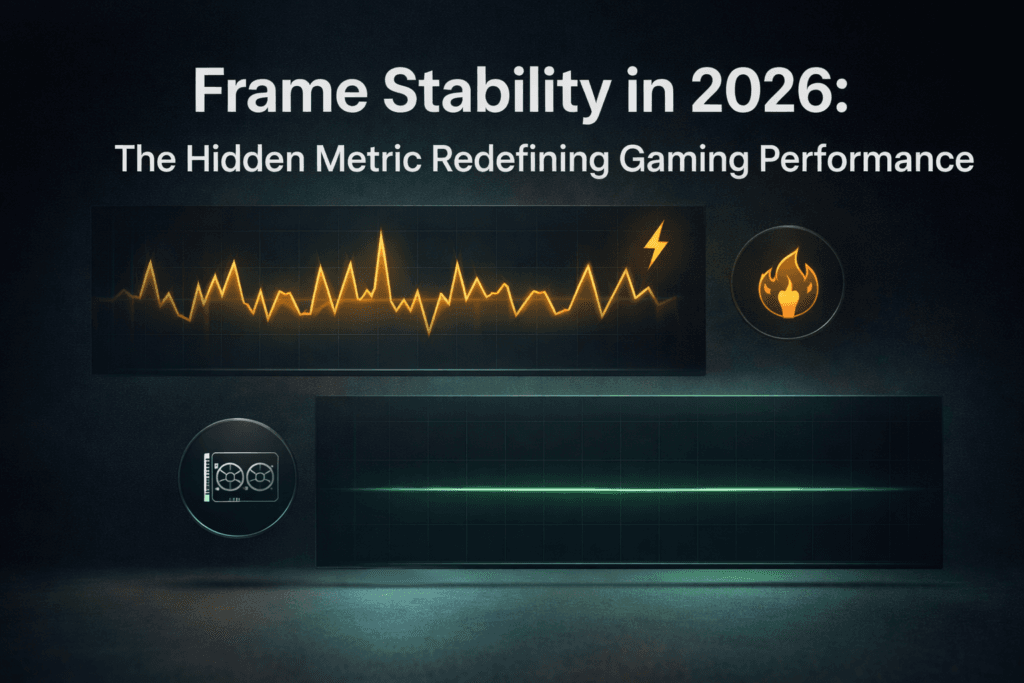
Frame Stability in 2026: The Hidden Metric Redefining Gaming Performance
Frame Stability in 2026: The Hidden Metric Redefining Gaming Performance For years, gaming conversations revolved around one number: frames per second. Higher
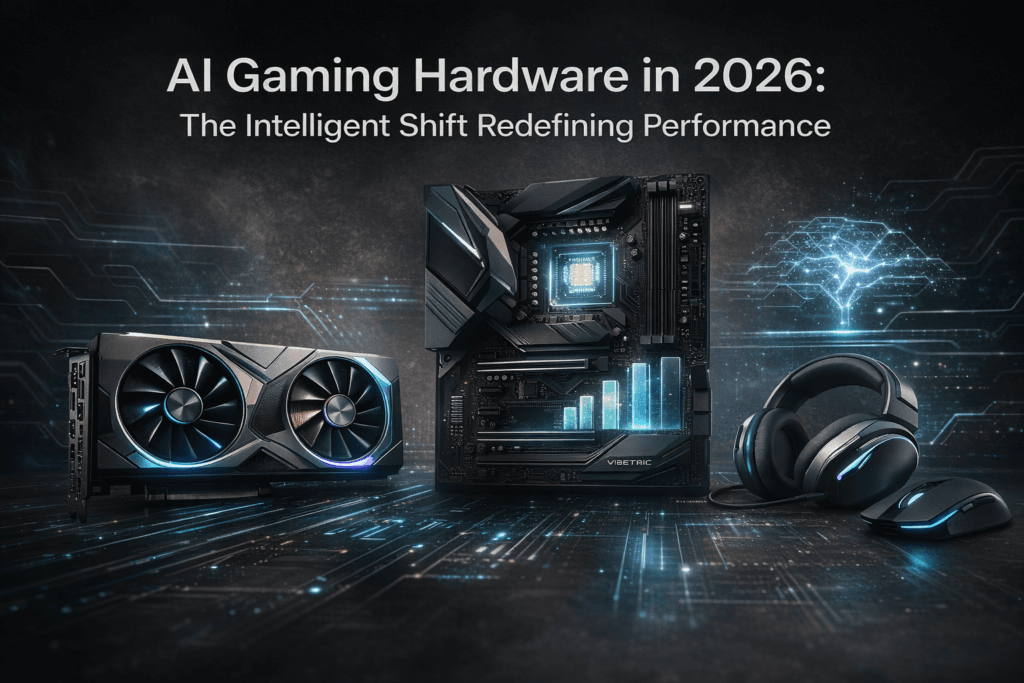
AI Gaming Hardware in 2026: The Intelligent Shift Redefining Performance
AI Gaming Hardware in 2026: The Intelligent Shift Redefining Performance For decades, gaming hardware evolved in predictable increments: more GPU cores, higher