
Headphone Comfort Importance: Why Fit Truly Matters More Than You Think
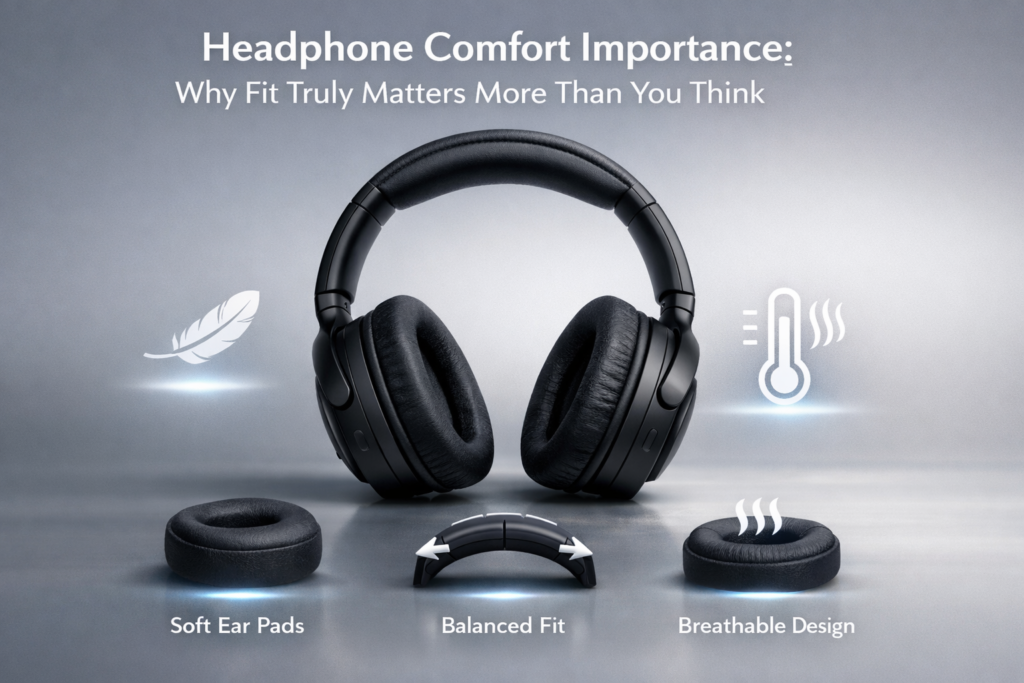
Sound quality gets the spotlight, but comfort decides whether you keep listening. Most people discover this only after the novelty fades—when great-sounding headphones start feeling distracting, fatiguing, or physically intrusive. Over long sessions, headphone comfort importance quietly outweighs tonal preferences, specs, and even price. Comfort isn’t an accessory to sound; it’s a prerequisite for hearing well over time.
The Moment Sound Stops Being the Problem
In the first few minutes, listeners focus on clarity, bass, and detail. After an hour, attention shifts. Pressure points emerge. Heat builds. Minor fit issues turn into constant micro-distractions. The brain starts allocating bandwidth to physical discomfort instead of music.
This is where perception changes. Even excellent tuning feels worse when your head or ears are under stress. Many users misattribute this to “fatiguing sound,” when the real culprit is physical strain. Understanding headphone comfort importance begins with recognizing how quickly the body overrides the ears.
Comfort Shapes How Long You Can Listen—And How Well You Listen
Listening isn’t passive. The brain actively processes spatial cues, dynamics, and texture. Discomfort interrupts that process. When clamping force is uneven or pads don’t breathe, the listener subconsciously seeks relief. Posture shifts. Focus drifts. Sessions shorten.
Comfortable headphones fade from awareness. They let music occupy attention fully. This absence of friction is why long-term listeners often prioritize fit and ergonomics over marginal sonic gains. Comfort doesn’t make sound better—it allows sound to be perceived consistently.
Why “Lightweight” Doesn’t Automatically Mean Comfortable
Weight is often treated as the headline comfort metric, but distribution matters more. A heavier headphone with balanced weight and compliant padding can feel easier than a lighter one with poor pressure management. Clamp force, pad shape, headband compliance, and material breathability interact in complex ways.
Heat retention is another overlooked factor. Pads that trap warmth accelerate fatigue, especially in long sessions. Breathable materials may slightly alter acoustics, but they dramatically improve endurance. This trade-off highlights the practical side of headphone comfort importance: sustainable listening beats theoretical perfection.
A Snapshot of Comfort Factors That Actually Matter
Placed early to anchor evaluation beyond specs, this snapshot reframes comfort priorities:
| Comfort Factor | Long-Session Impact |
|---|---|
| Clamp force consistency | Reduces pressure fatigue |
| Pad material & breathability | Controls heat buildup |
| Weight distribution | Prevents hotspot formation |
| Ear cup depth & shape | Avoids ear contact strain |
These elements rarely appear on spec sheets, yet they determine whether a headphone earns repeat use.
The Behavioral Cost of Ignoring Comfort
When comfort is compromised, listening habits change. Users lower volume to compensate for physical fatigue, masking discomfort as sonic harshness. Sessions become shorter and more fragmented. Eventually, even well-regarded headphones sit unused.
This behavioral drift explains why many people rotate through gear quickly. They’re chasing sound improvements when the limiting factor is wearability. Recognizing headphone comfort importance shifts buying decisions from short demos to long-term suitability.
Why Comfort Becomes More Critical as Sound Quality Improves
As technical performance converges across price tiers, comfort becomes the differentiator. Once distortion is low and tuning is competent, physical design dictates enjoyment. At higher levels, discomfort is amplified because there’s nothing else “wrong” to blame.
Experienced listeners often settle on headphones that may not measure perfectly but disappear physically. That disappearance is a form of quality. It enables focus, immersion, and consistency—qualities no frequency graph can capture.
The Contrarian Insight: Comfort Is a Sound Feature
It’s tempting to treat comfort as separate from audio performance. In reality, it directly affects perception. Reduced tension improves relaxation, which alters how dynamics and space are perceived. Comfortable listeners hear deeper, not because the gear changed, but because their attention did.
This reframes headphone comfort importance as part of the sound chain. The body is the final component. If it’s stressed, fidelity suffers.
Listening Longer Changes What You Value
Short auditions reward excitement. Long sessions reward balance. Over time, listeners gravitate toward headphones that respect their physiology. Comfort doesn’t impress instantly. It proves itself slowly.
The quiet truth is that the best-sounding headphones are the ones you forget you’re wearing. Not because they lack character—but because nothing pulls you out of the experience.
Sound begins at the driver. Listening ends at the body. Ignore that, and even great audio falls short.
Build a Better Listening Baseline
- Follow our Instagram @vibetric_official for human-first audio insight.
- Bookmark vibetric.com to keep long-session priorities in focus.
- Stay updated as listening quality shifts beyond raw sound metrics.
What’s your take on this?
At Vibetric, the comments go way beyond quick reactions — they’re where creators, innovators, and curious minds spark conversations that push tech’s future forward.