
Why Some Laptops Age Better Than Others
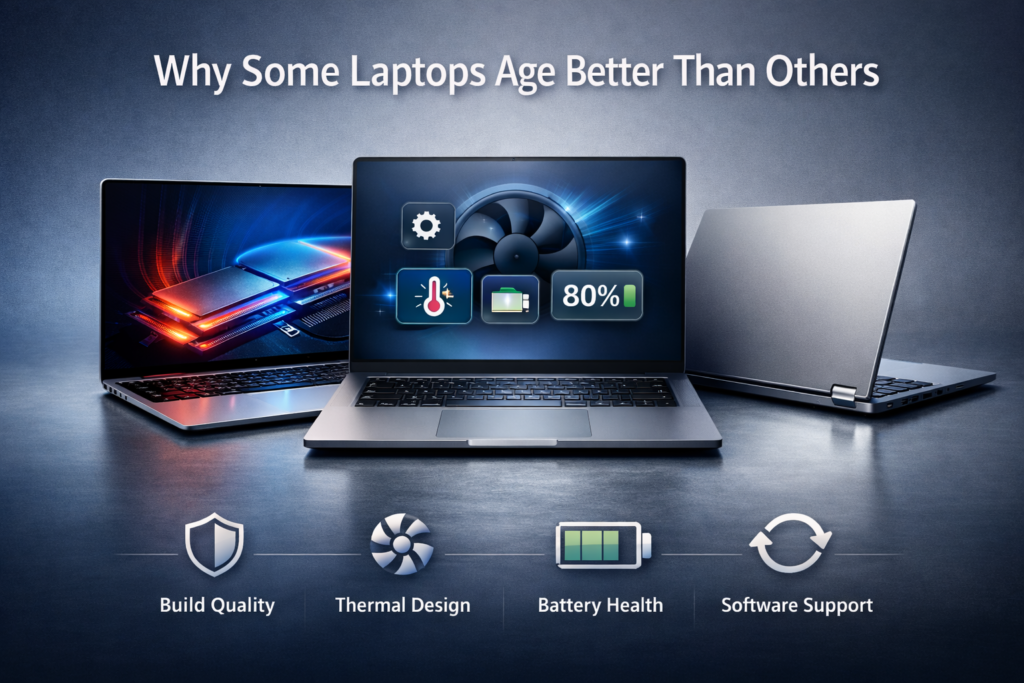
When choosing a laptop in 2025, specifications like CPU speed, GPU power, and display quality dominate the conversation. Yet, the true measure of value often lies in laptop longevity—how well a device maintains performance, usability, and reliability over years of use. Two laptops with similar specs can diverge drastically in lifespan due to design, components, and user habits.
Build Quality and Materials
Physical construction plays a crucial role in longevity. Laptops with metal chassis, reinforced hinges, and quality keyboards resist wear better than cheaper plastic alternatives. Even minor flex in the body or keyboard degradation can erode daily usability, affecting how long a laptop feels solid and reliable.
Premium ultrabooks like the MacBook Pro and Dell XPS series demonstrate this principle: high-quality materials allow them to withstand years of travel, commuting, and frequent handling without noticeable degradation, directly impacting laptop longevity.
Thermal Design and Component Durability
Heat is a major enemy of electronics. Laptops with efficient cooling systems maintain consistent performance longer because high temperatures accelerate component degradation. Advanced cooling solutions, such as vapor chambers, dual fans, or heat pipe arrays, distribute thermal load effectively, reducing stress on CPU, GPU, and battery cells.
Conversely, poorly ventilated laptops may throttle performance within months of heavy use, diminishing the perception of longevity even if the hardware itself remains functional. Users targeting long-term reliability should weigh thermal design as heavily as raw specs.
Battery Management and Lifespan
Batteries naturally degrade, but design and software strategies can extend life. Laptops that support adaptive charging, charge limit features, or multi-cell configurations reduce wear over time. Frequent high-temperature charging or keeping the battery at 100% continuously accelerates chemical aging.
Engineering foresight in flagship devices—like the Lenovo ThinkPad X1 or MacBook Pro—ensures that the battery remains above 80% capacity even after thousands of cycles, a key metric for laptop longevity.
Software Support and Update Cadence
Hardware longevity is intertwined with software support. Laptops that continue receiving OS updates, driver patches, and security improvements remain functional and secure longer. Apple leads with extended macOS support, often six to seven years, while Windows and select Linux-supported laptops vary depending on OEM policies. Lack of updates can force users to replace otherwise capable machines, impacting practical longevity.
Mini Snapshot: Factors Influencing Laptop Longevity
| Factor | High-Longevity Devices | Common Shortcomings |
|---|---|---|
| Build Quality | Metal chassis, reinforced hinges | Plastic body, fragile keyboard |
| Thermal Management | Vapor chamber, dual-fan cooling | Single fan, poor ventilation |
| Battery Care | Multi-cell, adaptive charging | Standard battery, no management software |
| Software Updates | 6–7 years (macOS), extended support for business laptops | 3–4 years on average |
| Component Selection | High-quality RAM, SSDs | Budget components prone to early wear |
This table highlights why some laptops maintain performance and usability while others degrade faster despite similar initial specifications.
User Behavior Matters Too
Even the best-engineered laptop can age poorly if misused. Common habits that reduce laptop longevity include:
- Using laptops on soft surfaces that block airflow.
- Overloading storage drives continuously.
- Ignoring software updates or running outdated drivers.
- Exposing devices to extreme temperatures or moisture.
Conversely, proactive users who maintain cooling, manage battery cycles, and update software preserve both performance and lifespan.
Contrarian Perspective: Not Always About Specs
High-end CPUs or GPUs do not guarantee long-term satisfaction. A mid-range laptop with excellent thermal management, robust chassis, and strong software support can outlast a flagship device with overheating issues or poor update policies. Longevity is multidimensional, blending engineering, materials, and user habits.
Closing Insight
Laptop longevity in 2025 is a mix of design foresight, hardware resilience, software support, and responsible user behavior. Devices that balance cooling, build quality, battery management, and updates tend to age gracefully, maintaining productivity and reliability over several years. Understanding these factors helps users make informed choices that save money, reduce frustration, and enhance long-term satisfaction with their laptops.
Maximize Your Laptop’s Lifespan
- Follow our Instagram @vibetric_official for tips on choosing durable laptops and optimizing their usage.
- Bookmark vibetric.com to explore detailed guides on maintenance, thermal care, and software longevity.
- Stay informed about innovations in battery, cooling, and component design that extend device life.
What’s your take on this?
At Vibetric, the comments go way beyond quick reactions — they’re where creators, innovators, and curious minds spark conversations that push tech’s future forward.

Galaxy S26 Ultra Privacy Display: 5 Brutal Real-World Truths Nobody Tells You
Galaxy S26 Ultra Privacy Display: 5 Brutal Real-World Truths Nobody Tells You There’s a specific anxiety that comes with using a phone