
Why Gaming Keyboards Keep Getting Smaller
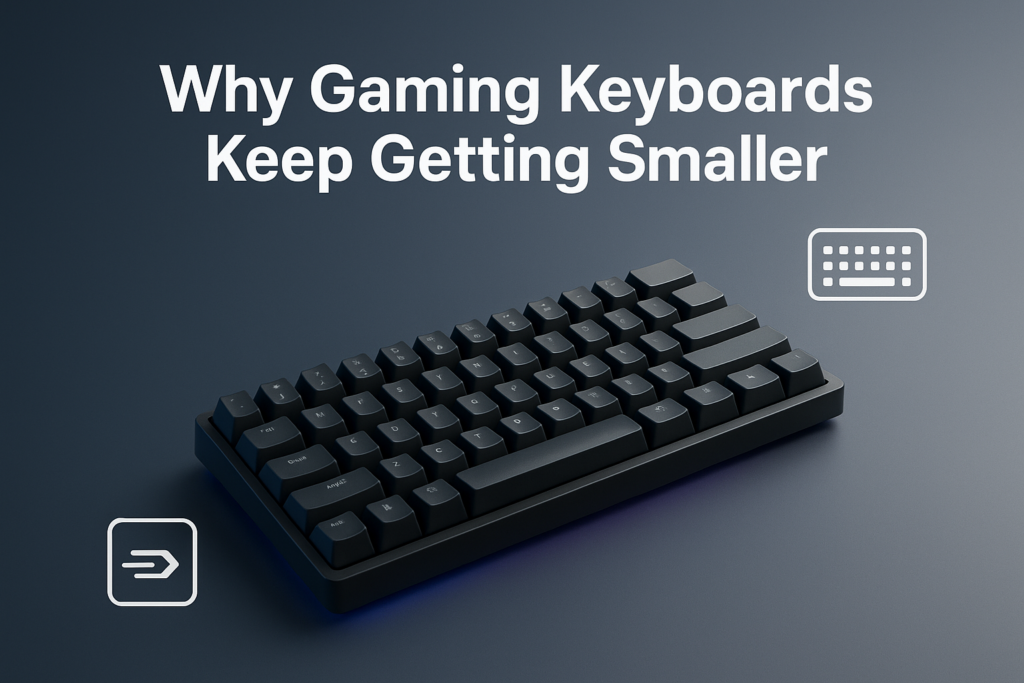
The trend toward compact gaming keyboards has accelerated in 2025, and it’s more than just a design fad. Gamers are increasingly seeking space efficiency, portability, and speed, forcing manufacturers to rethink traditional full-sized layouts. But shrinking a keyboard isn’t just about aesthetics — it fundamentally changes the way players interact with their devices.
The Shift Toward Minimalism
Compact gaming keyboards, including 60% and 65% layouts, remove redundant keys such as numpads and function rows. This reduction frees desk space, allowing larger mouse movements — crucial for high-sensitivity FPS gaming. Portability is another driver: enthusiasts attending LAN parties or traveling prefer lightweight setups that slip easily into backpacks.
Designers also consider ergonomics. Smaller layouts reduce hand travel, improving response time and reducing fatigue during long sessions. This design philosophy explains why compact gaming keyboards align well with modern gaming habits, where precision and speed outweigh the need for rarely used keys.
Performance vs Size: The Trade-Offs
While compact gaming keyboards offer speed and portability, they come with compromises. Fewer keys mean reliance on function layers or key combinations, which can slow down productivity tasks like video editing or complex MMO macros. For competitive FPS or MOBA players, however, the trade-off is often acceptable — reduced finger movement directly translates to quicker input response.
Some premium compact models integrate mechanical switches, customizable macros, and RGB lighting, ensuring high performance without sacrificing essential gaming features. Manufacturers carefully balance minimalism with tactile quality to preserve immersion.
Cultural Shift: Gamers and Desk Space
The rise of smaller desks, ergonomic setups, and streaming environments has accelerated adoption of compact gaming keyboards. These layouts fit neatly into multi-monitor or single-camera setups, leaving more room for precise mouse movement, controllers, or audio gear.
The minimalist approach also reflects lifestyle shifts among younger gamers, who value multipurpose workspaces and portability. Gaming peripherals are no longer static desk fixtures — compact gaming keyboards support mobility without compromising competitive readiness.
Industry Insight: Market Response in 2025
Manufacturers have responded with a wide range of compact options: wired mechanical keyboards optimized for esports, wireless low-latency boards for travel, and hot-swappable designs for customization. Esports teams increasingly favor 60–65% layouts, reinforcing the legitimacy of compact gaming keyboards at the highest levels of play.
Full-sized keyboards still serve content creators and productivity-focused users, but the compact segment continues to expand as gaming priorities evolve.
Mini Comparison Snapshot: Compact vs Full-Sized Gaming Keyboards (2025)
| Feature | Compact Keyboards | Full-Sized Keyboards |
|---|---|---|
| Layout | 60–75%, minimal keys | 100%, full numpad + F-row |
| Desk Space | Saves space, large mouse area | Requires more room |
| Portability | High, ideal for travel | Limited mobility |
| Speed | Faster finger travel | Slightly slower hand movement |
| Ideal Use | FPS, MOBA, mobile setups | MMO, productivity, general use |
Contrarian Angle: Less Isn’t Always More
Despite their popularity, compact gaming keyboards aren’t universal solutions. Workflows that rely on frequent shortcuts, numeric input, or layered macros benefit from full-sized layouts. What improves competitive gaming performance may slow productivity or creative work.
Compact designs serve a focused audience rather than replacing traditional keyboards outright.
Closing Insight
Compact gaming keyboards represent a broader evolution in gaming culture — prioritizing speed, ergonomics, and desk efficiency over sheer size. In 2025, they reflect intent rather than compromise, supporting agile setups built around precision and adaptability. Understanding where compact layouts excel — and where they don’t — allows gamers to choose tools that enhance performance instead of following trends blindly.
Designing a Smarter Gaming Setup
- Follow our Instagram @vibetric_official for insights into gaming hardware and peripheral trends.
- Bookmark vibetric.com for detailed breakdowns of keyboard layouts, switches, and ergonomics.
- Stay updated on how evolving designs impact real-world gaming performance.
What’s your take on this?
At Vibetric, the comments go way beyond quick reactions — they’re where creators, innovators, and curious minds spark conversations that push tech’s future forward.

Galaxy S26 Ultra Privacy Display: 5 Brutal Real-World Truths Nobody Tells You
Galaxy S26 Ultra Privacy Display: 5 Brutal Real-World Truths Nobody Tells You There’s a specific anxiety that comes with using a phone