
Are Gaming Chairs Actually Good for Your Back?
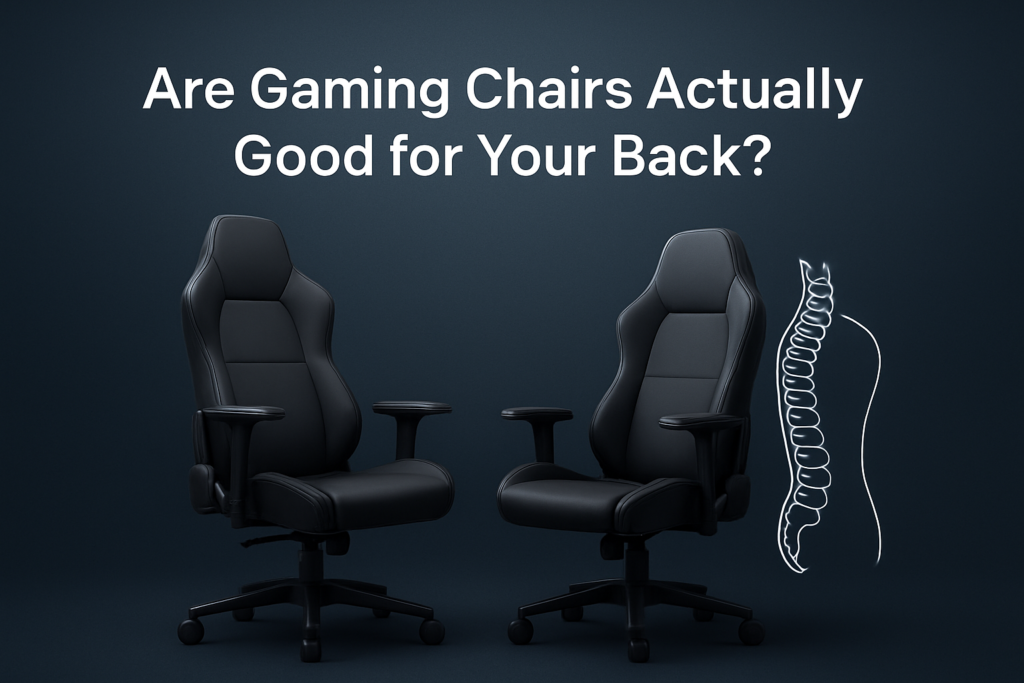
Gaming chairs exploded in popularity because they look supportive — tall backs, bold stitching, thick cushions, and racing-seat curves that signal “premium.” But visuals don’t always reflect real gaming chair ergonomics. Many users only realize the gap between appearance and actual back support after months of subtle discomfort. The design language promises posture correction, yet the engineering under the surface often tells a different story.
The Problem With “Ergonomic” Labels in Gaming Gear
The gaming industry loves absolute statements — more padding means better comfort, more height means better support, more curves mean better posture. But when evaluated through actual ergonomic principles, most racing-style chairs prioritize identity over anatomy. The spinal load they create is rarely noticeable at first, which is why gamers mistake early comfort for long-term support.
The real question isn’t whether the chair looks structured — it’s whether its architecture protects neutral posture over long hours.
The Engineering Behind a Back-Friendly Chair
Most gaming chairs borrow their silhouette from bucket seats in race cars, which were designed to keep drivers stable during turns — not to support desk workers for eight-hour sessions. The raised sides limit natural movement, and the single-angle backrest often forces a rigid posture rather than supporting healthy micro-adjustments.
In practical engineering terms, three factors define true back support:
- Neutral spine alignment — supporting the natural S-curve instead of forcing the back into a fixed angle.
- Dynamic movement — allowing the seat and backrest to tilt independently to reduce static muscle strain.
- Forward-adjusting lumbar depth — which most gaming chairs replace with a simple pillow that compresses over time.
This is why racing-style chairs often fall short. A compressing lumbar pillow changes your spinal curve throughout the day. Shoulder wings restrict upper-body rotation. Thick foam feels comfortable initially but traps heat and collapses with long use.
Ergonomic office chairs, on the other hand, build movement and spinal decompression into their frame, not their padding.
Why Gamers Feel Comfortable at First But Not Hours Later
Gaming chairs create a plush first impression because of their soft foam padding. The initial comfort masks deeper structural issues — the foam sinks, posture collapses, and pressure points form in predictable patterns around the lower back and shoulders.
This is the central misunderstanding around gaming chair ergonomics:
Comfort at hour one does not equal support at hour four.
Spinal fatigue sets in when the chair does not allow micro-movement. The rigid wings, fixed back curve, and pillow-based lumbar all limit natural posture shifts. The chair works against the body’s instinct to adjust, leading to cumulative strain rather than preventing it.
Myth vs Reality: What Gaming Chairs Actually Do
Myth: Racing design = better posture.
Reality: Most racing frames restrict movement — the opposite of ergonomic design.
Myth: Neck pillows reduce fatigue.
Reality: Fixed-height pillows often push the neck forward, causing extension strain.
Myth: Thick foam equals long-session comfort.
Reality: Foam comfort decreases sharply as it compresses and heats.
Myth: Recline features make chairs ergonomic.
Reality: Recline helps only when paired with synchronized tilt — rare in gaming chairs.
When judging gaming chair ergonomics, mechanical features matter more than aesthetics or accessories.
Mini Comparison Snapshot
| Category | Gaming Chairs | Ergonomic Office Chairs |
|---|---|---|
| Lumbar Support | Pillow-based | Adjustable, structured |
| Movement | Limited | Dynamic tilt + flexibility |
| Comfort Duration | Short-term | Long-term stability |
| Shoulder Space | Narrow wings | Open design |
| Ideal Use | Short gaming | Daily work + long sessions |
When a Gaming Chair Still Makes Sense
Gaming chairs aren’t universally bad — they simply serve a narrower set of use cases:
- Short sessions where firmness is preferable
- Aesthetic setups where the chair is part of the identity
- Console-style reclined gaming
- Users who prefer a fixed posture over dynamic movement
They’re functional, but rarely optimized for long hours of continuous seating.
Closing Insight
Back health depends more on structure than style, and chairs influence posture quietly over years — not immediately. Once you understand what real lumbar architecture feels like, the limitations of racing-style seats become more obvious with every session. A chair doesn’t need bright stitching or a tall silhouette to protect your spine; it needs smart mechanics that move with you instead of against you. The best choice is the one that preserves natural posture — not the one that looks the most “gamer.”
Keep Your Setup Ahead of the Curve
- Follow our Instagram @vibetric_official for more ergonomics and setup insights.
- Bookmark vibetric.com to keep up with upcoming deep-dive reviews.
- New breakdowns and trend analyses drop frequently — stay tuned.
What’s your take on this?
At Vibetric, the comments go way beyond quick reactions — they’re where creators, innovators, and curious minds spark conversations that push tech’s future forward.

Best Tech Gadgets 2026 — The Smart Devices That Truly Deliver
Best Tech Gadgets 2026 — The Smart Devices That Truly Deliver Every year begins with spectacle. Product teasers promise transformation. Launch events

Smartphone Stagnation 2026: The Hidden Shift Behind Slower Upgrade Cycles
Smartphone Stagnation 2026: The Hidden Shift Behind Slower Upgrade Cycles The review unit arrived on schedule, exactly as expected — sealed packaging,