
ANC vs Passive Isolation — Which One Matters More?
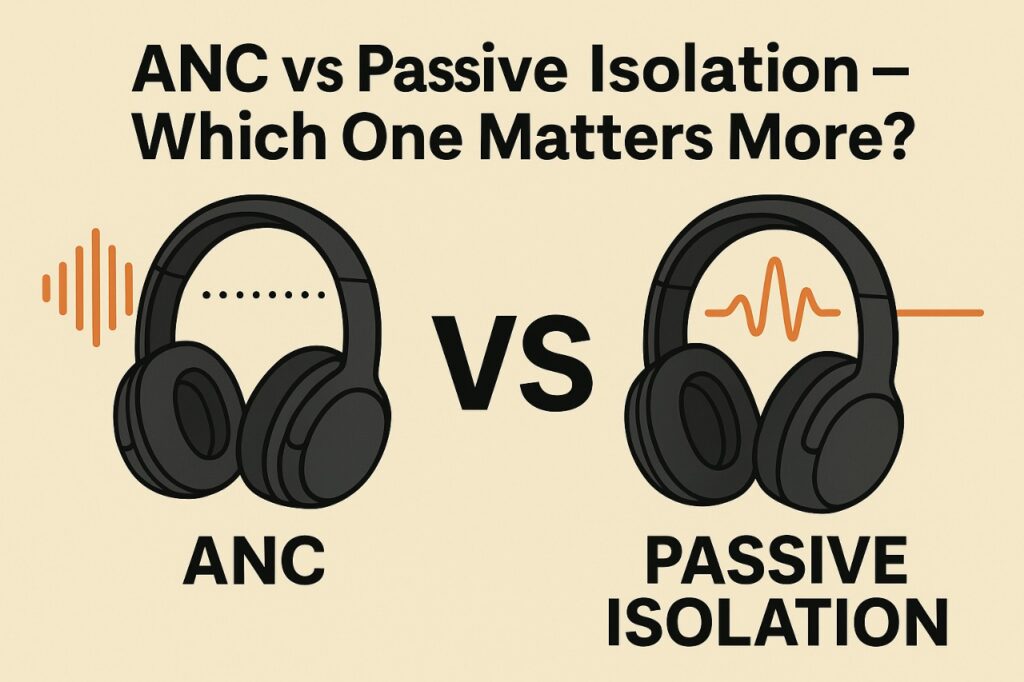
Silence in headphones isn’t created by magic. It’s created by physics — one part mechanical, one part digital. Most people compare ANC vs passive noise isolation as if one simply “wins,” but the truth is that both attack noise through completely different pathways. One reshapes incoming pressure waves using algorithms. The other blocks those waves before they even reach your ear canal. Understanding how each system works — and where the limits appear — is the only reliable way to judge which one matters more for your listening style.
How ANC Reshapes the Air Around You
Active cancellation is essentially a controlled collision of sound. Microphones capture external noise, a processor inverts that waveform, and the driver plays the inverse signal to neutralize the disturbance. This works best where patterns are predictable: aircraft hum, AC units, low-frequency engines, or subway drones.
Where ANC shines:
- Low-frequency consistency
- Situations with repetitive background rumble
- Scenarios where digital phase inversion can stay ahead of the noise
But ANC has physical boundaries. High-frequency sounds (keyboard clicks, clinking utensils, chatter) change too quickly for real-time inversion. The processor simply can’t predict them with perfect accuracy. This is why even flagship ANC headphones let through certain spikes — not due to weak hardware, but due to physics itself.
Why Passive Isolation Works Where ANC Can’t
Passive noise isolation is older than any algorithm. Seal quality, clamp force, cup depth, foam density, and ear-tip geometry directly determine how well a headphone blocks the outside world. Instead of fighting noise with anti-noise, it simply rejects the sound before it enters.
Where passive isolation excels:
- High-frequency attenuation
- Situations with unpredictable or sharp noise
- Maintaining silence without battery usage
A high-performing passive seal can outperform expensive ANC if the fit is right. A poorly sealing ANC headphone, meanwhile, can lose 40–60% of its potential simply because air leaks destroy the algorithm’s foundation.
The Layer Where They Actually Meet
If you zoom out, the ANC vs passive noise isolation debate becomes less about which is “better” and more about how they complement each other. ANC is a subtractive system; passive isolation is a preventative system. One cancels; the other blocks. And engineers design both knowing that each has a different frequency domain where it dominates.
A simplified view of their strengths:
| Noise Range | ANC Strength | Passive Isolation Strength |
|---|---|---|
| Low-frequency hum | Strong | Moderate |
| Mid-frequency chatter | Moderate | Strong |
| High-frequency spikes | Weak | Strong |
| Battery-off performance | None | Full |
| Fit dependency | High | Very High |
The two aren’t rivals — they’re stacked systems. The most silent headphones combine good materials with strong algorithms, not one or the other.
Why Consumers Misjudge ANC Performance
Most users judge ANC by the “wow moment.” If the headphone kills the deepest rumble, the brain assumes everything else is handled. But the illusion breaks when:
- the fit loosens
- the tips are mismatched
- wind enters the mic chamber
- fast transients slip through
A stronger ANC logo doesn’t automatically equal quieter experiences. The seal and ergonomics matter just as much, sometimes more. That’s why earbuds with great silicone tips can feel quieter than over-ears with mediocre tuning — even with weaker processing power.
A Simple Framework to Understand Which One Matters More
To avoid the confusion, here’s a clear decision lens:
Choose ANC if:
- you travel frequently
- your environment includes engine noise
- you prefer over-ear comfort
- you need relief from deep rumble fatigue
Choose passive isolation if:
- you work around people talking
- you’re sensitive to pressure or ANC “ear suck”
- you use IEMs with good tips
- you need silence without relying on battery life
For most real-world listeners, the sweet spot is a combination of both: a strong passive seal that provides the foundation, and ANC that clears out the frequencies mechanical isolation can’t reach efficiently.
A Contrarian Insight: Silence Isn’t the Goal
Here’s the part rarely discussed — perfect silence isn’t always the healthiest or most comfortable experience. Long sessions of heavy ANC can create unnatural pressure sensations, and extreme passive isolation can feel claustrophobic. What we truly want is controlled sound, not zero sound. A balanced tuning between passive block and ANC shaping often gives a more natural environment than either system pushed to its absolute limit.
Closing Reflection
Quiet is engineered, not wished into existence. And when you break down the physics behind it, the ANC vs passive noise isolation debate stops being a showdown and becomes a partnership. The seal sets the stage; the algorithm cleans the rest. Whether you’re blocking the hum of travel or the brightness of everyday chatter, the system that matters more is the one that aligns with your surroundings and your biology. Silence isn’t created by a single technology — it’s the result of smart stacking.
Keep Exploring with Vibetric
- Follow our Instagram @vibetric_official for upcoming sound science breakdowns and gear insights.
- Bookmark vibetric.com if you want clean, engineer-level explanations without hype.
- Stay tuned for more short-form analyses built to help you choose tech with confidence.
What’s your take on this?
At Vibetric, the comments go way beyond quick reactions — they’re where creators, innovators, and curious minds spark conversations that push tech’s future forward.

Galaxy S26 Ultra Privacy Display: 5 Brutal Real-World Truths Nobody Tells You
Galaxy S26 Ultra Privacy Display: 5 Brutal Real-World Truths Nobody Tells You There’s a specific anxiety that comes with using a phone