
Why ARM Laptops Are Becoming a Global Trend
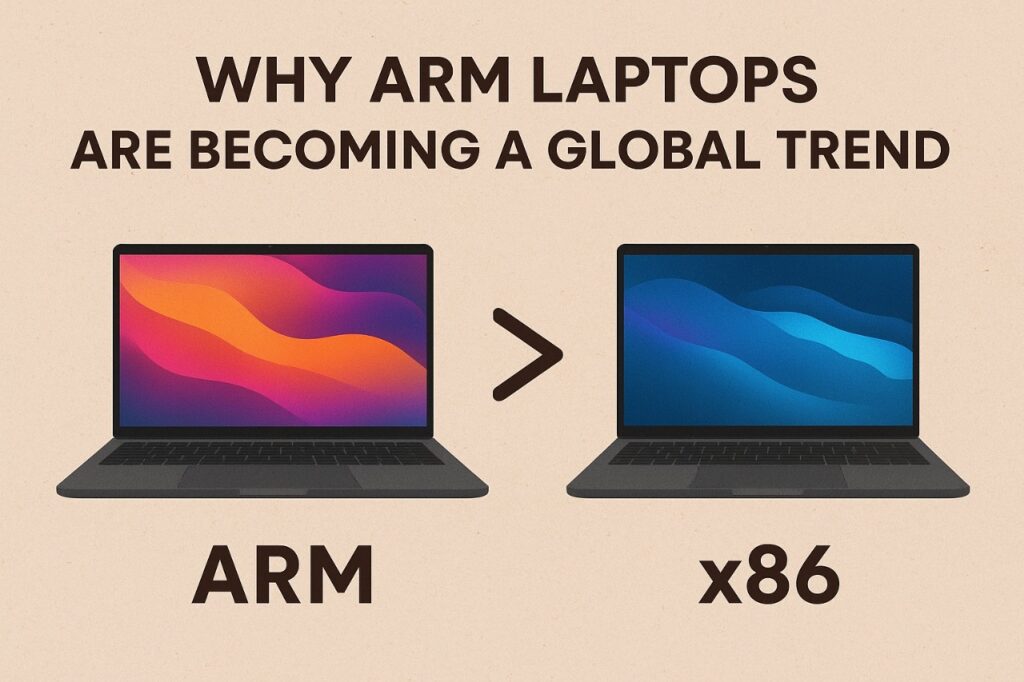
ARM-based laptops are steadily reshaping the global computing landscape. Once confined to smartphones and tablets, ARM chips are now powering ultrathin laptops, drawing attention from consumers and manufacturers alike. In 2025, the shift toward ARM laptops reflects a convergence of performance efficiency, battery longevity, and evolving software ecosystems that traditional x86 machines struggle to match.
Energy Efficiency at the Core
ARM architecture is fundamentally designed for efficiency. Unlike traditional x86 processors, ARM chips consume far less power while delivering sufficient performance for everyday tasks. This energy advantage translates to dramatically improved battery life, allowing laptops to last a full workday—or even two—without recharging. For mobile professionals, students, and frequent travelers, this efficiency is a primary motivator to adopt ARM-based devices.
Moreover, lower power consumption also reduces heat output. Fanless ARM laptops maintain cooler surfaces and quieter operation, enhancing user comfort. For ultrathin designs where cooling is a challenge, this thermal efficiency is a crucial differentiator, allowing sleek laptops without sacrificing usability.
Shifting User Expectations
Modern laptop users prioritize mobility, instant-on functionality, and multitasking over raw computing power. ARM laptops meet these expectations by offering lightweight designs and long-lasting batteries without significant heat generation. Users no longer accept short battery cycles or noisy fans as trade-offs for speed. This cultural shift is reshaping purchasing patterns: ultrabooks, hybrid laptops, and portable workstations are increasingly embracing ARM designs to satisfy these new priorities.
Software Ecosystem Evolution
Historically, software compatibility limited ARM laptop adoption. Many x86 applications relied on legacy libraries that did not run natively on ARM, creating friction for professional users. By 2025, improved emulation, native ARM apps, and cloud-based workflows have reduced this barrier. Popular productivity suites, creative tools, and even some gaming titles now run efficiently on ARM laptops. Developers are increasingly optimizing applications for ARM architecture, reinforcing its credibility as a serious alternative to x86 for a wide range of users.
Mini Snapshot: ARM vs x86 Laptop Adoption (2025)
| Metric | ARM Laptops | x86 Laptops |
|---|---|---|
| Battery Life | 12–24 hours | 6–10 hours |
| Average Thermal Output | Low | Moderate-High |
| Typical Weight | 1–1.5 kg | 1.3–2.5 kg |
| Native App Ecosystem | Growing rapidly | Mature |
| Popular Use Cases | Productivity, mobility | Gaming, legacy apps |
This snapshot illustrates why ARM laptops appeal to users prioritizing mobility and efficiency, while x86 continues to dominate for high-performance or legacy software requirements.
Industry Momentum and Manufacturing Trends
Leading manufacturers—Apple, Lenovo, Microsoft, and Samsung—are accelerating ARM laptop production. Apple’s M-series chips have demonstrated that ARM can deliver both high efficiency and competitive performance, prompting rivals to explore custom ARM silicon or adopt licensing agreements. Supply chains are adjusting accordingly, with ARM-based components becoming increasingly accessible, reducing costs and expanding global reach.
Market data suggests that ARM laptops are no longer niche; they are gaining meaningful share in ultrabook, hybrid, and enterprise laptop segments. This trend is supported by consumer demand for extended battery life, low heat, and portability—parameters where ARM consistently outperforms traditional x86 chips.
Contrarian Angle: Not a Universal Replacement
Despite rapid adoption, ARM laptops are not a universal solution. High-end gaming, advanced 3D rendering, and certain enterprise applications still rely on x86 architectures for peak performance and software compatibility. Professionals requiring specialized software may continue to favor traditional laptops. However, ARM’s rise signals a broader shift: energy efficiency, ecosystem synergy, and user-centric design increasingly outweigh raw processing power for mainstream users.
Closing Reflection
ARM laptops are more than a technical novelty—they reflect a global shift in computing philosophy. Mobility, battery longevity, and software optimization now take precedence over sheer clock speed or cores. While x86 machines retain dominance in niche segments, ARM’s trajectory highlights the priorities of everyday users and industry direction. Understanding this trend equips consumers and professionals alike to choose devices aligned with evolving workflows and real-world usage, rather than chasing outdated benchmarks.
Stay Ahead with Vibetric Tech Insights
- Follow our Instagram @vibetric_official for analyses of emerging computing trends.
- Bookmark vibetric.com to explore detailed comparisons between ARM and x86 laptops.
- Stay informed on how industry shifts affect user experience, battery life, and mobility.
What’s your take on this?
At Vibetric, the comments go way beyond quick reactions — they’re where creators, innovators, and curious minds spark conversations that push tech’s future forward.
Community Triage (0)