
How Spatial Audio Is Rewriting Entertainment Experiences
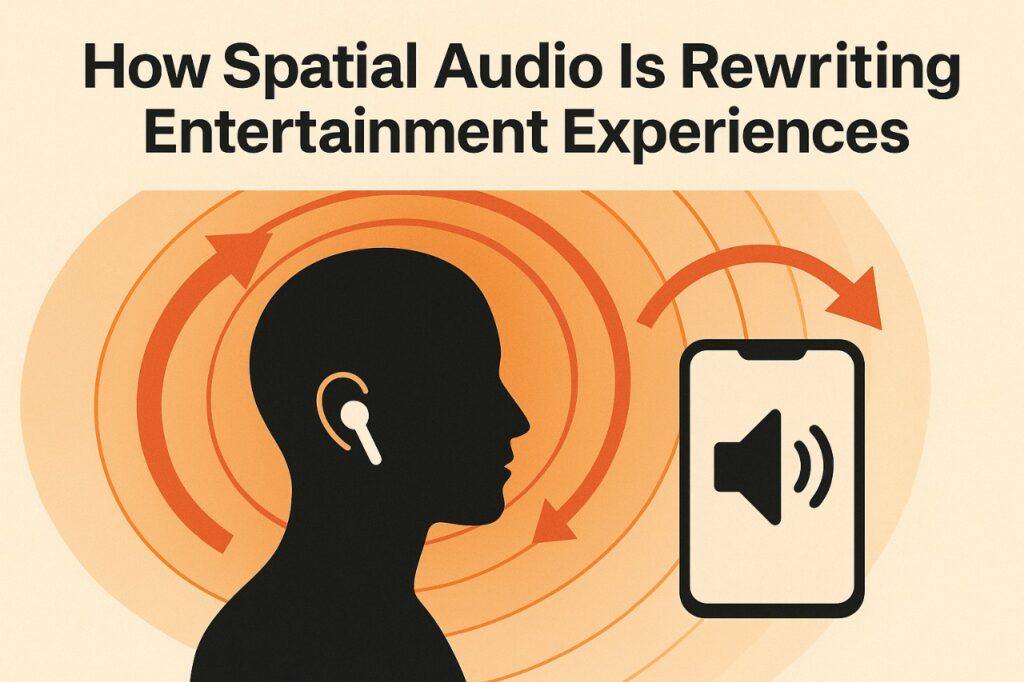
There was a time when audio was flat. Two speakers, two channels, and a simple left–right divide. Movies sounded good, games felt immersive enough, and music was… predictable. Then something shifted — not in volume, not in fidelity, but in dimension.
Spatial audio arrived quietly. Not loud, not dramatic, not with a marketing explosion — but with a whisper that felt like the world had suddenly expanded. For the first time, sound wasn’t just heard. It was felt, mapped, and placed around us. Listeners didn’t just consume content anymore — they stepped inside it.
Streaming platforms began adapting. Game developers rebuilt engines. Movie studios redesigned mixes. And headphone brands redesigned experiences from the ground up. Because the truth is simple:
➡️ We don’t want louder audio anymore.
➡️ We want realer audio.
In a world obsessed with visuals — 4K, 8K, HDR — sound has finally taken its rightful place as a driver of emotion, presence, and immersion. This blog breaks down how spatial audio is quietly rewriting entertainment experiences across music, cinema, gaming, and everyday digital interaction.
⚡Quick Summary Table
| Category | Traditional Audio | Spatial Audio (2025) |
|---|---|---|
| Sound Stage | Left–Right stereo | 360° full-environment sound |
| Immersion | Medium | Extremely High |
| Content Availability | High | Increasing rapidly |
| Hardware Support | Limited | Growing across phones, laptops, TVs, TWS |
| Use Cases | Music, movies | Music, movies, gaming, VR/AR, calls |
| Accuracy | Positional but flat | Object-based 3D precision |
| Engagement Time | Moderate | Higher due to immersion |
| Experience Type | Passive | Interactive & presence-driven |
🧭What This Blog Covers
✅ What’s Included
- How spatial audio changes music, movies, gaming, and AR/VR
- Real-world benefits vs theoretical claims
- Hardware + software foundations
- User experience snapshots from Reddit & forums
- Comparison with stereo and surround sound
- Value breakdown for buyers in 2025
❌ What’s NOT Included
- Audiophile-only analysis
- Studio mixing deep dives
- VR-specific technical breakdowns
- Brand promotions or sponsored tone
📌 How This Evaluation Is Structured
We focus on real-world effects, not specs. Each section looks at practical immersion, listener perception, platform differences, and ecosystem maturity — the Vibetric way.
🛠️Design & Build Analysis
Spatial audio isn’t “built” into headphones alone — it’s designed into the ecosystem. The experience depends on:
🎧 Hardware
- Multi-driver TWS setups
- Beamforming microphones
- HRTF (head-related transfer function) modelling
- Sensors for head-tracking
📡 Software
- Dolby Atmos
- Sony 360 Reality Audio
- Apple Spatial Audio
- DTS:X
- Game engines with spatial mapping
🧱 Durability Expectations
Most mid-to-high-end audio gear designed for spatial processing includes:
- Better thermal design for DSP loads
- Stronger drivers
- Improved ANC tuning
📊 Mini Comparison Table
| Hardware Type | Spatial Audio Quality | Notes |
|---|---|---|
| TWS Earbuds | ⭐⭐⭐ | Great but limited by size |
| Over-Ear Headphones | ⭐⭐⭐⭐⭐ | Best immersion + head-tracking |
| Phone Speakers | ⭐⭐ | Wide stage, limited depth |
| Soundbars | ⭐⭐⭐⭐ | Excellent for movies |
🔊Audio Experience Breakdown
(Here we focus exclusively on audio, the core of the keyword.)
How Spatial Audio Actually Sounds
Spatial audio reconstructs sound in three layers:
- Horizontal Plane — left, right, front
- Vertical Plane — above, below
- Depth Field — near, mid, far
This creates a dome of movement around you.
🎶 Music (Immersive Layering)
- Vocals anchored in front
- Instruments placed in 3D shells
- Reverbs rendered in full space
- Subtle details become direction-aware
🎬 Movies (Cinematic Elevation)
- Helicopters over you
- Rain around you
- Crisp dialogues staying in the center
🎮 Gaming (True Positional Advantage)
- Footsteps behind you
- Enemy reloads placed directionally
- Environmental cues boosting reaction time
📊 Micro Audio Table
| Category | Stereo | Spatial Audio |
|---|---|---|
| Sound Position Accuracy | ⭐⭐ | ⭐⭐⭐⭐⭐ |
| Immersion | ⭐⭐⭐ | ⭐⭐⭐⭐⭐ |
| Detail Separation | ⭐⭐⭐ | ⭐⭐⭐⭐ |
| Vertical Audio | ❌ | ✔️ |
| Gaming Advantage | ⭐⭐ | ⭐⭐⭐⭐⭐ |
🚀Performance Breakdown
Spatial audio performance depends on three engineering layers:
1️⃣ DSP (Digital Signal Processing)
- Determines how clean the 3D mapping is
- Better DSP = fewer artifacts, cleaner position
2️⃣ Thermal Behavior
TWS earbuds with spatial audio often warm up faster because:
- Higher compute load
- Real-time tracking
- Active ANC + HRTF
3️⃣ Responsiveness
Real-world behavior:
- No delays in movie playback
- Minor latency in gaming (headphones vary)
- Adaptive EQ varies between devices
🔋Battery Life & Efficiency
Spatial audio consumes more battery due to:
- DSP load
- Continuous head-tracking
- Higher bitrate streams
🔋 Real-World Observations
- TWS lose 15–25% extra battery
- Over-ear headphones lose 10–15%
- Phones drain faster during spatial movie playback
Usage Summary
- Music: Mild impact
- Movies: Moderate impact
- Gaming: High impact
📱Software & Experience Layer
Spatial audio is shaped heavily by software optimization.
📱 OS-Level Impact
- Apple devices → Best head-tracking
- Android → More flexible formats
- Windows 11 → Best for PC gaming
🎧 App-Level Behavior
| Platform | Spatial Audio Support | Notes |
|---|---|---|
| Apple Music | Full support | Best in vocals & imaging |
| Spotify | Partial | 3D expansion only |
| Netflix | Full | Dolby Atmos spatial audio |
| YouTube | Limited | Mostly stereo upmix |
✨ Experience Summary
Spatial audio feels magical when content is native.
Upmixed content varies widely in quality.
👥Real-World User Insights
| User Insight Type | Summary |
|---|---|
| Praise | “Movies sound insane — like a real theater.” |
| Praise | “Gaming feels unfairly immersive now.” |
| Praise | “Spatial audio finally makes music feel alive.” |
| Complaint | “Battery drains much faster.” |
| Complaint | “Upmixed tracks sound weird sometimes.” |
| Misconception | “Spatial audio = louder audio.” (False) |
| Long-Term Behavior | Most users keep it on for movies, off for calls. |
| Buyer Pattern | Over-ear headphones favored for spatial immersion. |
🥊Competitor Comparison
Major Alternatives
- Dolby Atmos Headphones
- Sony 360 Reality
- Apple Spatial Audio
- Windows Sonic
📊 Comparison Table
| Technology | Strength | Weakness | Best for |
|---|---|---|---|
| Dolby Atmos | Best movie immersion | App-dependent | Movies |
| Apple Spatial Audio | Smoothest head tracking | Expensive ecosystem | iPhone users |
| Sony 360 Reality | Best music imaging | Limited content | Audiophiles |
| Windows Sonic | Free & decent | Not true object-based audio | PC gamers |
📌Pros & Cons
✅ Pros
- Immersive 360° sound experience
- Better depth separation
- Strong impact on movies & gaming
- More natural environmental cues
- Enhances emotional storytelling
❌ Cons
- Increased battery drain
- Requires compatible hardware
- Some content sounds odd when upmixed
- Varies heavily by brand and platform
- Head-tracking accuracy varies
🎯Buyer Guide
🎮 For Gamers
Massive competitive advantage — directional clarity is unmatched.
🎧 For Music Lovers
Best with native mixes. Some genres benefit more (acoustic, live recordings).
🎬 For Movie Buffs
Spatial audio = mini-theater experience.
💼 For Travelers
Immersive bubble effect reduces fatigue during flights.
💸 For Budget Buyers
Entry-level spatial audio works, but not magical. Mid-range headphones recommended.
⚠️Known Issues & Limitations
- Upmixed music often sounds artificial
- Occasional latency in gaming
- Head-tracking glitches on some models
- Battery drain increases noticeably
- Content availability still growing
🔮Future-Proofing Score
- Spatial audio has a long runway, backed by:
- Growing content on every major platform
- Improving DSP efficiency
- Wider smartphone and TWS adoption
- Heavy integration in AR/VR
This technology will remain relevant 5–7 years, expanding beyond entertainment into:
- Navigation
- Accessibility tools
- Virtual assistants
- Telepresence
💬 Vibetric Verdict
Spatial audio isn’t an upgrade — it’s an evolution.
It transforms entertainment into presence, turning passive consumption into sensory immersion. The keyword might sound technical, but the effect is emotional. Spatial audio is the future of how we feel content, not just hear it.
🔗 Stay in the Loop
We help you choose smarter, not louder.
- Follow @vibetric_official on Instagram for weekly flagship breakdowns, sound tech deep-dives, and immersive entertainment analysis.
- Bookmark Vibetric.com for for expert reviews, trend analysis, and buyer guides.
No fluff. No bias. Just honest performance — the Vibetric way.
❓ FAQs
- What is spatial audio?
Spatial audio is a 3D audio technology that places sound around the listener, creating a realistic sense of direction and depth.
- Is spatial audio worth it for movies?
Yes. Movies gain dramatic realism, clearer positioning, and theater-like immersion.
- Does spatial audio work with all headphones?
No. You need compatible headphones or TWS for full performance.
- Does spatial audio drain more battery?
Yes — typically 10–25% more power depending on the device.
- Is spatial audio good for gaming?
Absolutely — positional cues provide genuine competitive advantage.
- Does Spotify support spatial audio?
Only partial support. Apple Music and Tidal offer full native mixes.
- Why do some tracks sound weird in spatial audio?
Because they’re upmixed from stereo instead of being mastered for 3D.
- Is spatial audio the same as Dolby Atmos?
No. Atmos is a format; spatial audio is the broader 3D audio experience.
- Do I need expensive headphones for spatial audio?
Not necessarily — mid-range models offer excellent immersion.
- Will spatial audio grow in the future?
Yes. It’s becoming central to AR/VR, gaming, and next-gen entertainment.
💬 What’s your take on this?
The comment section at Vibetric isn’t just for reactions — it’s where creators, thinkers, and curious minds exchange ideas that shape how we see tech’s future.
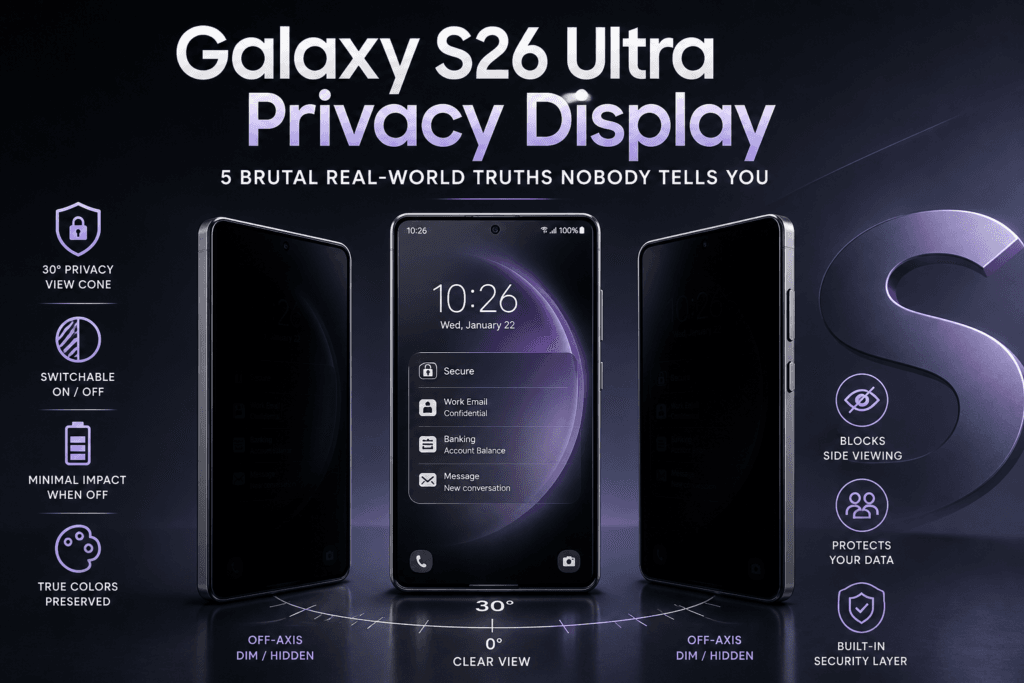
Galaxy S26 Ultra Privacy Display: 5 Brutal Real-World Truths Nobody Tells You
Galaxy S26 Ultra Privacy Display: 5 Brutal Real-World Truths Nobody Tells You There’s a specific anxiety that comes with using a phone