
Why ANC Isn’t Always the Best Choice for Everyone
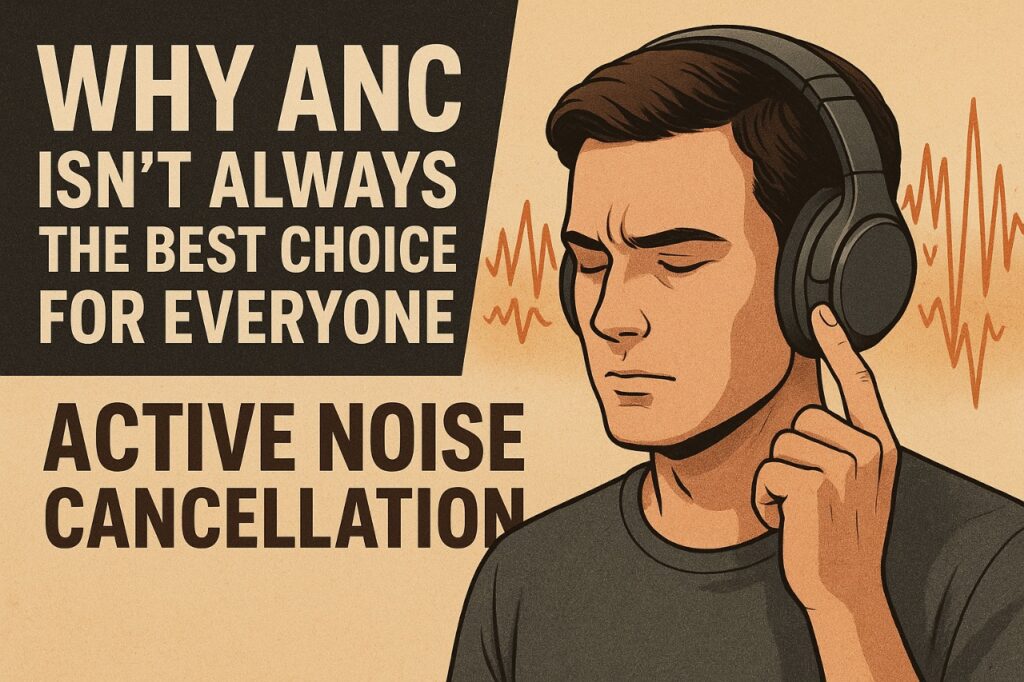
For years, active noise cancellation (ANC) has been sold as the ultimate solution for immersive audio — the holy grail for commuters, office workers, and audiophiles alike. But in 2025, it’s clear that ANC isn’t universally perfect.
Some users report headaches, ear fatigue, or even audio distortion. Others find that ANC masks important environmental cues, like announcements or approaching vehicles. This short read explains why active noise cancellation isn’t automatically the best choice, what its real-world trade-offs are, and how to decide if it’s right for you.
⚙️ Core Insight (Depth + Clarity)
Active noise cancellation works by using microphones and processing algorithms to generate anti-noise, canceling out unwanted sound. The technology is evolving fast — from bulky over-ear headphones to in-ear true wireless models — but the benefits depend heavily on context.
Why it matters now: improvements in ANC algorithms, hybrid designs, and AI-driven adaptive noise control have made it highly effective in certain scenarios. Yet these same advances highlight limitations: ANC can struggle with high-frequency sounds, sudden noise spikes, or irregular environments. Users often don’t notice that the perfect ANC experience requires a combination of proper fit, device quality, and usage environment.
The simple truth: ANC is powerful, but it’s not universally comfortable or necessary. Many users may achieve better audio satisfaction through passive isolation, EQ tuning, or situational awareness features.
📊Bite-Sized Data Table
| Feature (2025) | Effective Scenario | Caveat / Limitation |
|---|---|---|
| Over-ear ANC | Airplanes, busy offices | Ear fatigue after long sessions |
| In-ear ANC | Commutes, light travel | Can cause pressure sensation |
| Adaptive ANC | Variable urban noise | Occasional miscalibration in sudden spikes |
| Passive isolation | Quiet environments, gyms | Less effective against low-frequency hum |
| Transparency / Awareness Mode | Street, public transport | May reduce ANC efficacy |
| AI-driven noise tuning | Cafes, co-working spaces | Depends on app updates and firmware |
🔍 Micro Analysis
A: The Real-World Impact
- Long-haul travelers benefit from ANC in airplanes, but over long periods, some users feel pressure or mild fatigue.
- Commuters enjoy reduced urban noise, yet rapid traffic sounds or announcements are sometimes masked.
- Adaptive ANC improves comfort and response but can feel inconsistent in dynamic noise environments.
- In-ear ANC offers portability but often at the cost of soundstage depth and natural bass perception.
- The takeaway: ANC changes perception of sound, but not everyone experiences “better” — context and preferences matter.
B: The Hidden Truth
- Marketing positions ANC as universally superior, but engineering constraints remain.
- The best ANC performance depends on driver size, fit, seal, and processing power.
- Hybrid designs attempt to balance passive isolation and active cancellation, but compromises are unavoidable.
- For many users, properly fitted earbuds without ANC provide clearer, more natural sound in everyday settings.
The reality: ANC is a tool — not a requirement. Choosing the wrong ANC device can worsen comfort, reduce battery life, and even alter audio fidelity.
🌍 Culture Angle
In 2025, audio culture has shifted toward situational awareness and user customization:
- Urban commuters value the ability to filter selectively rather than block everything.
- Younger listeners prioritize portability, app-driven EQ, and transparency modes over pure cancellation.
- Workspace trends favor “hybrid audio”: moderate ANC combined with ambient sound monitoring to stay alert.
- Audiophiles often prefer high-quality drivers with passive isolation over over-engineered ANC algorithms.
Culturally, ANC is no longer the default expectation — it’s one option among many in a diversified listening ecosystem.
🧠 Quick Vibetric Takeaway
- Active noise cancellation is situational, not universally better.
- Over-ear ANC excels in sustained loud environments; in-ear ANC is portable but can cause pressure.
- Adaptive and AI-driven ANC improve comfort but may misread sudden noise spikes.
- Passive isolation and transparency modes remain effective alternatives.
- User comfort, fit, and environment are as important as raw ANC specs.
- ANC can affect audio fidelity, battery life, and awareness — trade-offs are unavoidable.
- Choose ANC as a tool, not a guarantee of better listening.
💬 Vibetric Verdict
Vibetric Verdict: Active noise cancellation isn’t magic — it’s a refined tool with limits.
For some, it transforms commutes and office hours; for others, it creates fatigue or masks crucial sounds.
The best audio experience isn’t always the loudest cancellation — it’s the combination of comfort, awareness, and sonic fidelity.
ANC works when applied wisely; misapplied, it highlights that no technology is universally perfect.
🔗 Stay in the Loop
We don’t sell hype — we explain it.
- Follow @vibetric_official for grounded insights on audio tech, real-world testing, and honest analysis.
- Bookmark vibetric.com to stay ahead of the tech curve.
- No hype. No bias. Just facts — the Vibetric way.
💬 What’s your take on this?
The comment section at Vibetric isn’t just for reactions — it’s where creators, thinkers, and curious minds exchange ideas that shape how we see tech’s future.
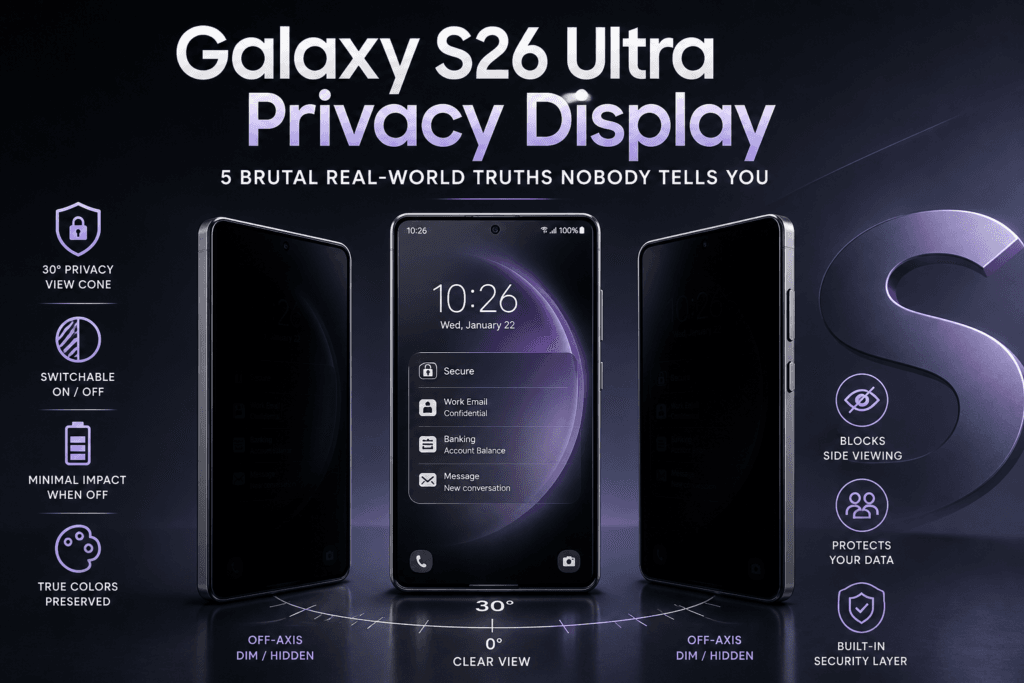
Galaxy S26 Ultra Privacy Display: 5 Brutal Real-World Truths Nobody Tells You
Galaxy S26 Ultra Privacy Display: 5 Brutal Real-World Truths Nobody Tells You There’s a specific anxiety that comes with using a phone