
Samsung vs Xiaomi — Who’s Winning the Value Game in 2025?
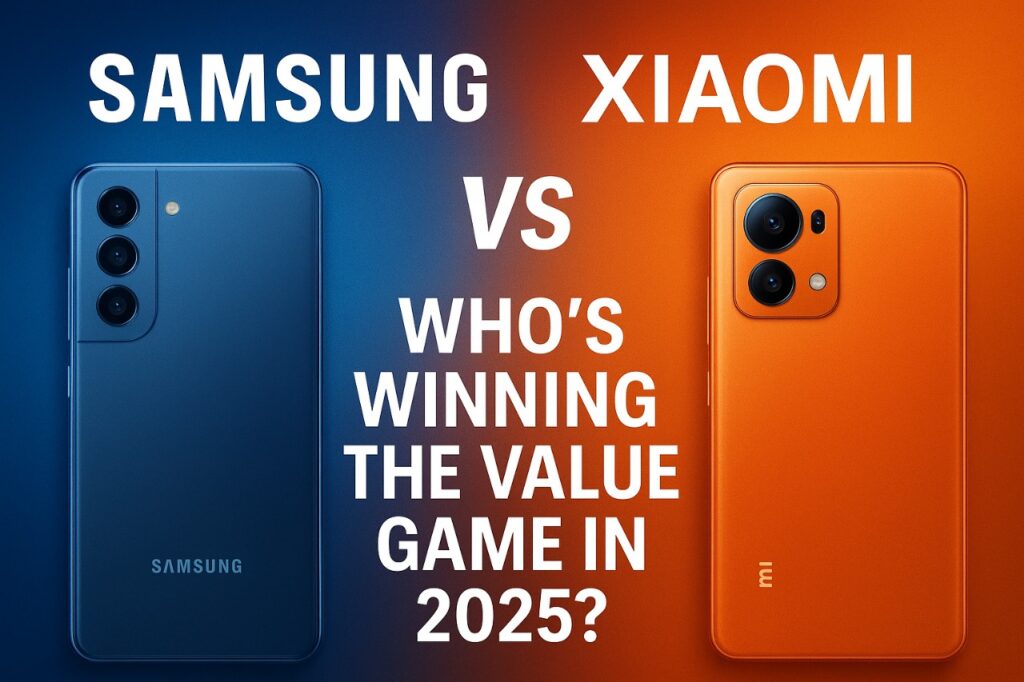
Value has quietly become the real battlefield of modern smartphones. Not the megapixel wars, not the chipset hype, not even the AI buzzwords — value. The ability of a phone to deliver performance, longevity, features, and trust at a price that feels justified.
In 2025, this battle has never been more intense. Samsung continues to dominate the global stage with its premium ecosystem and long-term support, while Xiaomi disrupts the market with aggressive pricing and hardware-first engineering. One sells assurance. The other sells ambition.
Consumers today aren’t just buying phones — they’re buying stability, convenience, and identity. And in a world where upgrades feel incremental, the question becomes sharper than ever:
Is Samsung still the safer long-term value?
Or has Xiaomi finally mastered premium performance at half the price?
This blog cuts through assumptions, hype cycles, and spec sheet illusions — giving you a grounded, expert-backed breakdown of Samsung vs Xiaomi in 2025, and who truly wins the value game.
⚡Quick Summary Table
| Category | Samsung (2025) | Xiaomi (2025) |
|---|---|---|
| Pricing Strategy | Premium + Upper Midrange | Aggressive + Hardware Value |
| Software Support | 7 Years OS / 7 Years Security | 4 Years OS / 5 Years Security |
| Build Quality | Aluminum/Armor Glass | Aluminum/Glass/Polycarbonate |
| Camera Performance | Consistent + Proven Processing | High-end hardware |
| Battery + Charging | Moderate battery + slower charging | Bigger batteries + faster charging |
| Ecosystem | Mature, stable, seamless | Expanding but inconsistent |
| Value-for-Money | Strong long-term value | Strong upfront value |
🧭What This Blog Covers
This analysis includes:
✅ What’s Included
- Direct comparison of Samsung vs Xiaomi in design, performance, cameras, software, and long-term value
- Real-world user behavior and Reddit patterns
- Feature trade-offs, strengths, and weaknesses
- Value breakdown for 2025 market conditions
❌ What’s NOT Included
- Old 2023–2024 devices
- Regional availability differences
- Rumor-based comparisons
- Benchmark-only conclusions
📌 How the Evaluation Is Structured
The blog follows a real-world first, expert-backed approach rather than spec-sheet theory. Pricing, software support, camera behavior, ecosystem reliability, and durability matter more than synthetic numbers.
🏗️Design & Build Analysis
Samsung and Xiaomi have matured drastically in build quality, but their philosophies differ.
🧱 Materials & Construction
- Samsung: Armor Aluminum frames, Gorilla Armor/Glass Victus 3, durable mass-tested construction.
- Xiaomi: Premium materials in high-end models, but polycarbonate still common in midrange.
✋ Ergonomics
- Samsung prioritizes rounded edges, weight balance, and slimness.
- Xiaomi favors chunkier designs due to larger batteries and cooling systems.
🔧 Durability Expectations
Samsung is still ahead — its IP ratings and build consistency hold up long-term. Xiaomi’s durability varies heavily between models.
📊 Mini Comparison Table
| Aspect | Samsung | Xiaomi |
|---|---|---|
| Frame | Armor Aluminum | Aluminum / Plastic mix |
| Glass Quality | Gorilla Armor / Victus | Gorilla Glass Victus / 5 |
| Weight Balance | Excellent | Moderate |
| IP Rating | Better | Varies by model |
🎨Display / Audio / Camera
🌈 Display
Both brands use exceptional OLEDs, but Samsung’s tuning remains industry-leading:
- Higher color accuracy
- Better outdoor visibility
- More consistent brightness integrity
Xiaomi does offer brighter peak numbers, but real-world tuning still favors Samsung.
🎧 Audio
- Samsung: Balanced, fuller mids, cleaner stereo separation
- Xiaomi: Louder output but harsher highs
📸 Camera Performance
This is where philosophies split:
- Samsung: Mature processing → better skin tones, HDR, low light
- Xiaomi: Strong hardware → inconsistent but impressive in ideal conditions
📊 Micro Camera Table
| Feature | Samsung | Xiaomi |
|---|---|---|
| HDR Consistency | ⭐⭐⭐⭐⭐ | ⭐⭐⭐ |
| Low Light | ⭐⭐⭐⭐ | ⭐⭐⭐⭐ |
| Color Accuracy | ⭐⭐⭐⭐⭐ | ⭐⭐⭐ |
| Detail Capture | ⭐⭐⭐⭐ | ⭐⭐⭐⭐⭐ |
🚀Performance Breakdown
2025 flagship and midrange phones from both brands are extremely capable.
⚙️ Samsung (Snapdragon 8 Gen 3 / Gen 4)
- Stable thermals
- Predictable performance
- Lower peaks but fewer drops
- Great for long gaming sessions
⚡ Xiaomi (Snapdragon 8 Gen 3 / Dimensity 9400 / 8300)
- Higher peak power
- Faster sustained performance… until thermal constraints hit
- Cooling varies significantly by model
⭐ Real-World Takeaway
Samsung ≈ smoother long-term performance
Xiaomi ≈ faster short-term performance
🔋Battery Life & Efficiency
🔋 Samsung
- Focus on efficiency rather than size
- More conservative thermal control → better battery stability
- Charging speeds remain slower (25–45W)
⚡ Xiaomi
- Big batteries (5000–5500 mAh common)
- Extreme charging speeds (90W–120W)
- Slightly faster battery degradation over time
Real-World Use
- Samsung lasts longer on lighter workloads
- Xiaomi lasts longer on heavy tasks due to bigger cells
🧩Software & Experience Layer
Software is where Samsung vs Xiaomi diverge the most.
📱 Samsung One UI 7
- Clean animations
- Mature interface
- No aggressive background killing
- 7 years of guaranteed support
🔧 Xiaomi HyperOS
- Faster animations
- More customizable
- Occasional ads (depending on region)
- Less stable background management
- 4+5 year support structure
🧠 Software Decides Long-Term Value
This is why Samsung remains the long-term winner — updates directly affect security, battery life, and optimization.
👥Real-World User Insights
| User Insight Type | Summary |
|---|---|
| Praise | Xiaomi’s unbeatable hardware value at every price |
| Praise | Samsung’s unmatched software polish |
| Complaint | Xiaomi UI ads + inconsistent updates |
| Complaint | Samsung’s slow charging speeds |
| Long-Term Review | Samsung phones age better after 2–3 years |
| Long-Term Review | Xiaomi hardware stays good but software slows |
| Buyer Pattern | Xiaomi wins budget, Samsung wins premium |
| Misconception | “More megapixels = better photos” — still false |
🥊Competitor Comparison Table
Alternatives (2025)
- Google Pixel 9 Pro → Best computational photography
- iPhone 16 Pro → Best ecosystem + long-term support
- Nothing Phone 3 → Best design + clean UI
📊 Comparison Table
| Brand | Strength | Weakness | Best for |
|---|---|---|---|
| Samsung | Software + Longevity | Slower charging | Long-term users |
| Xiaomi | Performance + Value | Update inconsistency | Performance buyers |
| Pixel | Camera + Clean UI | Average hardware | Photography users |
| Apple | Ecosystem + Stability | High price | Premium buyers |
📌Pros & Cons
✅ Samsung — Pros
- Best software support in Android
- Durable builds
- Balanced cameras
- Strong resale value
- Consistent long-term performance
❌ Samsung — Cons
- High pricing
- Slow charging
- Conservative hardware tuning
✅ Xiaomi — Pros
- Best hardware value
- Fastest charging
- Big batteries
- High performance-per-rupee
❌ Xiaomi — Cons
- Ads in UI (region-specific)
- Software updates less reliable
- Inconsistent camera processing
- Thermal throttling on some models
🛒Buyer Guide (Who Should Buy What?)
- If you want long-term value → Samsung wins
- If you want raw performance per rupee → Xiaomi wins
- If you want best camera reliability → Samsung
- If you want fast charging + huge battery → Xiaomi
- If you upgrade every 1–2 years → Xiaomi
- If you keep your phone 4–5+ years → Samsung
⚠️Known Issues & Limitations
Samsung Issues
- Slow charging
- Occasional shutter lag
- Exynos variants still less efficient
Xiaomi Issues
- Ads (MIUI regions)
- Faster battery degradation
- Update delays
- Over-aggressive background app killing
🔮Future-Proofing Score
📅 Samsung
7 years of updates make it the most future-proof Android brand.
⚡ Xiaomi
Hardware remains impressive, but software future-proofing lags behind.
Winner: Samsung — by longevity, ecosystem stability, and resale value.
💬 Vibetric Verdict
Samsung vs Xiaomi in 2025 isn’t a fight of specs — it’s a fight of identity.
Samsung wins the long-term value war, while Xiaomi dominates the immediate-spec-value war. Both brands deliver, but in different ways.
Your choice depends on whether you value years of stability or months of thrill.
🔗 Stay in the Loop
We help you choose smarter, not louder.
- Follow @vibetric_official on Instagram for weekly flagship breakdowns, AI deep-dives, and long-term real-world reviews.
- Bookmark Vibetric.com for for expert reviews, trend analysis, and buyer guides.
No fluff. No bias. Just honest performance — the Vibetric way.
❓ FAQs
- Which brand offers better long-term value, Samsung or Xiaomi?
Samsung offers better long-term value due to longer software support, better durability, and higher resale value.
- Which is better for cameras: Samsung or Xiaomi?
Samsung performs more consistently in all lighting conditions, while Xiaomi delivers higher detail but inconsistent processing.
- Which phone lasts longer over the years?
Samsung devices age better thanks to thermal stability and long-term optimization.
- Why is Xiaomi cheaper despite similar hardware?
Xiaomi uses aggressive pricing, slimmer profit margins, and regional ads to reduce costs.
- Does Xiaomi still show ads in 2025?
Yes — depending on the region and model, HyperOS still includes optional ads.
- Which is better for gaming: Samsung or Xiaomi?
Xiaomi has higher peak performance; Samsung offers better thermal consistency.
- Which has better battery life?
Xiaomi devices generally last longer due to bigger batteries, but Samsung maintains better long-term battery health.
- Which brand offers better UI experience?
Samsung’s One UI is smoother and more stable; Xiaomi HyperOS is more customizable but less predictable.
- Which brand is better for budget buyers?
Xiaomi — it dominates the budget and upper-budget segments.
- Which brand is best for premium users in 2025?
Samsung — for reliability, cameras, ecosystem, and support.
💬 What’s your take on this?
The comment section at Vibetric isn’t just for reactions — it’s where creators, thinkers, and curious minds exchange ideas that shape how we see tech’s future.
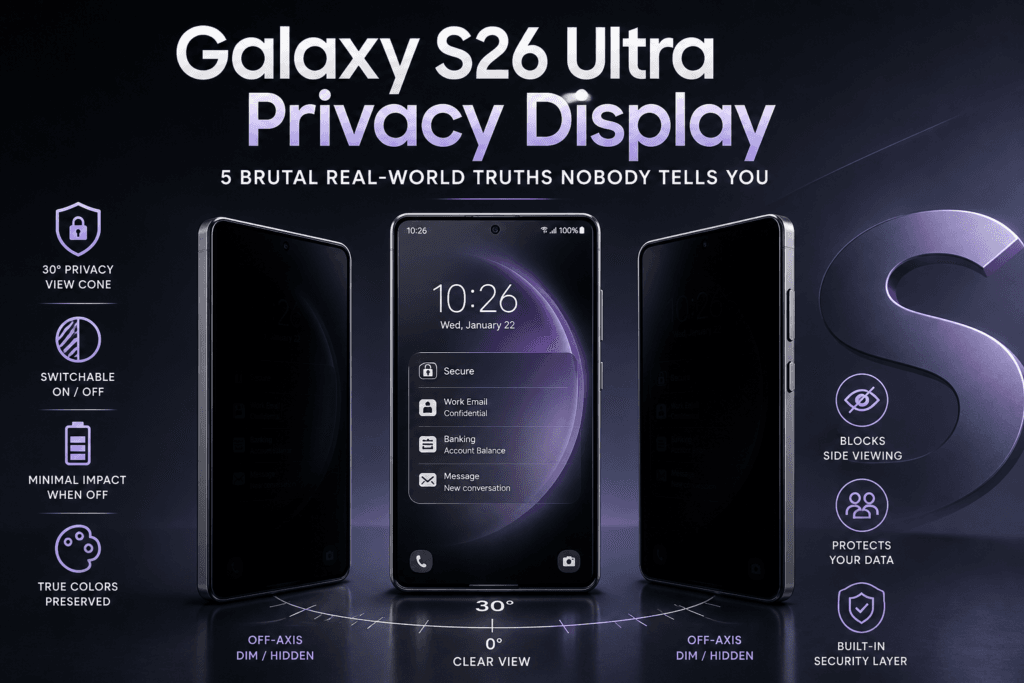
Galaxy S26 Ultra Privacy Display: 5 Brutal Real-World Truths Nobody Tells You
Galaxy S26 Ultra Privacy Display: 5 Brutal Real-World Truths Nobody Tells You There’s a specific anxiety that comes with using a phone