
Why “Pro” Controllers Don’t Make You a Better Gamer
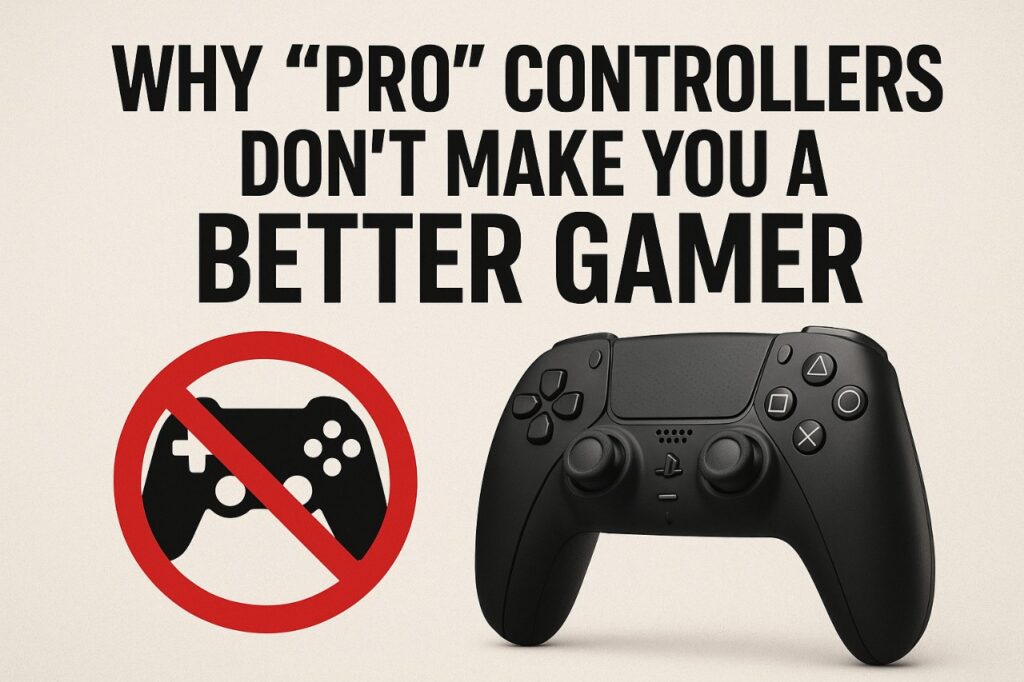
Every brand sells you a dream — custom triggers, swappable sticks, faster inputs, and the promise that your gameplay will instantly level up.
Pro gamers swear by them, streamers showcase them in every highlight, and marketing convinces you that buying a “pro controller” is the shortcut to becoming cracked overnight, no practice required.
But here’s the uncomfortable truth — it won’t.
In 2025, pro controllers have shifted from being performance boosters to more of a comfort and customization upgrade. They look elite, feel premium, and come with features that sound impressive, but the real-world improvement still comes from you, not the hardware. A controller can enhance how you feel, but it can’t teach you timing, strategy, discipline, or muscle memory.
⚙️ Core Insight
Pro controllers don’t change anything fundamental about how the game reads your inputs. The signal is the same, the latency difference is barely measurable, and the game engine interprets every command identically — whether it came from a ₹4,000 stock controller or a ₹20,000 pro model.
What they really offer is optimization, not transformation.
They add small but useful quality-of-life upgrades like:
- Paddles for remapping actions so your thumbs stay on the sticks
- Adjustable triggers for slightly faster actuation
- Premium grips and materials for long sessions
- Swappable hardware for a more personalized feel
These improvements matter only when you’ve already mastered your fundamentals. If your aim is inconsistent, if your game sense is weak, or if your movement isn’t wired into muscle memory, then a pro controller won’t magically fix those gaps.
As one eSports coach on Reddit put it perfectly:
“A $200 controller won’t fix a $2 mindset.”
🎮 Why the Hype Exists
The hype around pro controllers is built on the psychology of progress. Gamers want an edge, a shortcut, a feeling that they’re evolving — and brands know exactly how to sell that emotion.
Limited editions, magnetic parts, RGB trims, and words like “elite,” “pro,” and “tournament-ready” trigger the belief that you’re buying skill… even when you’re mostly buying comfort.
Yes, a pro controller can reduce hand fatigue, improve grip, and offer a more tailored overall experience. But the measurable performance difference — often under 10 milliseconds — is so tiny that even most pros can’t reliably feel it.
In real competitive play, the true advantage comes from practice, repetition, reaction training, and experience. Hardware helps, but only as a supporting tool — never as a replacement for ability.
🧠 When a Pro Controller Actually Makes Sense
Here’s when investing in one is genuinely worth it:
- You regularly compete in tournaments or ranked ladders.
- You rely heavily on remapping and paddle inputs for speed.
- You play long sessions and need better ergonomics to avoid fatigue.
- You care about comfort, consistency, and personalization more than raw competitiveness.
For the average casual gamer, the stock controller still delivers around 95% of the same performance with zero learning curve
💬 Vibetric Verdict
Vibetric Verdict: Pro controllers don’t make you better — they make you more comfortable.
Skill still beats setup. Reflex still beats RGB.
In 2025, the best gear isn’t what’s labeled “pro” — it’s whatever feels natural in your hands and supports how you play.
🔗 Stay in the Loop
We don’t sell hype — we explain it.
- Follow @vibetric_official for grounded gaming insights, real-world performance reviews, and no-nonsense breakdowns of what truly improves gameplay.
- Bookmark vibetric.com to stay ahead of the tech curve.
- No hype. No bias. Just facts — the Vibetric way.
💬 What’s your take on this?
The comment section at Vibetric isn’t just for reactions — it’s where creators, thinkers, and curious minds exchange ideas that shape how we see tech’s future.
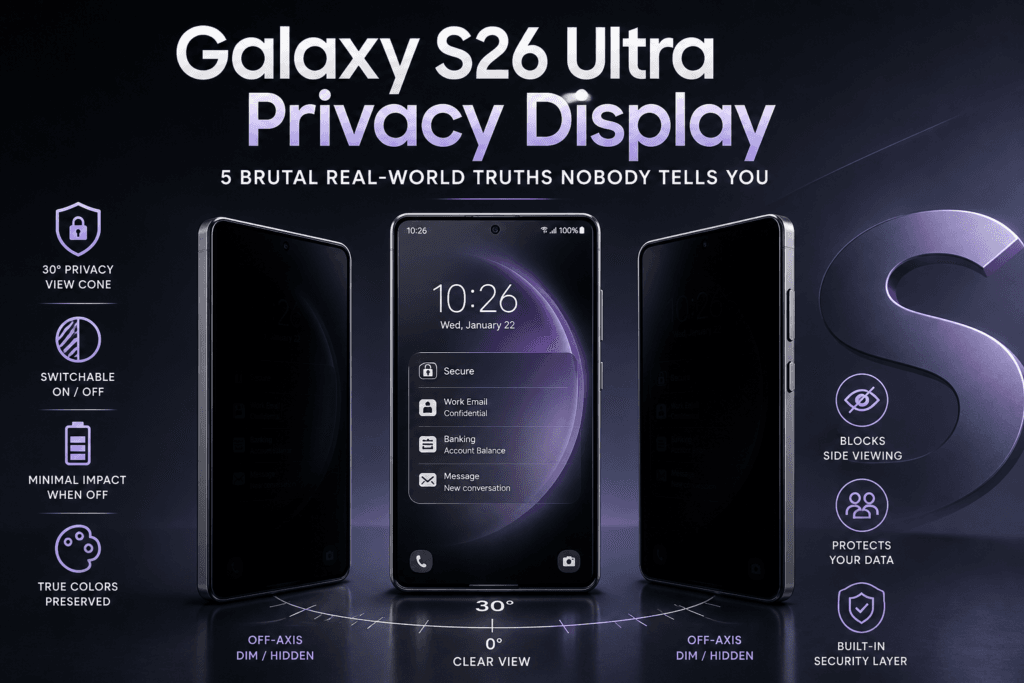
Galaxy S26 Ultra Privacy Display: 5 Brutal Real-World Truths Nobody Tells You
Galaxy S26 Ultra Privacy Display: 5 Brutal Real-World Truths Nobody Tells You There’s a specific anxiety that comes with using a phone