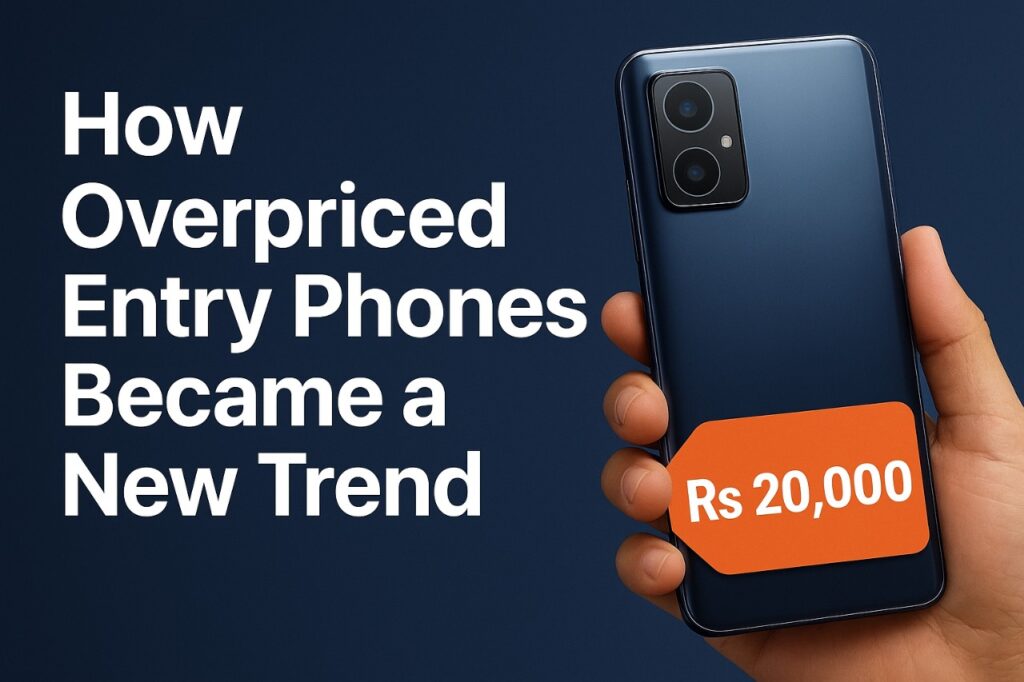
How Overpriced Entry Phones Became a New Trend
Remember when “budget phones” actually felt affordable?
In 2025, even entry-level models cross ₹15,000–₹20,000 — and the irony is, they’re not getting much better. What used to be called budget has slowly evolved into a new marketing class — overpriced entry phones.
They look flashier, sound more premium, and come in bold new colors — yet deep down, they’re still running the same hardware we saw years ago.
💰 The Illusion of “Premium Budget”
Smartphone brands have rebranded their cheapest phones into “entry-premium” devices.
The trick? Design and language. A shiny glass back, a “Pro” in the name, and marketing phrases like “AI camera,” “dynamic display,” or “hyper boost performance” create an illusion of progress — even when the internals barely change.
Between 2020 and 2025, average budget phone prices rose by nearly 38%, while real-world performance gains stayed under 15%.
That means you’re now paying more for the same experience — just with a different box and a buzzier name.
Why? Because brands realized that most buyers no longer compare benchmarks — they compare how premium a phone looks on Instagram.
The result: overpriced entry phones dominate shelves, combining style-heavy exteriors with cost-cut internals.
🧩 The Subtle Downgrades
Scroll through Reddit or Quora threads, and you’ll find frustrated users echoing the same sentiment:
“Phones that cost ₹20K now feel like ₹12K devices from 2020.”
“Plastic frames, LCD screens, and no charger in the box — what’s the ‘Pro’ here?”
Brands quietly remove essentials — headphone jacks, microSD slots, chargers — and reframe it as “minimalist innovation.” Even performance chips are recycled under new names or throttled slightly to save battery life, all while being sold as “energy-efficient upgrades.”
These overpriced entry phones rely on visual polish and marketing language more than substance.
The savings for brands? Massive. Each small hardware cut compounds into bigger profit margins — while the illusion of “premium” keeps customers convinced they’re upgrading.
⚙️ The Psychology Behind It
The shift didn’t happen overnight — it’s a psychological play.
Consumers have been trained to associate price with trust. A ₹20,000 phone simply “feels” safer than a ₹10,000 one, even if the difference is only cosmetic.
This tactic, known in marketing circles as “perceived tier elevation,” lets companies push modest devices into higher segments without improving real specs. The “budget” category is shrinking not because phones improved, but because marketing blurred the line between entry and midrange.
Even tech reviewers unintentionally feed the cycle — praising “AI battery optimization” or “enhanced night mode” like they’re major innovations, when in truth, they’re just firmware tweaks.
The result? The overpriced entry phone trend has reshaped the entire smartphone market. Consumers think they’re buying into innovation — but what they’re really buying is presentation.
💬 Vibetric Verdict
Vibetric Verdict: Entry phones didn’t suddenly get better — they just got better at pretending.
You’re not paying for performance anymore — you’re paying for perception.
So before buying that next “entry-premium” device, check beyond the buzzwords. Real innovation happens under the hood — not in the color name.
🔗 Stay in the Loop
We don’t sell hype — we explain it.
- Follow @vibetric_official for unbiased tech insights and breakdowns that cut through marketing noise.
- No hype. No bias. Just facts — the Vibetric way.
💬 What’s your take on this?
The comment section at Vibetric isn’t just for reactions — it’s where creators, thinkers, and curious minds exchange ideas that shape how we see tech’s future.
Why Thin Doesn’t Always Mean Better in Laptops