
Why 8K Polling Rate Doesn’t Matter for Most Gamers
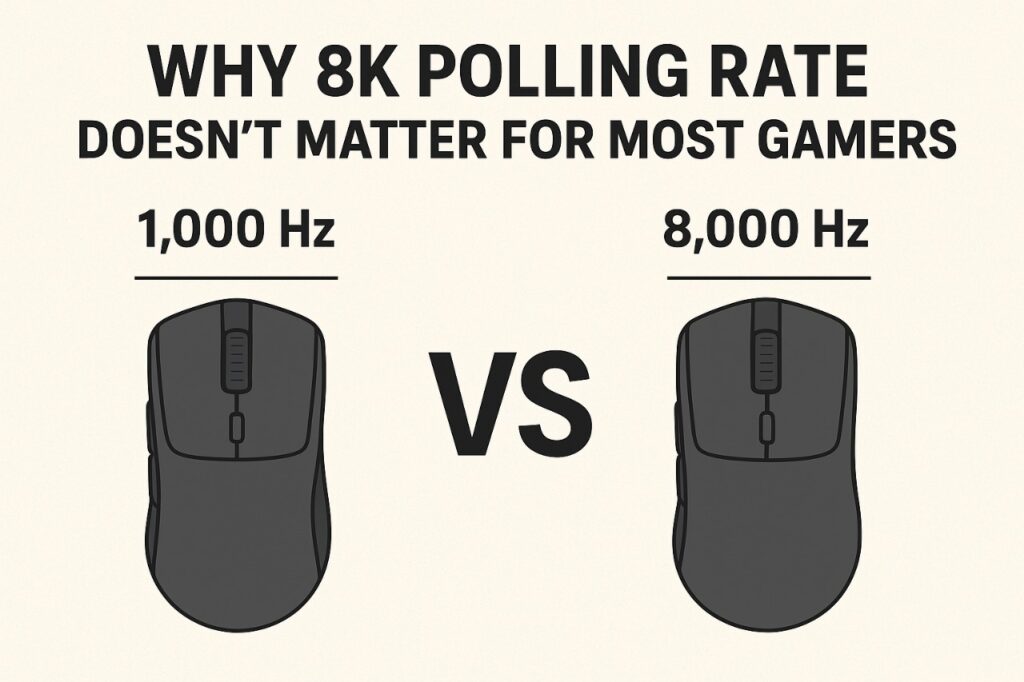
High polling rate mice have become a common selling point in competitive gaming peripherals. With some brands touting 8K polling rate gaming capabilities, many players wonder if the difference is tangible or just marketing hype. In 2025, understanding the science behind polling rate, human perception, and system limitations is key to separating meaningful performance gains from superficial claims.
What Polling Rate Means
Polling rate measures how often a mouse reports its position to the computer, expressed in Hertz (Hz). A standard 1,000Hz mouse sends data 1,000 times per second, while an 8K mouse claims 8,000 reports per second. On paper, higher polling rates reduce input lag and increase responsiveness, theoretically giving gamers an edge in fast-paced games. However, the practical effect depends on system capability, monitor refresh rate, and human perception.
System Limitations and Diminishing Returns
Most modern gaming setups cannot fully leverage 8K polling rates. Even high-end systems face bottlenecks in USB bandwidth, CPU polling, and GPU rendering. For instance, a 240Hz monitor refreshes 240 times per second—far below the theoretical 8,000Hz input report rate. As a result, the difference between 1K, 2K, or 8K polling rates becomes imperceptible under real-world conditions. Beyond a certain threshold, increasing polling rate yields negligible gains while adding unnecessary system demand.
Mini Comparison: Polling Rates and Practical Impact
| Polling Rate | Reports per Second | Typical System Limitations | Observable Impact on Gaming |
|---|---|---|---|
| 125Hz | 125 | Standard USB latency | Noticeable lag in fast FPS |
| 500Hz | 500 | Minor CPU bottleneck | Smooth for most casual play |
| 1,000Hz | 1,000 | Well-handled by modern PCs | Responsive for competitive gaming |
| 8,000Hz | 8,000 | USB bandwidth + monitor limits | Practically imperceptible for most |
This illustrates that while 8K polling is technically superior, real-world gains are largely negligible for the vast majority of players.
Human Perception Limits
The average human can detect input lag down to approximately 1–2 milliseconds, which corresponds closely to 500–1,000Hz polling rates. Beyond this range, the difference becomes imperceptible, meaning that an 8K mouse does not provide a noticeable advantage to the typical gamer. Competitive players may feel psychological reassurance using ultra-high polling devices, but actual performance gains are unlikely without specialized testing conditions.
Software and Driver Overhead
Higher polling rates place additional demand on the operating system and mouse drivers. Poorly optimized drivers can introduce micro-stutters or inconsistencies, ironically reducing performance instead of improving it. Manufacturers sometimes highlight extreme polling as a feature without emphasizing that these benefits require flawless software support and minimal system interference.
Practical Advice for Gamers
For most users, a 1,000Hz gaming mouse paired with a high-refresh-rate monitor and low-latency USB port offers optimal responsiveness. Investing in better sensor quality, ergonomic design, or low-latency switches will often yield more tangible benefits than chasing ultra-high polling numbers. Understanding diminishing returns ensures smarter gear purchases and realistic performance expectations.
Debunking 8K Myths
| Myth | Reality |
|---|---|
| Higher polling always improves FPS | Marginal benefit beyond 1,000Hz for typical systems |
| 8K polling eliminates input lag | System bottlenecks and human perception prevent noticeable gain |
| Only extreme gamers notice the difference | Most casual and even competitive players see no effect |
| Software optimization is irrelevant | Poor drivers can negate theoretical benefits |
Closing Reflection
The 8K polling rate represents an impressive technical specification, but for most gamers, it is effectively overkill. Input responsiveness, ergonomic design, sensor precision, and overall system performance remain far more critical than raw reporting frequency. By understanding the limitations of human perception and system hardware, players can make informed choices that improve gameplay without chasing marginal spec gains.
Stay Ahead with Vibetric Gaming Insights
- Follow our Instagram @vibetric_official for in-depth peripheral analyses and gaming trends.
- Bookmark vibetric.com to explore unbiased reviews of mice, keyboards, and monitors.
- Learn practical ways to optimize setups for both casual and competitive play.
What’s your take on this?
At Vibetric, the comments go way beyond quick reactions — they’re where creators, innovators, and curious minds spark conversations that push tech’s future forward.
Frame Stability in 2026: The Hidden Metric Redefining Gaming Performance
Frame Stability in 2026: The Hidden Metric Redefining Gaming Performance For years, gaming conversations revolved around one number: frames per second. Higher

AI Infrastructure in 2026: The Critical Shift Reshaping Modern Technology
AI Infrastructure in 2026: The Critical Shift Reshaping Modern Technology For years, artificial intelligence was presented as decoration. Product launches highlighted AI-enhanced